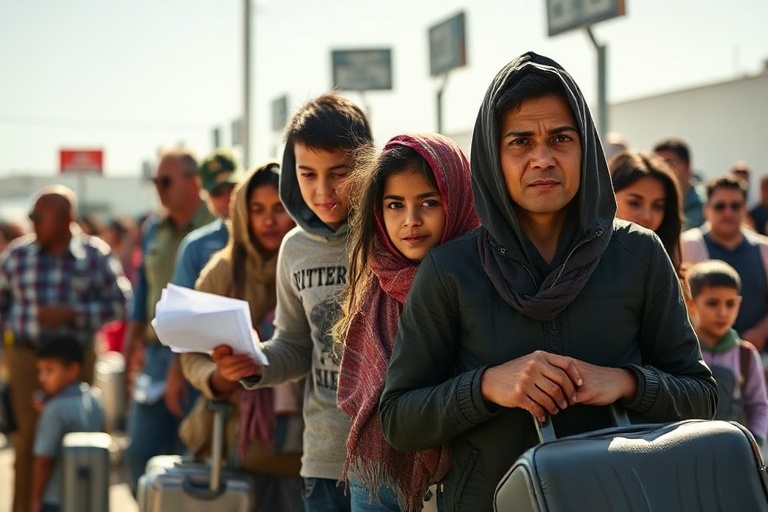
The immigration system in the United States has long been a subject of national debate, shaped by legal frameworks, economic needs, and humanitarian concerns. Over the past century, waves of immigrants have arrived seeking better opportunities, safety, or simply a chance at a new life. The current landscape reflects a complex interplay of federal laws, enforcement practices, and societal attitudes that continue to evolve.
The Legal Framework Governing Immigration
U.S. immigration law is primarily governed by the Immigration and Nationality Act (INA), first passed in 1952 and amended numerous times since. The INA establishes categories for legal immigration, including family reunification, employment-based visas, refugee and asylum status, and the Diversity Visa Lottery. Each pathway carries specific eligibility requirements and numerical limits.
Family-based immigration remains the largest component of legal immigration. U.S. citizens and lawful permanent residents can sponsor certain relatives, including spouses, children, and siblings. Employment-based visas are another critical route, particularly for highly skilled workers in sectors like technology and healthcare. The H-1B visa program, for instance, allows companies to hire foreign workers in specialty occupations, though it is capped at 85,000 visas per year.
Refugees and asylum seekers represent a humanitarian pillar of U.S. immigration policy. The U.S. has historically been a global leader in resettling refugees, though annual admissions fluctuate based on geopolitical conditions and administrative priorities. In recent years, asylum policies have become particularly contentious, with debates over border security and due process shaping enforcement strategies.
Key Visa Categories and Annual Limits
- Immediate Relative Visas (IR): Unlimited visas for spouses, parents, and unmarried children under 21 of U.S. citizens.
- Family Preference Visas (F1-F4): Limited visas (totaling about 226,000 annually) for more distant relatives of U.S. citizens and lawful permanent residents.
- Employment-Based Visas (EB-1 to EB-5): Approximately 140,000 visas annually, prioritizing priority workers, professionals with advanced degrees, skilled workers, and investors.
- Diversity Visa Lottery: 50,000 visas annually, randomly distributed to applicants from countries with low rates of immigration to the U.S.
- Refugee and Asylee Admissions: Varies yearly; in 2023, the U.S. admitted 62,500 refugees.
Economic and Social Impacts of Immigration
Economists widely agree that immigration contributes positively to the U.S. economy, both in the short and long term. Immigrants fill critical labor gaps in industries such as agriculture, construction, healthcare, and technology. Studies by the National Academy of Sciences, Engineering, and Medicine have shown that immigrants have a net positive effect on the federal budget over time, despite initial costs associated with services like education and healthcare.
Immigrant-owned businesses are a significant driver of economic growth. According to the New American Economy Research Fund, immigrants started 25% of all new businesses in the U.S. in 2019. These enterprises span diverse sectors, from restaurants and retail to tech startups and manufacturing. Cities with large immigrant populations, such as New York, Los Angeles, and Miami, often experience higher rates of innovation and entrepreneurship.
On the social front, immigration has shaped the cultural fabric of the United States. Neighborhoods, schools, and workplaces across the country reflect the contributions of immigrant communities. However, integration is not always seamless. Language barriers, discrimination, and economic disparities can pose challenges for newcomers, particularly those from non-English-speaking countries.
Immigrant Contributions by the Numbers
The Pew Research Center provides a snapshot of the immigrant population in the U.S. as of 2023:
- There were 46.1 million immigrants living in the U.S., accounting for 14% of the total population.
- Mexico remains the largest source country, followed by India, China, the Philippines, and El Salvador.
- Immigrants make up 18% of the civilian labor force, with higher representation in industries like farming, cleaning, and construction.
- Over 40% of Fortune 500 companies were founded by immigrants or their children.
Challenges and Controversies at the Border
The U.S.-Mexico border has become a focal point for debates on immigration policy. Record numbers of arrivals in recent years have strained federal resources and intensified discussions on border security, humanitarian aid, and legal pathways for asylum seekers. The Biden administration has faced criticism from both sides of the aisle: progressives argue for more humane treatment of migrants, while conservatives call for stricter enforcement.
One of the most contentious issues is the use of Title 42, a public health authority invoked during the COVID-19 pandemic to allow border officials to rapidly expel migrants without processing their asylum claims. Though the policy was lifted in May 2023, its legacy continues to influence border dynamics. Meanwhile, the number of migrant encounters at the southern border remains high, with over 2.5 million encounters recorded in fiscal year 2023.
Humanitarian crises at the border have drawn global attention. Reports from organizations like Human Rights Watch and Amnesty International highlight the dangers faced by migrants, including exploitation by human traffickers, extreme weather conditions, and inadequate access to food, water, and medical care. These challenges underscore the need for comprehensive reforms that balance security with compassion.
Pathways to Reform and the Role of Public Opinion
Comprehensive immigration reform has been a recurring theme in U.S. politics, yet progress has been elusive. The last major reform, the Immigration Reform and Control Act of 1986, provided legal status to nearly 3 million undocumented immigrants. Since then, attempts to pass new legislation—such as the Development, Relief, and Education for Alien Minors (DREAM) Act or the Border Security, Economic Opportunity, and Immigration Modernization Act of 2013—have stalled due to partisan divisions.
Public opinion on immigration is nuanced. Polls consistently show that a majority of Americans support a pathway to citizenship for undocumented immigrants, particularly those brought to the U.S. as children. However, opinions diverge sharply on issues like border wall construction, visa caps, and enforcement priorities. These divisions reflect broader cultural and political tensions within the country.
Advocacy groups play a crucial role in shaping the conversation. Organizations like the American Immigration Council, the National Immigration Law Center, and the American Civil Liberties Union (ACLU) work to promote policies that protect immigrant rights and provide legal representation. Their efforts have led to significant legal victories, such as the Deferred Action for Childhood Arrivals (DACA) program, which temporarily shields certain undocumented immigrants from deportation and allows them to work legally.
Meanwhile, grassroots movements have emerged in immigrant communities, demanding dignity and justice. Protests, strikes, and community organizing have brought attention to issues like family separation, detention conditions, and the militarization of border regions. These efforts highlight the human stories behind the statistics, reminding policymakers of the real lives affected by their decisions.
Notable Immigration Policies and Legislative Proposals
- DACA (2012): Created by executive action under President Obama, DACA provides temporary relief from deportation and work authorization for undocumented immigrants who arrived as children.
- Travel Ban (2017): Implemented by President Trump, this policy restricted travel and immigration from several predominantly Muslim countries, sparking widespread protests and legal challenges.
- Public Charge Rule (2019): Expanded by the Trump administration, this rule allows immigration officials to deny visas or green cards to applicants who may rely on public benefits, such as Medicaid or food stamps.
- U.S. Citizenship Act (2021): Proposed by President Biden, this bill aims to create an earned path to citizenship for undocumented immigrants, reform family-based immigration, and address root causes of migration from Central America.
Looking Ahead: The Future of U.S. Immigration
The future of immigration in the U.S. will likely be shaped by a combination of legislative action, executive policies, and judicial rulings. As the global landscape evolves—marked by climate change, economic inequality, and geopolitical instability—the U.S. will continue to face pressure to adapt its immigration system to meet new challenges.
One area of potential change is the expansion of legal pathways for migration. Programs like the Central American Minors (CAM) program, which allows children from El Salvador, Guatemala, and Honduras to apply for refugee status from their home countries, offer a model for proactive humanitarian responses. Similarly, regional agreements with countries like Canada and Mexico could create more orderly and safe migration channels.
Technology and data analytics are also playing an increasingly important role in immigration enforcement and management. The U.S. Citizenship and Immigration Services (USCIS) has invested in digital systems to streamline visa processing and improve transparency. However, concerns about surveillance, data privacy, and algorithmic bias remain significant hurdles.
Ultimately, the conversation on immigration must move beyond polarizing rhetoric and focus on practical solutions. Whether through legislative reform, administrative adjustments, or community-led initiatives, the goal should be a system that upholds the values of fairness, opportunity, and human dignity.
For those interested in exploring related topics, the Analysis and Politics sections on Dave’s Locker offer additional perspectives on the intersection of policy, society, and culture.
Conclusion
Immigration in the United States is a multifaceted issue that touches on economics, law, human rights, and national identity. While the system remains imperfect, its evolution reflects the country’s ongoing struggle to balance its ideals with the realities of a changing world. By centering the voices of immigrants and fostering informed, compassionate debate, the