Isle of Man TT: The Ultimate Test of Man and Machine
“`html
The Isle of Man TT: Racing’s Most Extreme Challenge
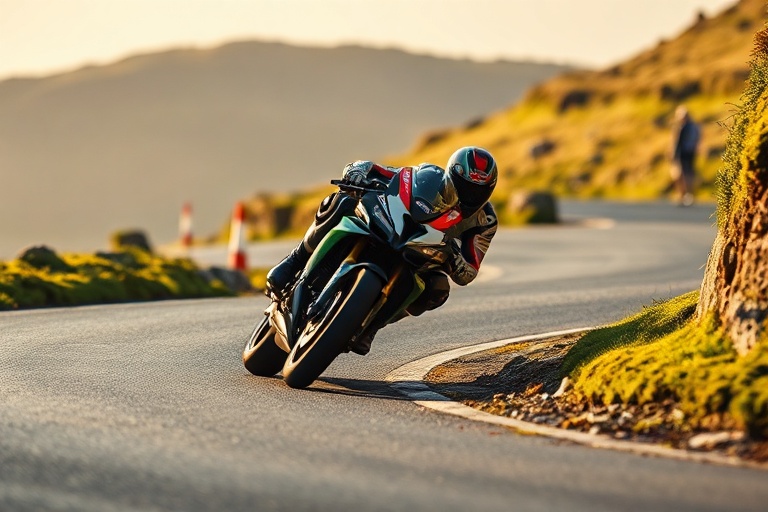
The Isle of Man TT isn’t just another motorcycle race—it’s a brutal test of man and machine against some of the most unforgiving roads on Earth. Every May and June, the world’s top riders converge on the 37.73-mile Snaefell Mountain Course, a public road network that demands absolute precision at speeds exceeding 200 mph. This isn’t circuit racing; it’s a high-stakes ballet performed on tarmac that doubles as living room floors and sheep crossings.
The event’s origins trace back to 1907, when the first trials were held on a 15.8-mile course. Since then, it has evolved into the most prestigious—and dangerous—race in motorcycle sport. The TT’s unique format, where riders tackle the same course six times in a single week, creates an unparalleled challenge. Each lap becomes a separate battle against fatigue, weather, and the course’s relentless sequence of blind crests and abrupt corners.
The Course: Where Roads Become a Race Track
The Mountain Course isn’t just long—it’s psychologically demanding. It begins in the quiet seaside town of Douglas before climbing through 264 corners that range from gentle bends to 90-degree hairpins. The most famous sections tell stories of triumph and tragedy: the sweeping right-hander at Ballagarey, the treacherous left at the Gooseneck, the flat-out run through the 32nd Milestone. Each corner has its own personality, demanding different techniques and courage levels.
The weather adds another layer of complexity. Riders can experience bright sunshine, thick fog, and sideways rain within a single lap. The course’s elevation changes—from sea level to 1,300 feet at the Bungalow—create microclimates that can shift in minutes. This unpredictability is why even the most experienced TT racers speak of it in almost spiritual terms. As one veteran put it, “The Mountain doesn’t care who you are. It either accepts you or rejects you.”
Why the TT Stands Apart from Other Races
Most motorcycle races take place on dedicated circuits designed for safety and spectator enjoyment. The TT uses public roads that were never meant for racing. This fundamental difference creates several unique aspects:
- Lap Times Matter More Than Position: With races lasting over an hour, riders aren’t just competing against each other—they’re racing against the clock and their own endurance.
- Public Roads Bring Real Consequences: A momentary lapse in concentration doesn’t result in a trip to the gravel trap—it can mean a high-speed impact with a stone wall or another vehicle.
- No Room for Error: The narrow roads and lack of runoff areas mean that even a small mistake can have catastrophic consequences, making every corner feel like a life-or-death decision.
- Cultural Significance: The TT is woven into the fabric of Manx identity. Locals don’t just watch the race—they live it, with entire communities transforming into temporary racing hubs.
The Human Factor: What It Takes to Master the TT
Riding the Mountain Course at speed requires skills that go beyond mere motorcycle control. The physical demands are extreme—riders experience forces up to 4.5G through the Gooseneck, while the mental strain of maintaining focus for hours at a time pushes even the toughest competitors to their limits.
Most TT riders develop a deep, almost mystical relationship with the course. They study each corner’s camber and surface changes like scholars poring over ancient texts. The best riders don’t just memorize the line—they develop an intuitive understanding of how the bike will behave in each section, adjusting their technique based on weather, tire wear, and their own physical state.
The learning curve is notoriously steep. Even world champions often struggle in their first TT attempts. As one rider explained, “The first time I rode the Mountain Course, I felt like a child trying to solve a Rubik’s Cube while riding at 180 mph. Every corner was a new lesson.”
The Evolution of TT Machinery
The bikes that tackle the TT today bear little resemblance to those from the early 20th century. Modern Superbikes generate over 200 horsepower and weigh less than 400 pounds, allowing them to accelerate from 0-60 mph in under three seconds. Yet despite these technological advances, the fundamental challenge remains unchanged: translating that power into speed while maintaining control on roads that haven’t changed in decades.
Manufacturers treat the TT as the ultimate proving ground. A bike that can dominate here can handle anything. The lessons learned on the Mountain Course often translate directly to production bikes, making TT victories a powerful marketing tool.
Beyond the Racing: The TT’s Broader Impact
The Isle of Man TT isn’t just about motorcycle racing—it’s a cultural touchstone that has influenced motorsport in ways few events can match. Its legacy extends far beyond the island itself, shaping everything from road racing regulations to motorcycle design philosophy.
One of the TT’s most significant contributions has been its role in motorcycle safety. The event’s high-profile accidents have repeatedly forced the racing world to confront uncomfortable truths about rider protection. Innovations like airbag leathers and advanced helmet designs have often been pioneered in response to TT tragedies before filtering down to mainstream motorcycle gear.
The economic impact on the Isle of Man is substantial. Each year, the TT injects tens of millions of pounds into the local economy, supporting everything from hotels to local businesses. The event creates jobs not just during race week but throughout the year, as businesses prepare for the influx of visitors.
Yet the TT also faces challenges. Environmental concerns about traffic and emissions have led to calls for changes in how the event is run. Some critics argue that the race’s traditional format may need to evolve to survive in an increasingly safety-conscious world. The Isle of Man government has responded by implementing stricter regulations around noise levels and track maintenance, but the fundamental question remains: can the TT maintain its unique character while adapting to modern expectations?
The TT’s Global Influence on Motorcycle Culture
The TT’s prestige has made it a magnet for riders from around the world. Countries as diverse as Japan, Australia, and the United States have sent their top competitors to tackle the Mountain Course. This international participation has created a global community of TT enthusiasts who share a deep respect for the event’s traditions and challenges.
Many of today’s motorcycle manufacturers trace their racing roots back to TT success. The event’s history is filled with legendary names like Joey Dunlop, Mike Hailwood, and John McGuinness—riders whose exploits have become the stuff of motorsport folklore. Their stories continue to inspire new generations of racers and fans alike.
For motorcycle enthusiasts, the TT represents the purest form of racing. It’s a celebration of skill, courage, and mechanical sympathy in a world increasingly dominated by electronics and telemetry. In an era where most races are carefully controlled spectacles, the TT remains wild and unpredictable—a reminder of what motorcycle racing used to be.
Conclusion: Why the TT Still Matters
The Isle of Man TT endures because it represents something fundamental about human nature: our desire to push boundaries and test our limits. In a world where most aspects of life are carefully controlled and regulated, the TT stands as a raw, unfiltered challenge where the only judge is the clock and the only jury is gravity.
Yet the TT’s continued existence isn’t guaranteed. As safety standards rise and environmental concerns grow, the event must constantly justify its place in the modern sporting landscape. The Isle of Man government and TT organizers have shown remarkable adaptability, implementing changes while preserving the event’s unique character.
For those who understand its magic, the TT represents the pinnacle of motorcycle racing—a place where legends are made and where the line between triumph and tragedy is thinner than anywhere else on Earth. As long as there are riders willing to accept its challenge, the Mountain Course will continue to claim its tribute, year after year.
Perhaps that’s why the TT resonates so deeply with fans around the world. It’s not just about speed or competition—it’s about the human spirit’s relentless drive to conquer the impossible, one corner at a time.
For those interested in exploring more about motorcycle racing culture and its broader implications, visit Dave’s Locker Automotive section for in-depth analysis and features on motorsport’s most fascinating stories.