Mississippi Tornadoes: Why the South Faces Unpredictable Storms
“`html
Mississippi Tornadoes: Nature’s Unpredictable Fury in the American South
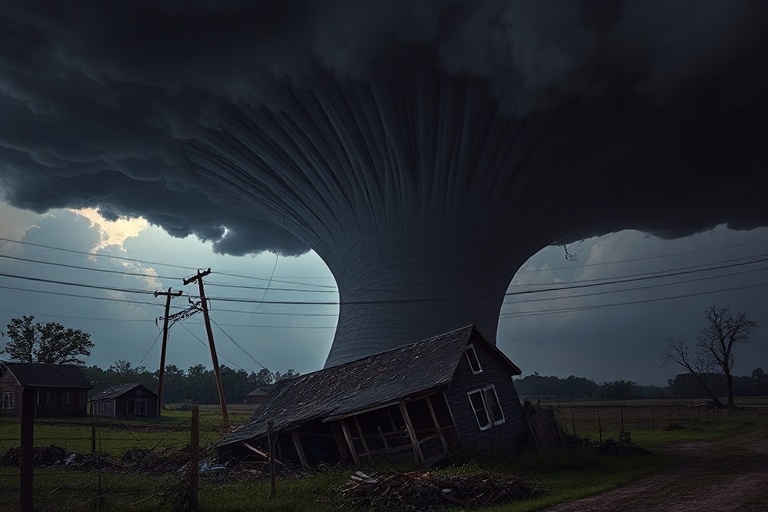
The Mississippi River Valley has long been a region where the forces of nature command respect. Its flatlands and humid climate create a volatile atmosphere, particularly during spring and early summer. Tornadoes are an annual reality here, carving paths of destruction that reshape communities overnight. While technology has improved early warning systems, the unpredictability of these storms remains a stark reminder of nature’s dominance.
Mississippi sits in the heart of what meteorologists call “Dixie Alley,” a zone prone to particularly intense tornado activity. Unlike the more widely recognized “Tornado Alley” in the Great Plains, Dixie Alley experiences tornadoes that are often more erratic, forming in clusters and striking with little warning. This difference stems from the region’s unique geography and atmospheric conditions.
The Science Behind Mississippi’s Tornadoes
The formation of tornadoes in Mississippi is a complex interplay of geography and meteorology. The state’s proximity to the Gulf of Mexico provides a steady supply of warm, moist air, which clashes with cooler, drier air masses moving southward from Canada. This collision creates the instability necessary for severe thunderstorms, which can spawn tornadoes.
Tornadoes in Mississippi often form along squall lines—long bands of thunderstorms that stretch for hundreds of miles. These lines can produce multiple tornadoes in quick succession, overwhelming local resources. The terrain of Mississippi, with its rolling hills and dense forests, can obscure visibility, making it difficult to spot approaching storms until they are dangerously close.
According to the National Centers for Environmental Information, Mississippi averages 25 to 30 tornadoes per year, though some seasons see far higher numbers. The most destructive outbreaks often occur in April, when atmospheric conditions are most favorable for tornado development. The 2011 Super Outbreak, one of the deadliest in U.S. history, produced 11 tornadoes in Mississippi alone, including an EF-5 that devastated the town of Smithville.
A History of Destruction and Resilience
The legacy of tornadoes in Mississippi is etched into the state’s history, with some storms becoming defining moments for entire generations. The 1936 Tupelo Tornado remains one of the deadliest in U.S. history, killing 216 people and injuring over 700. The storm’s path through the heart of Tupelo, then a segregated city, highlighted the vulnerabilities of Black communities, who were often housed in less sturdy structures with fewer resources to seek shelter.
Decades later, the 2011 Smithville Tornado demonstrated how far warning systems had come—and how much farther they still needed to go. An EF-5 tornado, the strongest on the Enhanced Fujita Scale, tore through the small town at 70 mph, destroying nearly every structure in its path. The storm’s rapid formation caught many off guard, despite advanced radar technology. The disaster underscored the need for improved public education on tornado preparedness, particularly in rural areas where sirens and alerts may not reach everyone.
In recent years, Mississippi has seen a shift in tornado patterns. While the traditional peak remains in spring, there has been an uptick in tornado activity during the fall and winter months. This change aligns with broader trends observed across the southeastern U.S., where warming temperatures and shifting jet streams are altering storm dynamics. Researchers are still unraveling the connections between climate change and tornado frequency, but the data suggests that Mississippi may face an increasing number of extreme weather events in the coming decades.
The Human Impact: Stories of Survival and Loss
Behind the statistics and meteorological data are the stories of people whose lives are forever changed by tornadoes. For many in Mississippi, tornado preparedness is not just a matter of drills and emergency kits—it’s a way of life. Communities have developed unique coping mechanisms, from reinforced storm shelters in backyards to informal networks of neighbors checking on one another after warnings are issued.
One such community is Enterprise, Mississippi, where residents have banded together to rebuild after multiple tornadoes. In 2020, an EF-3 tornado tore through the town, damaging homes and businesses. Rather than waiting for external aid, locals organized a grassroots recovery effort, with volunteers from nearby towns pitching in to clear debris and repair roofs. Their resilience reflects a broader cultural trait in the South: a deep-seated belief in community over individualism, even in the face of disaster.
Yet, the emotional toll of tornadoes cannot be overstated. Survivors often describe a sense of survivor’s guilt, particularly when neighbors or family members are lost. Mental health professionals in Mississippi have noted a rise in post-traumatic stress disorder (PTSD) and anxiety among tornado survivors, especially children who may struggle with fear of future storms. Organizations like the American Red Cross provide critical support, offering counseling and financial assistance to those rebuilding their lives.
Global Perspectives: How Mississippi Compares to Other Tornado Hotspots
Mississippi’s tornadoes are not unique, but they occur in a region with distinct cultural and socioeconomic factors that shape their impact. Comparing Mississippi to other tornado-prone areas around the world reveals both similarities and differences in how societies prepare for and recover from these disasters.
In Bangladesh, for example, tornadoes are less frequent but often more deadly due to the country’s dense population and limited infrastructure. The 1989 Manikganj tornado killed over 1,300 people, making it one of the deadliest in history. Like Mississippi, Bangladesh faces challenges in early warning dissemination, though mobile technology is gradually improving alert systems.
In Argentina, the Pampas region experiences tornadoes that are similar in intensity to those in Dixie Alley. However, the country’s robust emergency response systems and widespread use of storm shelters have reduced fatalities. This highlights how preparedness—rather than geography alone—can mitigate disaster impacts.
Meanwhile, in Japan, tornadoes are relatively rare but growing more frequent due to climate change. The country’s advanced infrastructure and strict building codes have limited casualties, though rural areas remain vulnerable. Japan’s approach to tornado preparedness offers lessons for Mississippi, particularly in urban planning and community education.
One striking contrast is the role of insurance. In the U.S., tornado damage is often covered by homeowners’ insurance, though disputes over payouts can drag on for years. In contrast, many countries with high tornado risk lack comprehensive insurance systems, leaving survivors to rely on government aid or international aid organizations. This disparity underscores the broader issue of disaster equity—who bears the financial burden of nature’s fury.
Looking Ahead: Preparing for an Uncertain Future
The future of tornadoes in Mississippi is uncertain, but one thing is clear: adaptation will be key. Climate scientists predict that the Southeast U.S. will see an increase in severe weather events, including tornadoes, as global temperatures rise. This means communities must prioritize resilience in both infrastructure and public policy.
Several initiatives are already underway. The Mississippi Emergency Management Agency (MEMA) has expanded its storm shelter program, providing grants to low-income families to install underground shelters. Schools and public buildings are being retrofitted to meet enhanced safety standards, while local governments are investing in better warning systems for rural areas.
Technology is also playing a crucial role. Advances in radar, such as dual-polarization Doppler, have improved forecasters’ ability to predict tornado formation. Meanwhile, smartphone apps like NOAA Weather Radio and Tornado Shield provide real-time alerts to users, even in remote areas. Social media has become an invaluable tool for disseminating information, with platforms like Twitter and Facebook used to share updates and coordinate rescues during storms.
Yet, technology alone cannot eliminate risk. Public education remains the most effective tool for saving lives. Schools in Mississippi now incorporate tornado drills into their emergency plans, and organizations like the Community Emergency Response Teams (CERT) train volunteers to assist during disasters. These efforts are slowly changing the culture around tornado preparedness, shifting the focus from reaction to prevention.
As Mississippi continues to grapple with the threat of tornadoes, it does so with a mix of caution and determination. The state’s history is marked by destruction, but also by resilience. From the ruins of Tupelo and Smithville to the rebuilding efforts in Enterprise, Mississippians have shown time and again that they can weather even the fiercest storms. The challenge now is to ensure that future generations are not just survivors, but prepared and empowered to face whatever nature throws their way.