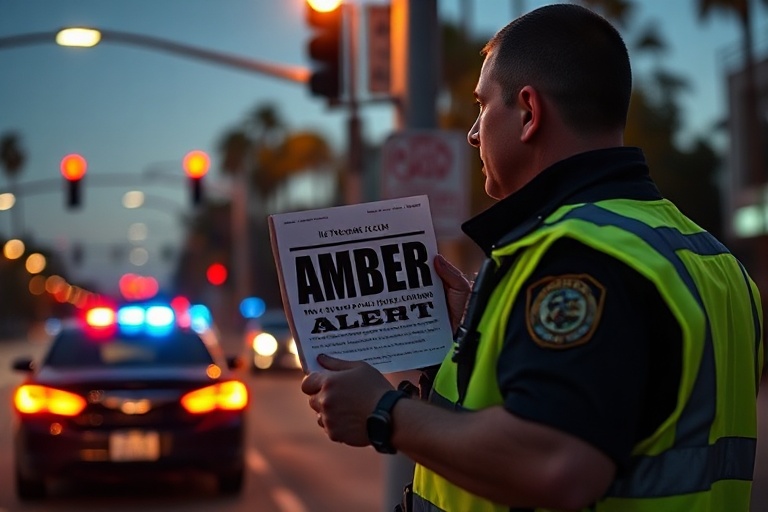
The AMBER Alert system in Los Angeles has become a critical tool in the urgent effort to recover missing and abducted children. Since its implementation in California in 2002, the program has evolved into a highly coordinated network involving law enforcement, media outlets, and public participation. Los Angeles, with its dense population and complex urban landscape, presents unique challenges and opportunities for this lifesaving initiative.
The system operates under the AMBER Alert Program, named in memory of Amber Hagerman, a 9-year-old girl abducted and murdered in Texas in 1996. California adopted the program as part of a statewide initiative to enhance child safety, and Los Angeles quickly became one of its most active regions. The system is designed to issue urgent bulletins when a child is believed to be in imminent danger of serious bodily harm or death.
How the AMBER Alert System Works in Los Angeles
The AMBER Alert process in Los Angeles begins when local law enforcement confirms a child abduction meets specific criteria. These criteria include a belief that the child is in danger and sufficient descriptive information about the child, abductor, or vehicle involved. Once activated, the alert is distributed through multiple channels:
- Emergency Alert System (EAS): Alerts interrupt television and radio broadcasts across the region.
- Wireless Emergency Alerts (WEA): Notifications are sent directly to mobile phones within the affected area.
- Digital Billboards: Messages appear on electronic billboards along highways and major roads.
- Social Media: Platforms like Twitter, Facebook, and local news websites amplify the alert.
- Local Media: Television and radio stations broadcast the alert repeatedly.
The California Highway Patrol (CHP) manages the statewide AMBER Alert network, while local agencies like the Los Angeles Police Department (LAPD) and the Los Angeles County Sheriff’s Department (LASD) coordinate investigations. Public response is crucial. Tips from residents often lead to breakthroughs, and the system relies on community awareness to succeed.
In Los Angeles, the system has proven effective due to the region’s robust infrastructure and high level of public engagement. The city’s diverse neighborhoods, from dense urban centers to sprawling suburbs, require a flexible approach to alert distribution. The integration of technology, such as real-time traffic updates and GPS-based alerts, has further enhanced the system’s reach.
The Role of Technology in Modern AMBER Alerts
Technology has transformed the AMBER Alert system in Los Angeles, making it faster and more precise. One of the most significant advancements is the integration of technology into alert distribution. Wireless Emergency Alerts (WEA), introduced in 2012, allow for instant notifications to mobile devices based on geographic location. This ensures that only people in the relevant area receive the alert, reducing unnecessary panic and improving response times.
Social media platforms have also become essential tools. The LAPD and LASD maintain active profiles on Twitter and Facebook, where they share AMBER Alerts alongside other public safety updates. These platforms enable rapid dissemination of information, including photos and vehicle descriptions. In some cases, community members have shared alerts on their own, expanding the network’s reach beyond official channels.
Another technological innovation is the use of digital billboards. The Los Angeles Department of Transportation (LADOT) works with local authorities to display AMBER Alerts on electronic billboards along major highways like the 405 and 101. These high-visibility messages ensure that drivers are aware of the situation, even when they are not actively monitoring other channels.
The system also leverages data analytics to improve response times. By analyzing patterns in abduction cases, law enforcement can identify high-risk areas and times, allowing for more targeted alert distribution. This data-driven approach has contributed to the recovery of several children in Los Angeles over the past decade.
Challenges and Criticisms of the AMBER Alert System
Despite its successes, the AMBER Alert system in Los Angeles faces challenges. One of the most significant is alert fatigue. With frequent notifications, some residents may become desensitized to the urgency of the messages. This phenomenon, known as “alert overload,” can lead to slower public response times and reduced effectiveness over time.
Another issue is the reliance on descriptive information. AMBER Alerts require specific details about the child, abductor, or vehicle to be effective. In cases where such information is limited or outdated, the alert may not provide enough actionable data for the public to assist. This was evident in the 2018 case of a missing 10-year-old boy in Los Angeles, where the initial alert lacked critical details, delaying recovery efforts.
Privacy concerns have also been raised, particularly regarding the use of Wireless Emergency Alerts. While these notifications are critical for public safety, some critics argue that they blur the line between government communication and personal privacy. The Federal Communications Commission (FCC) has addressed these concerns by limiting the frequency and scope of WEA notifications.
Additionally, the system’s effectiveness varies across different communities. In some neighborhoods, language barriers and limited access to technology can hinder alert distribution. The Los Angeles Police Department has worked to address this by partnering with community organizations to translate alerts into multiple languages and ensure accessibility for all residents.
Success Stories and the Future of AMBER Alerts in Los Angeles
The AMBER Alert system in Los Angeles has a strong track record of success. Since its inception, the program has contributed to the recovery of dozens of children across the region. One notable case occurred in 2020, when an AMBER Alert led to the rescue of a 5-year-old girl who had been abducted by her non-custodial father. The alert, which included a photo of the child and the suspect’s vehicle, prompted a member of the public to call 911 after spotting the car on the freeway. The swift response ensured the child’s safe return.
Another success story unfolded in 2019, when an AMBER Alert helped locate a missing 6-year-old boy within hours of its issuance. The alert included a detailed description of the suspect’s vehicle, and a motorist recognized it from a local gas station. The child was found unharmed, and the suspect was arrested shortly after.
Looking ahead, the future of AMBER Alerts in Los Angeles may involve further integration of artificial intelligence and machine learning. These technologies could help predict high-risk abduction scenarios and optimize alert distribution. Additionally, the system may expand to include more partnerships with private sector companies, such as ride-sharing services and navigation apps, to enhance public engagement.
The AMBER Alert system remains a cornerstone of child protection in Los Angeles. Its success hinges on the collaboration between law enforcement, media, and the public. As technology continues to evolve, so too will the system’s ability to adapt and respond to the ever-changing landscape of child abductions. For now, the program stands as a testament to what can be achieved when communities unite for a common cause.
For more insights into how technology shapes emergency response systems, visit our Technology category. To learn about other public safety initiatives, explore our News category.