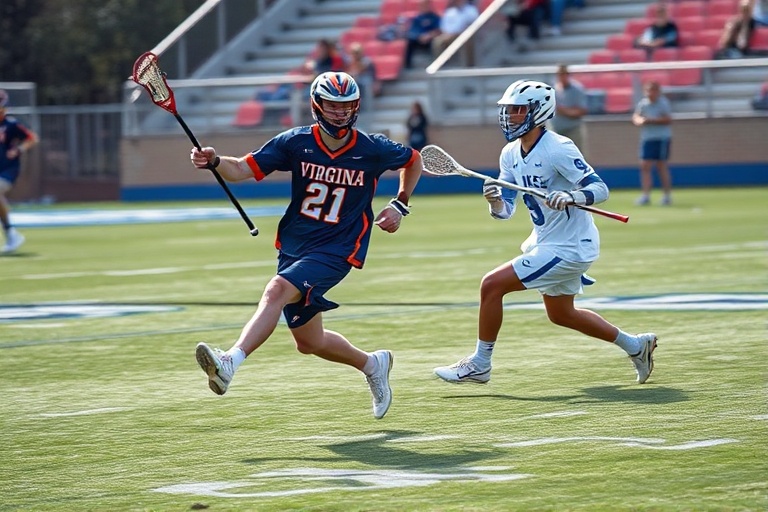
Lacrosse, often called “the fastest sport on two feet,” has deep roots in Indigenous North American culture. It was first documented by European settlers in the 17th century, but its modern form began evolving in the 19th century at Canadian and American universities. Today, NCAA lacrosse stands as a showcase of athletic excellence, cultural exchange, and institutional tradition.
The National Collegiate Athletic Association (NCAA) governs men’s and women’s lacrosse at the Division I, II, and III levels. What started as a regional sport confined to the Northeast has expanded across the United States and beyond. With over 700 collegiate programs and growing participation in high schools, lacrosse is one of the fastest-growing team sports in the country. Its integration into the NCAA reflects broader trends in youth sports development, institutional investment, and fan engagement.
The Structure of NCAA Lacrosse: Divisions, Seasons, and Championships
NCAA lacrosse operates across three divisions, each with distinct competitive standards and institutional priorities. Division I features the highest level of competition, with powerhouse programs like Duke, Maryland, and Virginia consistently vying for national titles. These teams are often backed by significant athletic budgets and national broadcast exposure.
Division II and III programs, while less resourced, provide opportunities for student-athletes at institutions focused on academic mission and holistic development. The NCAA oversees a structured season that culminates in national championships in both men’s and women’s lacrosse. The men’s championship began in 1971, while the women’s tournament started in 1982. Both events draw thousands of spectators and showcase elite-level play.
The NCAA also governs recruiting, eligibility, and academic standards. Student-athletes must meet minimum GPA and core course requirements to compete, reinforcing the organization’s commitment to education. This structure has helped lacrosse maintain its academic integrity while growing in popularity.
Key Features of NCAA Lacrosse Structure:
- Three divisions with different levels of competition and institutional focus
- National championships in both men’s and women’s lacrosse
- Strict academic eligibility rules enforced by the NCAA
- Recruiting calendars that regulate contact between coaches and prospective athletes
- Gender equity compliance under Title IX, shaping team funding and participation
Cultural Impact: How Lacrosse Transcends Sport in North America
Lacrosse occupies a unique space in North American sports culture. While it lacks the global footprint of soccer or basketball, it commands deep loyalty within its community. The sport’s Indigenous origins are increasingly recognized and honored, with programs like the Iroquois Nationals representing Native nations in international competition. The NCAA has worked with Indigenous leaders to acknowledge these roots and promote cultural education around the game.
At the collegiate level, lacrosse fosters strong school spirit and alumni engagement. Rivalries such as Johns Hopkins vs. Maryland or Syracuse vs. Cornell draw passionate crowds and media attention. The growth of lacrosse in the Mid-Atlantic and Great Lakes regions has made it a cultural staple, particularly in areas with strong high school participation.
Women’s lacrosse, in particular, has seen a surge in popularity and visibility. The NCAA Women’s Lacrosse Championship is now broadcast on major networks, and programs like Northwestern and Boston College have built national dynasties. This growth reflects broader trends in women’s sports, where visibility and investment continue to rise.
Global Expansion: Lacrosse Beyond U.S. Borders
While NCAA lacrosse remains centered in the United States, the sport is gaining traction worldwide. Canada has long been a lacrosse stronghold, with teams competing in NCAA conferences and producing top-tier talent. The Canadian University Field Lacrosse Association (CUFLA) serves as a parallel structure to the NCAA, feeding athletes into U.S. programs.
Europe has emerged as a growing hub for lacrosse development. Countries like England, Germany, and Israel have established national teams and club systems. The European Lacrosse Federation (ELF) oversees competition and development, with youth programs introducing the sport to new generations. Israel, in particular, has become a lacrosse powerhouse in recent years, qualifying for multiple World Championships and producing NCAA standout players.
In Asia, Japan and South Korea have developed competitive programs, supported by partnerships with U.S. coaches and exchanges with NCAA teams. The sport’s inclusion in the World Games and potential future Olympic consideration has fueled international interest. While lacrosse remains a niche sport globally, its expansion reflects broader trends in the globalization of American college sports.
Regions Where NCAA Lacrosse Influence Is Growing:
- Canada: Established lacrosse culture with CUFLA and ties to NCAA programs
- Europe: Rapid growth in England, Germany, and Israel, driven by youth development
- Australia & New Zealand: Emerging programs with ties to U.S. exchanges
- Asia: Japan and South Korea investing in national teams and youth academies
- Latin America: Early-stage growth with U.S.-trained athletes returning home
The Future of NCAA Lacrosse: Trends and Challenges
The future of NCAA lacrosse will be shaped by several key trends. First, technological innovation is transforming how the sport is played and viewed. Teams are increasingly using data analytics to optimize training and game strategies. Wearable technology, video review tools, and virtual reality training are becoming standard in elite programs. These tools help athletes refine technique and reduce injury risk while giving coaches deeper insights into performance.
Media exposure is also evolving. While lacrosse has historically relied on regional broadcasts and streaming, platforms like ESPN+ and the ACC Network have increased national visibility. Social media has become a vital tool for player recruitment and fan engagement, with athletes building personal brands through platforms like Instagram and TikTok. This digital shift is helping lacrosse reach younger audiences and diversify its fan base.
However, challenges remain. Participation costs can be high, limiting access for athletes from lower-income backgrounds. The sport’s reliance on private club teams for youth development has created disparities in opportunity. Additionally, Title IX compliance continues to shape program funding and participation, particularly for women’s teams. Addressing these issues will be critical to ensuring sustainable growth.
Another challenge is maintaining the balance between tradition and innovation. Lacrosse’s cultural significance—especially its Indigenous roots—must be honored as the sport grows. The NCAA and member institutions are increasingly incorporating land acknowledgments and educational programs to respect these origins. This approach ensures that lacrosse’s expansion does not come at the expense of its heritage.
Conclusion: A Sport on the Rise
NCAA lacrosse stands at a pivotal moment. From its origins in Indigenous communities to its current status as a collegiate powerhouse, the sport has evolved while preserving its cultural identity. Its expansion beyond U.S. borders demonstrates its potential on the global stage. With increasing media exposure, technological integration, and international participation, lacrosse is poised for continued growth.
For fans, athletes, and institutions, lacrosse offers more than just competition—it represents tradition, innovation, and cultural exchange. As the sport continues to evolve, its ability to adapt while honoring its roots will determine its long-term success. Whether you’re a longtime follower or a newcomer, NCAA lacrosse invites you to experience one of the most dynamic and historically rich sports in North America.
For more insights into collegiate sports and cultural trends, visit our Sports category on Dave’s Locker. Explore how lacrosse compares to other emerging sports in the NCAA landscape and stay updated on the latest developments in the world of college athletics.