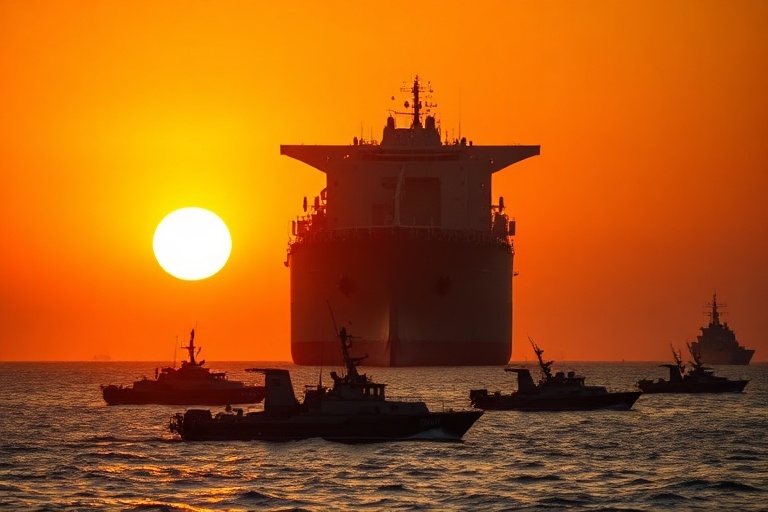
Strait of Hormuz: Why This Chokepoint Still Shapes Global Energy Markets
“`html
Strait of Hormuz: Why This Chokepoint Still Shapes Global Energy Markets
Published on October 12, 2024 | Updated October 12, 2024
The Strait of Hormuz remains one of the world’s most strategically sensitive waterways. Despite shifts in global energy policies and technological advancements, this narrow passage between Oman and Iran continues to influence oil prices, trade routes, and geopolitical stability. Recent tensions have once again thrust the strait into the spotlight, raising concerns about supply disruptions and the broader implications for energy security.
The Strait’s Role in Global Energy Flows
Every day, approximately 20-30% of the world’s seaborne oil passes through the Strait of Hormuz. This makes it the single most important chokepoint for global energy markets. The strait connects the Persian Gulf to the Gulf of Oman and, ultimately, the Arabian Sea. Its shallow waters and narrow width—just 21 miles at its narrowest point—create a bottleneck that no alternative shipping route can fully replace.
The volume of oil flowing through the strait fluctuates with geopolitical events, economic demand, and regional conflicts. In 2023, the U.S. Energy Information Administration estimated that about 17.2 million barrels per day transited the strait, accounting for roughly 20% of global petroleum liquids consumption. Any disruption here would send shockwaves through markets, leading to price volatility and potential shortages.
This critical role has made the strait a focal point for both state actors and non-state groups. Military patrols by the U.S., U.K., and other nations aim to ensure safe passage, but the risk of conflict—or even accidental escalation—remains ever-present.
Recent Tensions and Their Origins
Escalations in 2024 have underscored the strait’s volatility. In April, Iran seized an Israeli-linked container ship, the MSC Aries, in response to what it called a violation of its sovereignty. The incident followed months of tit-for-tat actions between Iran and Israel, including cyberattacks, drone strikes, and naval confrontations. While the ship was eventually released, the episode highlighted how quickly maritime security can deteriorate.
Iran has long used the strait as a pressure point in its broader standoff with Western powers. Its military doctrine includes the capability to disrupt shipping if threatened, a strategy that has kept adversaries guessing. The Islamic Revolutionary Guard Corps (IRGC) has demonstrated this through missile tests, naval exercises, and occasional harassment of commercial vessels. In June 2024, the U.S. Navy reported multiple close encounters with Iranian boats in the strait, raising concerns about unintended escalation.
Meanwhile, regional allies of Iran, such as the Houthis in Yemen, have also targeted shipping in the Red Sea and Gulf of Aden. While these attacks are not directly in the Strait of Hormuz, they contribute to a broader climate of instability that could spill over into the critical waterway.
Key Factors Driving Current Risks
- Iran’s Nuclear Ambitions: Negotiations over Iran’s nuclear program have stalled, leaving the country with advanced uranium enrichment capabilities. This increases the risk of a military response from Israel or the U.S., which could spill into the strait.
- Regional Proxy Conflicts: The war in Gaza and tensions between Israel and Hezbollah in Lebanon add another layer of complexity. Any wider regional conflict could draw in Iran and its proxies, disrupting shipping.
- U.S. Military Presence: The U.S. Fifth Fleet, based in Bahrain, patrols the strait to deter aggression. However, its presence is a constant irritant for Iran, which views it as an infringement on its sovereignty.
- Alternative Routes Are Limited: While pipelines like the Abu Dhabi Crude Oil Pipeline can bypass parts of the strait, no infrastructure exists to fully replace it. The strait remains indispensable for supertankers and LNG carriers.
Broader Implications for Energy and Trade
The strait’s instability is not just a regional issue—it has global repercussions. Oil price spikes, even if temporary, can ripple through economies, affecting inflation, consumer spending, and industrial output. In 2019, attacks on Saudi oil facilities temporarily halved the kingdom’s production, sending Brent crude prices soaring by nearly 20% in a single day. While the global oil market has diversified since then, a similar disruption in the Strait of Hormuz could still trigger a supply crisis.
Beyond oil, the strait is a critical artery for liquefied natural gas (LNG). Qatar, the world’s largest LNG exporter, relies on the strait to ship its gas to Asia and Europe. Any prolonged closure or disruption could tighten global gas markets, particularly in winter when demand surges. Europe, still recovering from its energy crisis following Russia’s invasion of Ukraine, would be especially vulnerable.
The strait’s role in trade extends beyond energy. It handles millions of tons of goods annually, including electronics, automobiles, and raw materials. A prolonged closure could disrupt supply chains, leading to delays and increased costs for industries worldwide. The COVID-19 pandemic demonstrated how vulnerable global trade is to logistical bottlenecks. The Strait of Hormuz represents a far greater risk.
What Could a Closure Look Like?
While a total blockade is unlikely due to the risks of military retaliation, partial disruptions are plausible. Iran could employ tactics such as:
- Mine Warfare: The IRGC has experience laying naval mines, which could target specific ships or narrow channels.
- Swarm Boat Attacks: Small, fast boats equipped with missiles or explosives could harass commercial vessels, forcing them to slow down or reroute.
- Missile Strikes: Iran could target key infrastructure, such as oil terminals or military installations, to demonstrate its capabilities.
- Legal Obstructions: Iran could detain ships under pretexts like “illegal cargo” or “environmental violations,” creating delays and uncertainty.
Even a temporary disruption would force shipping companies to reroute around the Cape of Good Hope in Africa, adding weeks to voyages and significantly increasing costs. Insurance premiums for vessels transiting the region could also rise, further straining global trade.
Looking Ahead: Can Diplomacy Prevent a Crisis?
Diplomatic efforts to ease tensions have yielded mixed results. The 2015 nuclear deal (JCPOA) initially reduced tensions, but its collapse in 2018 and subsequent U.S. sanctions have pushed Iran to adopt a more aggressive posture. Recent backchannel talks between the U.S. and Iran have focused on de-escalation, but progress remains fragile.
For now, the most likely scenario is a continuation of “gray zone” tactics—harassment, seizures, and low-level conflicts that avoid outright war but keep the strait in a state of perpetual risk. The U.S. and its allies are unlikely to withdraw their military presence, given the strait’s importance. Meanwhile, Iran will continue to use the strait as a lever in its broader standoff with the West.
The international community’s response has been reactive rather than proactive. Efforts to diversify energy sources, such as expanding U.S. shale production or accelerating renewable energy projects, could reduce reliance on the strait over time. However, these shifts take years to materialize. In the short term, the world remains dependent on the safe passage of ships through the Strait of Hormuz.
Conclusion
The Strait of Hormuz is more than a geographic feature—it is a pressure point in the global energy system. Its narrow waters have shaped decades of geopolitical strategy, military planning, and economic policy. While the world’s energy mix is evolving, the strait’s dominance in oil and gas transit ensures its continued relevance. The question is not whether the strait will remain critical, but how long the current cycle of tension and deterrence can persist without a miscalculation.
For policymakers, the challenge is clear: balance deterrence with diplomacy to prevent a crisis that could roil markets and destabilize regions. For businesses, the lesson is equally stark—prepare for volatility, diversify supply chains, and monitor the strait’s risks as closely as any other geopolitical hotspot. The world cannot afford to ignore this chokepoint, no matter how much the energy landscape changes.
As the situation develops, one thing is certain: the Strait of Hormuz will remain at the heart of the world’s energy and security debates for years to come.