Ukraine War Update: Frontlines, Human Cost, and Global Impact
“`html
Ukraine War: Mapping the Shifting Frontlines and Diplomatic Maneuvers
The conflict in Ukraine continues to evolve with localized advances, persistent humanitarian crises, and high-stakes negotiations. More than three years after the full-scale invasion, the war remains one of the most complex geopolitical challenges of the 21st century. Recent months have seen both incremental territorial shifts and diplomatic deadlocks that shape the trajectory of the fighting and international responses.
Recent Military Developments on the Ground
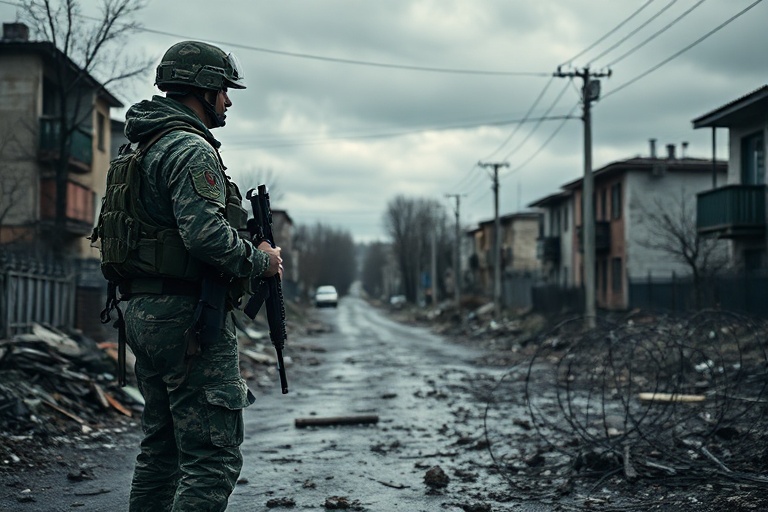
Ukraine’s 2024 counteroffensive, launched in late spring, initially aimed to reclaim territory in the south, particularly around Kherson and Zaporizhzhia. While initial momentum slowed due to entrenched Russian defenses and minefields, Ukrainian forces have since made measured gains in localized areas, particularly near the village of Robotyne in the Zaporizhzhia region. Satellite imagery and reports from the Institute for the Study of War indicate that Ukrainian units have pushed Russian troops back by several kilometers in certain sectors, though heavy casualties and equipment losses have been reported on both sides.
Russian forces, meanwhile, have concentrated their efforts on consolidating control in occupied regions, particularly in Donetsk and Luhansk. The use of long-range strikes, including drones and missiles, has increased, targeting Ukrainian infrastructure such as power grids and industrial sites. According to Ukraine’s Air Force Command, Russia launched over 1,200 drone attacks in June 2024 alone, marking a significant uptick from previous months. Civilian casualties have risen in frontline cities like Avdiivka and Chasiv Yar, where shelling has intensified.
International observers note that both armies are operating with dwindling manpower and resources. Ukraine’s ability to replenish its forces depends heavily on Western military aid, while Russia has turned to domestic production and foreign partnerships—particularly with Iran and North Korea—for drones, artillery, and ammunition. The reliance on foreign support underscores the war’s globalized nature, extending far beyond the immediate battlefield.
Humanitarian Impact and Civilian Life
The war has displaced over 6.3 million Ukrainians internally and forced more than 6.4 million to flee the country, according to the United Nations High Commissioner for Refugees (UNHCR). Cities like Mariupol, once a thriving port metropolis, now lie in ruins, with entire neighborhoods reduced to rubble. In areas under Ukrainian control, reconstruction efforts are underway, but progress is slow due to ongoing strikes and financial constraints. The World Food Programme reports that nearly 15% of Ukraine’s population faces food insecurity, exacerbated by blocked grain exports and disrupted supply chains.
Healthcare systems have been severely strained, with hospitals in conflict zones operating under constant threat of bombardment. The World Health Organization has documented over 1,000 attacks on medical facilities since February 2022. Mental health services, too, are overwhelmed, as trauma and displacement continue to affect millions. NGOs such as Doctors Without Borders have scaled up psychological support programs, but demand far exceeds capacity.
Children have been disproportionately affected. UNICEF estimates that nearly 3.5 million Ukrainian children have been displaced, with many experiencing interrupted education and exposure to violence. Schools in frontline regions have been forced to operate in shifts or remotely, while those in safer areas struggle with overcrowding and limited resources. The long-term psychological and educational consequences of the war on this generation remain a looming crisis.
Diplomatic Stalemates and Global Alliances
International efforts to broker peace have stalled, with negotiations repeatedly collapsing over preconditions and territorial demands. Ukrainian President Volodymyr Zelensky has insisted on a full Russian withdrawal as a prerequisite for talks, while Moscow continues to frame the conflict as a defensive operation against NATO expansion. The United Nations Security Council remains paralyzed by vetoes from Russia and its allies, limiting the body’s ability to intervene effectively.
Western support for Ukraine remains robust but is increasingly scrutinized. The United States has approved a $61 billion aid package, though delivery delays and political infighting in Congress have created uncertainty. European Union member states have pledged over €50 billion in assistance, but divisions persist over the pace and scope of military support. Countries like Hungary and Slovakia have called for diplomatic solutions, while Poland and the Baltic states have urged a harder line against Russia.
Meanwhile, non-Western actors are playing increasingly prominent roles. China, officially neutral, has deepened economic ties with Russia while positioning itself as a potential mediator. India and South Africa have abstained from key UN votes condemning the invasion, reflecting a broader Global South reluctance to fully align with Western positions. Turkey, meanwhile, has emerged as a key mediator, hosting talks between Russian and Ukrainian officials and brokering grain export deals.
Key Diplomatic Players
- United States: Leading military and financial aid, but facing domestic political challenges.
- European Union: Unified in condemning Russia but divided over long-term strategy.
- China: Balancing economic ties with Russia and diplomatic neutrality.
- Turkey: Acting as an intermediary and facilitating critical agreements.
- UN and NGOs: Providing humanitarian aid but limited in political influence.
Economic and Long-Term Consequences
The war has triggered a global energy crisis, with disruptions to Russian oil and gas exports sending prices soaring in 2022 and 2023. While Europe has reduced its dependence on Russian gas, the transition has come at a high economic cost. Inflation and supply chain disruptions have affected industries worldwide, from agriculture to manufacturing. The World Bank estimates that the global economy has lost $3.3 trillion due to the war and related sanctions.
For Ukraine, the economic toll is catastrophic. The country’s GDP has contracted by over 30% since 2022, and reconstruction costs are projected to exceed $400 billion, according to the Kyiv School of Economics. International donors have pledged billions in reconstruction aid, but corruption and inefficiency remain major obstacles. The government has launched anti-corruption reforms to unlock funding, but progress has been uneven.
Russia, despite sanctions, has managed to stabilize its economy through increased trade with China, India, and other non-Western partners. The Kremlin has redirected its economy toward wartime production, with military spending now accounting for over 6% of GDP. However, long-term prospects remain uncertain, as sanctions and technological isolation could stifle innovation and growth.
Looking Ahead: Scenarios and Uncertainties
The war’s trajectory remains uncertain, with several potential scenarios emerging. A prolonged stalemate could lead to a frozen conflict, where neither side achieves a decisive victory but fighting continues at lower intensity. This scenario risks normalizing occupation and prolonging humanitarian suffering. Alternatively, a breakthrough—either through a Ukrainian counteroffensive or Russian collapse—could force a negotiated settlement, though the terms remain highly contentious.
Another possibility is a negotiated peace deal, mediated by a third party such as Turkey or China. However, the gap between Ukrainian and Russian positions appears wider than ever. Ukraine demands full sovereignty over its pre-2014 borders, while Russia insists on retaining control over occupied territories. Any compromise would likely require painful concessions from both sides, potentially destabilizing their respective governments.
The international community’s role will be crucial in shaping the outcome. Continued military aid for Ukraine could shift the balance on the battlefield, while sanctions on Russia may further strain its economy. However, fatigue and political shifts in Western capitals could reduce support over time. The 2024 U.S. presidential election, for instance, has raised questions about the durability of American commitment to Ukraine.
One thing is clear: the war’s consequences will reverberate for decades. From the millions of displaced families to the reshaped global energy markets, the conflict has already left an indelible mark on the world. Rebuilding Ukraine—and ensuring justice for its people—will require sustained international effort long after the guns fall silent.
For those seeking to understand the war’s complexities, our news section offers real-time updates and analysis, while our analysis page delves deeper into the strategic and humanitarian dimensions.