Why Donald Trump’s Hands Became a Political Obsession
“`html
Donald Trump’s Hands: More Than Just a Gesture
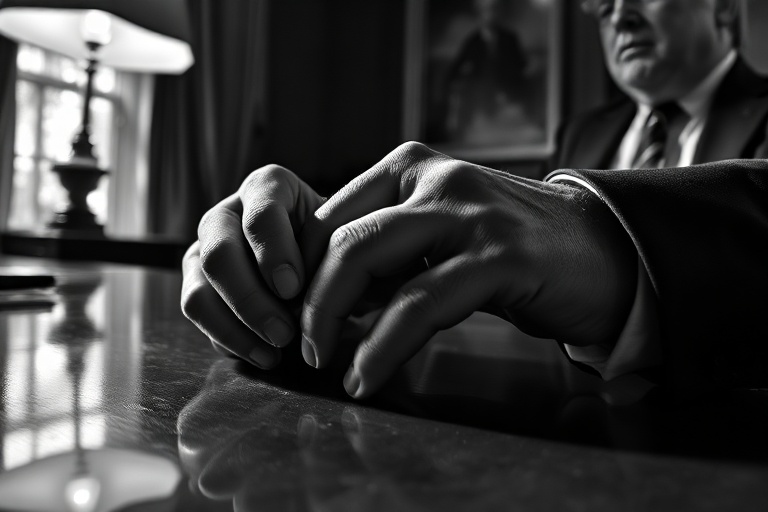
Few physical attributes in modern American politics have been scrutinized as thoroughly as Donald Trump’s hands. They’ve been the subject of late-night comedy monologues, late-night Twitter threads, and even late-night betting markets. The hands have become a symbol—sometimes of power, sometimes of absurdity, and often of something in between. While most politicians strive for gravitas, Trump’s hands have repeatedly become a focal point, illustrating how visual cues can overshadow policy in public perception.
This fascination isn’t entirely new. Throughout history, leaders have been judged by their posture, facial expressions, and gestures. But Trump’s hands have transcended mere body language. They’ve entered the realm of meme culture, political commentary, and even health speculation. The attention they’ve received reflects a broader cultural tendency to reduce complex figures to easily digestible, often exaggerated symbols.
The Anatomy of a Talking Point
Trump’s hands first gained widespread attention during the 2016 presidential debates, when critics and supporters alike fixated on their size, shape, and movement. Late-night hosts like Jimmy Kimmel and Stephen Colbert joked about their “smallness,” a reference to a 2005 conversation in which Trump allegedly made a crude remark about another man’s hands. The joke took on a life of its own, morphing into a broader critique of Trump’s masculinity and leadership style.
What began as a punchline soon evolved into something more nuanced. Political analysts noted that Trump’s hand gestures—often broad, sweeping, and emphatic—aligned with his bombastic speaking style. His hands became an extension of his persona: unfiltered, assertive, and occasionally chaotic. Supporters saw them as a sign of strength and authenticity. Critics viewed them as a visual manifestation of his impulsive and combative approach to governance.
The hands also became a subject of media analysis. News outlets dissected their movements frame by frame, as if decoding a secret language. Articles explored whether his gestures were rehearsed or spontaneous. Political scientists weighed in on how hand movements influence voter perception. The obsession reached its peak during the 2020 debates, where pundits scrutinized every flicker of a finger, interpreting each twitch as a potential gaffe or triumph.
A Cultural Mirror: Hands in the Age of Memes
Trump’s hands didn’t just belong to him. They became public property, repurposed across the internet in countless ways. Photoshopped images depicted them shaking hands with fictional characters, holding oversized objects, or even morphing into other body parts. The memeification of his hands reflected a cultural moment in which politicians are no longer just politicians—they’re walking, talking content generators.
This phenomenon isn’t unique to Trump. Figures like Bernie Sanders and Joe Biden have also seen their mannerisms turned into memes. But Trump’s hands occupied a special place in the internet’s collective imagination. They were both a source of humor and a symbol of resistance. For some, mocking his hands was a way to undermine his authority. For others, it was a form of catharsis in an era of political polarization.
The hands also became a visual shorthand in political art. Illustrations, cartoons, and even sculptures exaggerated their proportions, turning them into caricatures of power and insecurity. The artist Illma Gore gained notoriety for her painting “Make America Great Again,” which depicted Trump nude with an oversized phallus—but it was his hands that drew the most attention. The piece sparked debates about censorship, satire, and the boundaries of political art.
In the world of sports and entertainment, Trump’s hands have been compared to those of athletes, actors, and musicians. Some analysts have drawn parallels between his handshake style and those of professional wrestlers, emphasizing dominance and control. Others have noted the dexterity required for his signature move: the two-handed thumbs-up, a gesture that blends confidence with folksy charm.
Health Speculation and Public Curiosity
Beyond politics and culture, Trump’s hands have been the subject of persistent health speculation. During his presidency, rumors circulated about tremors, stiffness, or other signs of neurological conditions. Some pointed to his occasional clenched fists or slight tremors as evidence of stress or underlying health issues. Others dismissed these observations as unfounded conspiracy theories.
In 2018, a viral video appeared to show Trump’s hand trembling slightly as he signed an executive order. The clip sparked a wave of speculation, with media outlets and social media users dissecting the footage. Trump’s physician, Dr. Ronny Jackson, dismissed the concerns, attributing any tremors to dehydration or fatigue. Yet the episode underscored how physical traits—real or perceived—can become political liabilities.
This scrutiny reflects a broader cultural fascination with the bodies of public figures. From John F. Kennedy’s back problems to Hillary Clinton’s pneumonia, voters and pundits have long been drawn to the health of leaders. Trump’s hands, however, occupied a uniquely visual space. They were something everyone could see, touch, and interpret—even if the interpretations varied wildly.
The Legacy of Trump’s Hands
As Trump’s political career evolves, his hands may fade from the spotlight. Yet their cultural footprint remains indelible. They serve as a reminder of how visual symbols can shape public perception, for better or worse. In an age where every gesture is dissected and every phrase is analyzed, Trump’s hands became a case study in the power of the visual.
For historians and political scientists, they may one day represent a moment when politics and pop culture collided in unprecedented ways. For comedians and artists, they remain a rich vein of material. And for the public, they’re a reminder that in politics, perception often trumps policy.
Whether you see Trump’s hands as a symbol of strength, absurdity, or something in between, they’ve undeniably left their mark. They’ve been a mirror reflecting our collective anxieties, our obsessions, and our endless capacity for distraction. In the end, Trump’s hands may be just hands—but they’ve told a story far larger than their size.
Where to Go From Here
If Trump’s hands have piqued your interest in political symbolism, there’s plenty more to explore. For a deeper look at how gestures shape public perception, check out our Analysis section. If you’re curious about the intersection of politics and pop culture, our Culture category offers a wide range of perspectives on how leaders become cultural icons.
And if you’ve ever wondered how other public figures have used their hands—or been judged by them—you’re not alone. It’s a phenomenon that spans history, from ancient rulers to modern influencers. The hands may be just one part of the story, but they’re a part worth telling.