Why the US Flag Flies Half-Staff on Memorial Day Explained
“`html
US Flag Half-Staff on Memorial Day: A Tradition of Remembrance
The United States observes Memorial Day as a federal holiday dedicated to honoring military personnel who have died in the performance of their military duties. A key tradition associated with this day is the lowering of the US flag to half-staff, a visual gesture conveying national mourning. This practice, though simple in form, carries deep symbolic weight and reflects the country’s collective grief and respect.
While Memorial Day is widely recognized within the United States, its observance and the half-staff flag protocol also resonate globally. Many nations have similar days of remembrance, and the act of lowering flags serves as a universal language of tribute. Understanding this tradition offers insight into American civic culture and its broader connections to global memorial practices.
The Origins of Memorial Day and the Half-Staff Tradition
Memorial Day traces its roots to the aftermath of the American Civil War, when communities across the country began holding springtime tributes to honor fallen soldiers. The holiday evolved over time, officially becoming a national holiday in 1971 under the Uniform Monday Holiday Act. The tradition of flying the flag at half-staff on Memorial Day was formalized in 1968 through Public Law 90-321, which standardized federal protocols for mourning flags.
Half-staff, also known as half-mast in maritime contexts, is a signal of respect and mourning. In the United States, the flag is raised to the top of the staff briefly before being lowered to the halfway point. This brief moment symbolizes the nation’s brief ascendancy before acknowledging the weight of loss. The practice is not unique to Memorial Day; it is also observed after the death of certain government officials, national tragedies, or the passing of foreign dignitaries.
How the Tradition Differs Around the World
While the United States uses Memorial Day to honor its military dead, other countries have distinct days and customs. In Canada, Remembrance Day on November 11th features the lowering of the national flag and the wearing of poppies. In the United Kingdom, Remembrance Sunday includes a national service and the laying of wreaths, but the flag is not typically flown at half-staff. In Australia and New Zealand, ANZAC Day on April 25th is marked by dawn services and marches, with flags flown at half-mast in some jurisdictions.
These variations reflect differing historical experiences and national identities. In countries with colonial histories, remembrance often intersects with broader discussions of war, empire, and reconciliation. For instance, in India, Republic Day and Independence Day are celebrated with great fervor, but remembrance of war dead is integrated into military observances rather than a separate public holiday. Understanding these differences highlights how memorial traditions adapt to local contexts while maintaining a shared purpose of honoring sacrifice.
Flag Etiquette and Public Participation
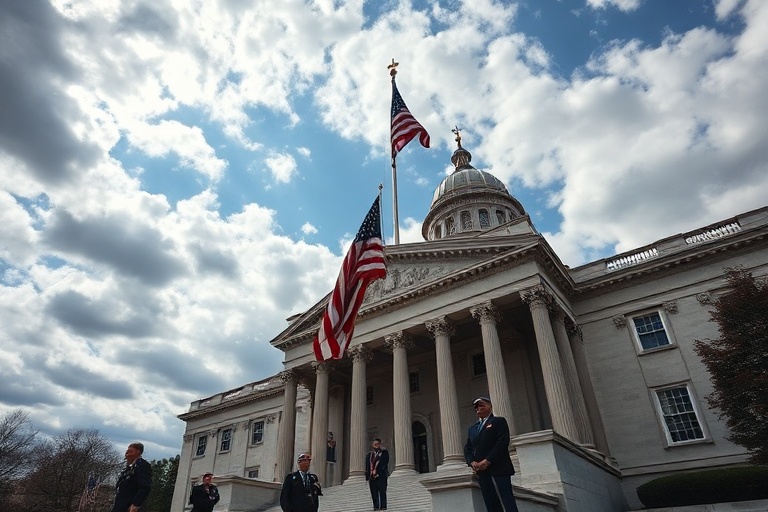
For Americans, participating in Memorial Day half-staff observance involves more than just lowering a flag. Proper flag etiquette includes raising the flag briskly to the peak before slowly lowering it to half-staff, where it remains until noon. At noon, the flag is raised to full-staff for the remainder of the day, symbolizing the nation’s resolve to continue honoring life even in the face of death.
This protocol is outlined in the US Flag Code, a set of guidelines maintained by the federal government. While the code is advisory rather than legally binding, its principles are widely observed by federal agencies, state governments, and private citizens. Many organizations, from sports teams to corporate offices, participate in the tradition as a mark of respect.
- Federal buildings and military installations are required to fly the flag at half-staff.
- Governors may issue proclamations for state-specific observances.
- Private citizens are encouraged to display flags at half-staff, though enforcement is not possible.
- Schools and community centers often hold ceremonies to explain the significance of the day.
The act of lowering the flag is not merely symbolic—it is a deliberate, communal act. In towns across America, local governments, veterans’ groups, and families gather to observe moments of silence at 3:00 PM, the National Moment of Remembrance. These coordinated efforts reinforce the idea that remembrance is both personal and collective.
Memorial Day in the Context of Modern America
In recent decades, Memorial Day has expanded beyond its original military focus. It now also serves as the unofficial start of summer, marked by barbecues, parades, and retail sales. This commercialization has sparked debate about the holiday’s true meaning. Critics argue that the half-staff tradition and solemn observances are increasingly overshadowed by consumer culture.
Yet, despite these challenges, the half-staff flag remains a powerful reminder. In an era of digital communication and fleeting attention spans, the sight of a flag at half-staff is immediate and unmistakable. It demands pause, reflection, and respect—qualities that are often in short supply in modern life.
Moreover, the tradition has evolved to include digital expressions of remembrance. Social media platforms often feature black-and-white profile pictures, virtual flags, or hashtags like #NeverForget and #MemorialDay. While these gestures lack the physical presence of a lowered flag, they extend the reach of remembrance across borders and generations.
The Role of Memorial Day in National Identity
Memorial Day, with its half-staff observance, plays a crucial role in shaping American national identity. It is one of the few moments when the country collectively confronts loss and mortality. In a nation often defined by optimism and progress, Memorial Day offers a counterbalance—a time to acknowledge sacrifice and acknowledge that freedom is not free.
This duality is reflected in the flag’s position. At half-staff, it conveys grief; at full-staff, it signals resilience. Together, these positions tell a story of a nation that honors its past while moving forward. This narrative is not unique to the United States, but it is uniquely American in its expression and scale.
Globally, the tradition invites comparison and reflection. It prompts questions about how other societies remember their dead, how rituals of mourning are preserved, and how national identity is constructed through shared grief. In an increasingly interconnected world, Memorial Day serves as both a local observance and a point of cultural exchange.
Conclusion: A Tradition That Endures
The US flag at half-staff on Memorial Day is more than a protocol—it is a living tradition that connects generations. From its origins in the 19th century to its modern adaptations, it remains a visible, tangible expression of respect for those who gave everything. While commercialization and digital culture may dilute its immediacy for some, the core act endures.
As Memorial Day approaches each year, communities across the country—and indeed, around the world—pause to lower their flags. In that moment, the distinctions of politics, geography, and belief fade. What remains is a shared understanding: that some sacrifices demand remembrance, and that flags, even at half-staff, continue to speak when words fail.