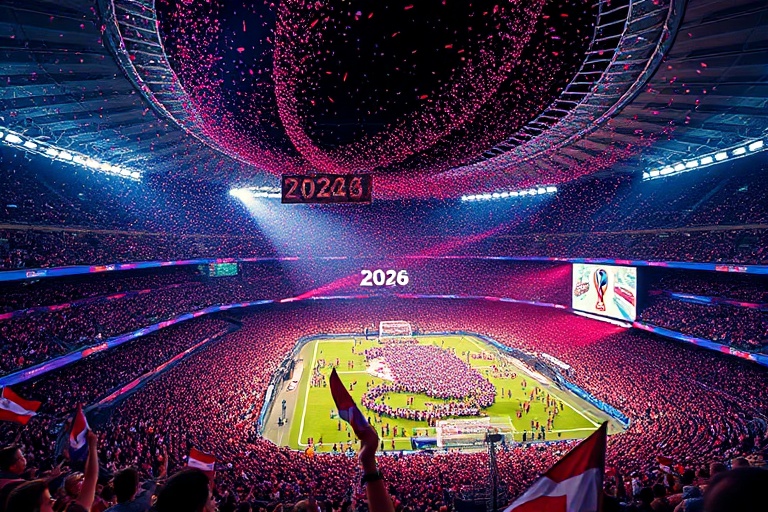
The 2026 FIFA World Cup is set to become the largest edition in tournament history, expanding from 32 to 48 teams. With matches spanning three countries and a condensed schedule, anticipation is building for what promises to be an unforgettable event. Fans worldwide are already marking their calendars, but the exact start date remains a point of curiosity. Here’s everything you need to know about when the World Cup begins, how the tournament is structured, and why this edition is different from past competitions.
The Official Start Date and Schedule
The 2026 World Cup will kick off on June 11, 2026, with the opening match taking place at the iconic Azteca Stadium in Mexico City. The tournament will run through July 19, 2026, concluding with the final at MetLife Stadium in the New York City metropolitan area. This marks the first time the World Cup will be hosted across three nations: the United States, Canada, and Mexico. The expanded format means more games, more drama, and a longer road to the championship.
Unlike previous tournaments, which typically lasted around a month, the 2026 edition will feature 104 matches played over 39 days. The group stage will begin immediately after the opening match, with 12 groups of four teams each. The top two teams from every group, along with the eight best third-place finishers, will advance to the Round of 32—the first time in World Cup history that this many teams will compete in the knockout rounds.
Key Dates to Remember
- June 11, 2026: Opening match at Azteca Stadium, Mexico City
- June 12-30, 2026: Group stage matches across all three host countries
- July 1-2, 2026: Round of 32 begins
- July 11, 2026: Quarterfinal matches
- July 14, 2026: Semifinal matchups
- July 19, 2026: Final at MetLife Stadium, New Jersey
Why This World Cup Is a Game of Firsts
The 2026 World Cup isn’t just notable for its expanded format—it’s also breaking new ground in several ways. For starters, it will be the first World Cup to be hosted by three countries, a decision made by FIFA in 2017 to promote global unity and accessibility. The shared hosting arrangement also means that fans across North America will have unprecedented access to games, with venues spread from Vancouver in the north to Atlanta in the south.
Another first is the introduction of a new format in the knockout rounds. With 48 teams competing, the Round of 32 replaces the traditional Round of 16, creating more opportunities for underdog stories and dramatic upsets. The tournament’s timeline is also unique: the group stage will conclude on June 30, giving teams a shorter break before the knockout rounds begin in July. This compressed schedule could lead to fatigue for players, but it also ensures that the most intense matches are crammed into the final weeks, heightening the stakes.
The choice of host cities reflects a blend of tradition and innovation. Iconic venues like the Rose Bowl in Pasadena and the Estádio do Maracanã in Rio de Janeiro (though not a host city, its proximity to São Paulo adds regional appeal) will share the stage with newer stadiums like SoFi in Los Angeles and AT&T Stadium in Dallas. The diversity of locations ensures that fans from different parts of the continent can experience the tournament without the need for long-distance travel.
What This Means for Fans and the Future of the World Cup
The 2026 World Cup represents more than just a sporting event—it’s a cultural and economic milestone. For fans, the expanded format means more games, more teams to cheer for, and a greater chance for lesser-known nations to make their mark. Countries like Qatar, who reached the knockout rounds in 2022, could see a repeat performance from new challengers like Jamaica or Canada, both of whom have shown recent progress in international play.
Economically, the tournament is projected to generate billions in revenue for the host countries. The U.S. alone is expected to see a surge in tourism, with hotels, restaurants, and transportation services preparing for an influx of visitors. The event will also serve as a litmus test for the feasibility of future multi-country World Cups, a model FIFA has hinted at exploring again.
For players, the expanded format presents both opportunities and challenges. Younger talents will have a better chance to shine on the global stage, while veterans will need to manage their fitness more carefully given the increased number of matches. The tournament’s condensed schedule could also lead to tactical adjustments, with coaches prioritizing squad rotation and recovery strategies.
Beyond the field, the 2026 World Cup has the potential to leave a lasting legacy. The inclusion of more teams from Africa, Asia, and North America aligns with FIFA’s push for greater global representation. It also offers a platform for social and environmental initiatives, as host cities implement sustainable practices and community engagement programs.
Preparing for the Biggest World Cup Ever
With the start date just over two years away, preparations are already underway. FIFA and local organizing committees are finalizing venue upgrades, transportation networks, and security plans. Fans, meanwhile, are beginning to plan their trips, whether they’re attending matches in person or following the action from home. Ticket sales, which will open in phases starting in 2025, are expected to be highly competitive, with demand likely to outstrip supply for marquee matches.
For those looking to stay ahead of the curve, now is the time to start tracking qualification campaigns. With 16 more spots available than in past tournaments, nearly every confederation is gearing up for intense battles. Europe, Africa, and South America are expected to dominate the field, but North America’s three automatic berths—one for each host nation—guarantee at least some local representation.
The 2026 World Cup is shaping up to be a landmark event, one that will redefine expectations for the tournament’s scale and excitement. Whether you’re a die-hard football fan or a casual observer, the start date of June 11, 2026, is worth circling on the calendar. This is more than just a competition; it’s a celebration of the world’s game in all its diversity and unpredictability.
As the countdown continues, one thing is certain: the 2026 World Cup will be a spectacle unlike any before it. From the opening kick in Mexico City to the final whistle in New Jersey, the tournament promises drama, history, and moments that will be talked about for generations.
“The World Cup is more than a tournament; it’s a global gathering where nations unite through sport. The 2026 edition will showcase the best of football while breaking new ground in accessibility and representation.” — FIFA President Gianni Infantino
For more on international football and tournament analysis, visit our Sports and News sections.