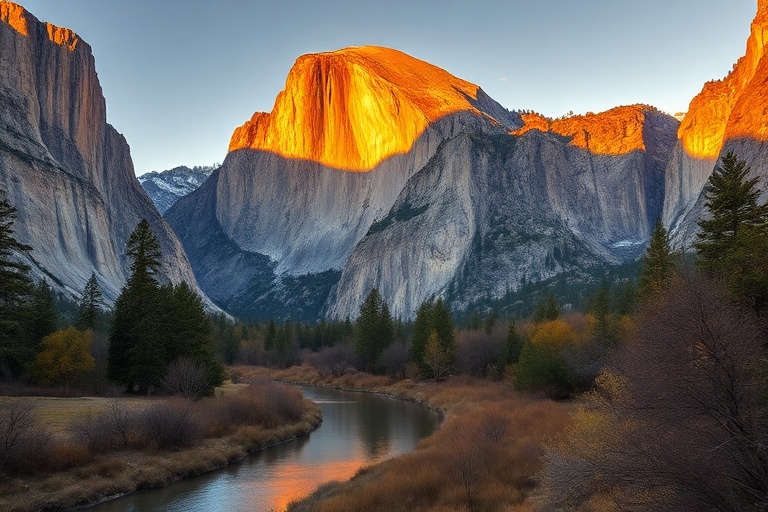
Few landscapes command the same reverence as Yosemite National Park, a 750,000-acre expanse where granite cliffs, ancient sequoias, and thundering waterfalls converge into a natural masterpiece. Protected since 1864 and designated a UNESCO World Heritage Site, Yosemite isn’t just a park—it’s a living museum of geological time, a sanctuary for biodiversity, and a proving ground for conservation philosophy. Its influence stretches far beyond its borders, shaping environmental policy, outdoor recreation, and even the way Americans perceive wilderness.
The Geological Marvels That Define Yosemite
Yosemite’s most iconic features tell a story written in stone over hundreds of millions of years. The park’s signature landmarks—El Capitan, Half Dome, and the towering walls of Yosemite Valley—are the result of tectonic uplift, glacial carving, and erosion that continues today. Half Dome, for instance, began as a magma bubble deep underground before being exposed and sculpted by Ice Age glaciers. Its sheer face, standing 8,842 feet above sea level, attracts climbers from around the world, including the legendary Alex Honnold, whose 2017 free solo ascent remains one of the most watched feats in climbing history.
The park’s waterfalls are equally dramatic. Yosemite Falls, North America’s tallest at 2,425 feet, cascades in three distinct tiers, fed by snowmelt and seasonal storms. Bridalveil Fall, meanwhile, has inspired artists for generations with its ethereal spray and misty arc. These features aren’t static relics—they’re dynamic systems, responsive to climate shifts and human impact. Drought cycles in California have reduced water flow in recent years, underscoring the fragility of even the most resilient natural wonders.
Key Geological Highlights of Yosemite
- Half Dome: A granite monolith formed by exfoliation and glacial erosion, now a symbol of wilderness adventure.
- El Capitan: The largest exposed granite monolith on Earth, a 3,000-foot vertical wall and premier big-wall climbing destination.
- Yosemite Falls: The tallest waterfall in North America, with peak flow in late spring and early summer.
- Tuolumne Meadows: A high-elevation subalpine landscape shaped by ancient glaciers, offering some of the park’s most pristine backcountry.
- Bridalveil Fall: Named for the veil-like spray that once blew horizontally in strong winds, now a year-round attraction.
Conservation: How Yosemite Changed the World
Yosemite’s legacy isn’t limited to its scenery—it’s rooted in its role as a catalyst for conservation. In 1864, President Abraham Lincoln signed the Yosemite Grant, the first time the U.S. government set aside land for preservation and public use. This act laid the foundation for the national park system, inspiring figures like John Muir, whose advocacy led to the creation of Yosemite National Park in 1890 and, later, the National Park Service in 1916.
Muir’s writings, including his 1901 book Our National Parks, framed wilderness as a spiritual necessity, not just a recreational resource. His vision clashed with industrial interests and early park management policies, particularly around the Hetch Hetchy Valley, which was dammed in 1913 to supply water to San Francisco. The controversy over Hetch Hetchy became a defining moment in environmental ethics, pitting preservationists against utilitarians and shaping debates that continue today.
Modern challenges in Yosemite include managing overtourism, combating the spread of invasive species, and addressing the impacts of climate change. The park’s visitation has surged in recent years, with over 4 million people entering annually. This influx has led to overcrowding in Yosemite Valley, prompting the National Park Service to implement timed entry reservations in 2020—a controversial but necessary step to protect the park’s fragile ecosystems.
The Cultural and Economic Impact of Yosemite
Yosemite’s influence extends into art, literature, and commerce. It was the subject of Ansel Adams’s iconic black-and-white photographs, which helped define the American wilderness aesthetic and popularized the idea of nature as art. The park has also been a muse for writers like Ralph Waldo Emerson and poets like Gary Snyder, who saw it as a place of transcendence and ecological awareness.
Economically, Yosemite is a powerhouse. The park generates over $1 billion in annual economic benefit for the surrounding region, supporting thousands of jobs in tourism, hospitality, and outdoor recreation. Towns like Mariposa and Groveland thrive on park-related commerce, from outfitters and lodges to restaurants and guide services. Yet this economic dependence creates a paradox: the more people visit, the more the park’s resources are strained, but the fewer visitors, the harder it becomes to justify conservation funding.
The rise of social media has amplified Yosemite’s reach—and its challenges. Viral moments, like the 2019 viral photo of a man standing on a granite ledge with Half Dome in the background, have drawn millions to the park, often to perilous or restricted areas. Park rangers now spend significant time educating visitors about safety and Leave No Trace principles, while also contending with illegal parking, trail erosion, and wildlife disturbances caused by overcrowding.
Beyond the Valley: Exploring Yosemite’s Hidden Gems
While Yosemite Valley draws the most attention, the park’s lesser-known areas offer equally breathtaking—and often quieter—experiences. The high-country wonderland of Tuolumne Meadows, accessible only in summer, features turquoise rivers, alpine lakes, and vast expanses of wildflower meadows. The Ansel Adams Wilderness, bordering Yosemite to the east, offers multi-day backpacking routes that feel worlds away from the crowds.
For those willing to venture off the beaten path, places like Wawona, with its historic Pioneer Yosemite History Center, and the remote Northern Yosemite region provide a glimpse into the park’s past and present. The park’s vastness ensures that solitude is still possible, even in peak season—if you know where to look.
Yosemite also serves as a living laboratory for scientific research. Studies on its giant sequoias, some over 3,000 years old, offer insights into climate resilience and forest ecology. Researchers monitor the park’s black bears, whose population has rebounded thanks to strict food storage regulations, and track the effects of wildfires, which play a crucial role in maintaining biodiversity.
Less-Visited Areas in Yosemite Worth Exploring
- Tuolumne Meadows: A high-elevation paradise with granite domes, alpine lakes, and minimal crowds outside of July and August.
- Hetch Hetchy: A controversial reservoir with stunning views, accessible via a 16-mile round-trip hike.
- Glacier Point: Offers panoramic views of the High Sierra, especially dramatic at sunset or during winter snowfalls.
- Wawona: Home to the historic Wawona Hotel and the Mariposa Grove of giant sequoias.
- White Wolf: A quiet area with meadows, streams, and access to the John Muir Trail.
Yosemite’s Future: Challenges and Opportunities
As Yosemite approaches its 160th anniversary, it faces a critical juncture. Climate change is altering snowpack patterns, shortening winter seasons, and increasing the frequency of wildfires. The park’s iconic sequoias, already stressed by drought, are at risk of losing their regenerative capacity. Meanwhile, the demand for outdoor recreation continues to grow, pressuring park infrastructure and ecosystems alike.
In response, the National Park Service has adopted a multi-faceted approach. This includes expanding visitor education programs, investing in trail restoration, and experimenting with new technologies like reservation systems and shuttle networks to reduce congestion. Partnerships with local tribes, such as the Southern Sierra Miwuk Nation, are also gaining traction, with efforts to integrate traditional ecological knowledge into park management.
For visitors, the message is clear: Yosemite’s future depends on how we engage with it today. Responsible recreation—staying on trails, packing out waste, respecting wildlife, and supporting conservation initiatives—can help preserve the park’s magic for generations to come. The challenge isn’t just protecting Yosemite from overuse, but ensuring that its cultural and ecological significance isn’t diluted by commercialization or neglect.
Yosemite remains a place of awe, a reminder of nature’s grandeur and our small place within it. It’s more than a destination; it’s a philosophy, a testament to the idea that some places are too precious to exploit, too beautiful to ignore. As we look to the future, Yosemite challenges us to ask not just how we can visit it, but how we can help it endure.
Explore more on outdoor adventure and conservation at Dave’s Locker Outdoor Adventure and News pages.