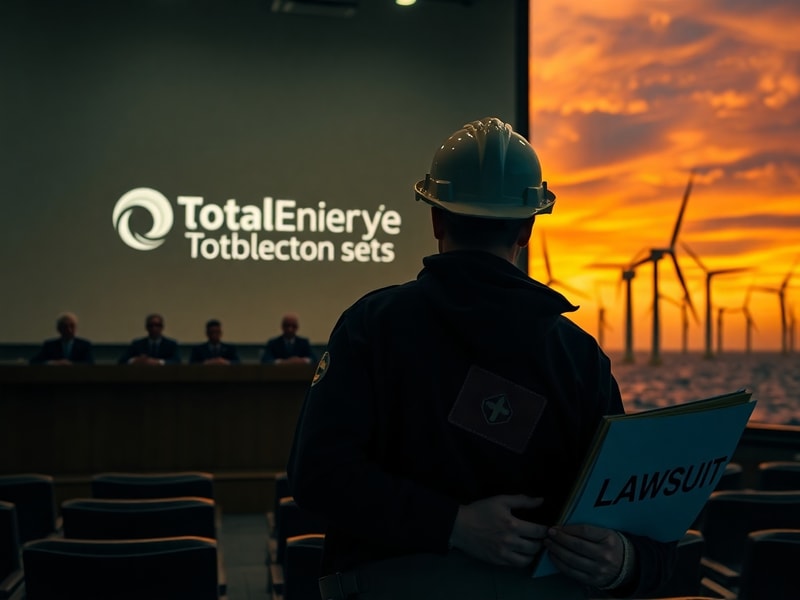
The offshore wind sector, often hailed as a cornerstone of the global energy transition, has encountered a significant legal hurdle. TotalEnergies, one of the world’s largest energy companies, is now at the center of a lawsuit tied to its offshore wind operations. The case has raised questions about environmental compliance, corporate accountability, and the future of renewable energy investments.
Filed in a federal court in Massachusetts, the lawsuit alleges that TotalEnergies’ offshore wind project, Vineyard Wind 1, has violated the Endangered Species Act. Environmental groups claim the project’s construction and operation pose serious risks to the North Atlantic right whale population, a critically endangered species. The legal challenge comes at a pivotal moment for the offshore wind industry, which is expanding rapidly to meet global decarbonization goals.
The Legal Framework: What’s at Stake for TotalEnergies
The lawsuit, brought by several conservation organizations including the Center for Biological Diversity and Defenders of Wildlife, centers on allegations that TotalEnergies failed to adequately assess and mitigate the impact of its operations on marine life. Under the Endangered Species Act, federal agencies are required to ensure that industrial activities do not jeopardize the survival of protected species. The plaintiffs argue that the company’s environmental impact statement was incomplete and that mitigation measures were insufficient.
TotalEnergies, which holds a 27.5% stake in Vineyard Wind 1, has defended its compliance with regulatory requirements. The company asserts that it has worked closely with federal agencies, including the Bureau of Ocean Energy Management (BOEM) and the National Marine Fisheries Service, to address environmental concerns. However, the lawsuit challenges the adequacy of these efforts, potentially setting a precedent for future offshore wind projects.
A ruling in favor of the plaintiffs could lead to costly delays or modifications for Vineyard Wind 1, which is already under construction. More broadly, the case could influence how offshore wind developers approach environmental assessments and stakeholder engagement moving forward. Legal experts suggest that the outcome may hinge on the interpretation of scientific data and the sufficiency of mitigation strategies.
Environmental Concerns and Industry-Wide Implications
The lawsuit highlights broader concerns about the environmental impact of offshore wind development. While wind energy is a critical component of the transition to renewable energy, its expansion is not without consequences. Construction activities, such as pile driving and cable laying, generate underwater noise that can disrupt marine ecosystems. For species like the North Atlantic right whale, which relies on low-frequency sounds for communication and navigation, these disruptions can be particularly harmful.
TotalEnergies is not the only company facing scrutiny over its offshore wind projects. Other developers, including Ørsted and Equinor, have also encountered legal challenges related to environmental compliance. The industry is grappling with how to balance rapid expansion with the need to protect vulnerable species. Some advocates argue that stricter regulatory oversight is necessary, while others caution that excessive delays could undermine the viability of offshore wind as a key energy source.
In response to these concerns, the Biden administration has emphasized the importance of responsible development. The Interior Department has pledged to streamline permitting processes while ensuring robust environmental protections. However, the TotalEnergies lawsuit underscores the challenges of achieving this balance in practice.
Key Environmental Risks Highlighted in the Lawsuit
- Noise Pollution: Pile driving during construction can generate underwater noise levels exceeding 250 decibels, which can cause physical harm or behavioral changes in marine mammals.
- Habitat Fragmentation: The installation of turbines and subsea cables may alter marine habitats, potentially affecting prey availability for endangered species.
- Collision Risks: While less directly tied to this lawsuit, operational turbines pose collision risks to species such as the right whale, which may navigate through wind farm areas.
- Regulatory Gaps: Critics argue that current environmental assessments do not adequately account for cumulative impacts from multiple projects in a region.
Corporate Accountability and the Future of Offshore Wind
The TotalEnergies lawsuit also raises questions about corporate accountability in the energy transition. As traditional oil and gas companies diversify into renewable energy, they bring with them financial resources and technical expertise. However, critics question whether these companies are adequately prioritizing environmental and social responsibility alongside profit motives.
TotalEnergies has positioned itself as a leader in the energy transition, with ambitious targets to expand its renewable energy portfolio. The company’s involvement in Vineyard Wind 1 reflects its commitment to offshore wind, a sector it views as critical to reducing global carbon emissions. Yet, the lawsuit challenges the narrative of seamless integration between fossil fuel giants and sustainable energy solutions.
For investors and policymakers, the case underscores the importance of due diligence in renewable energy projects. Companies must demonstrate not only technical feasibility but also adherence to environmental and social governance (ESG) standards. Failure to do so could result in reputational damage, financial penalties, or legal setbacks that delay or derail projects.
Broader Industry and Policy Responses
The outcome of the TotalEnergies lawsuit could have far-reaching implications for the offshore wind industry. If the court sides with the plaintiffs, developers may face stricter requirements for environmental impact assessments and mitigation plans. This could slow down project timelines and increase costs, potentially discouraging investment in the sector.
On the other hand, a ruling in favor of TotalEnergies could embolden the industry to push for faster permitting processes and reduced regulatory oversight. This scenario risks exacerbating environmental concerns and could lead to further legal challenges from conservation groups. Policymakers are thus caught in a delicate balancing act between accelerating the energy transition and ensuring sustainable practices.
The Biden administration has signaled its support for offshore wind as a key component of its climate agenda. However, the administration must also address the legal and environmental challenges that threaten to undermine public and regulatory confidence in the sector. Industry stakeholders are calling for clearer guidelines and more robust collaboration between developers, regulators, and environmental groups to avoid protracted legal battles.
Potential Policy Responses to the Lawsuit
- Enhanced Environmental Oversight: Federal agencies could impose stricter monitoring and reporting requirements for offshore wind projects, particularly in areas critical to endangered species.
- Regional Planning Initiatives: Collaborative efforts between states, developers, and conservation groups could help identify and protect key habitats before projects are approved.
- Incentives for Innovation: Policymakers could fund research into quieter construction methods, such as floating turbines or alternative anchoring systems, to reduce environmental impacts.
- Legal Clarity: Congress or federal agencies could provide clearer definitions of what constitutes “adequate” mitigation under the Endangered Species Act, reducing ambiguity for developers.
For now, the TotalEnergies lawsuit serves as a critical test case for the offshore wind industry. It forces stakeholders to confront difficult questions about sustainability, accountability, and the pace of the energy transition. The resolution of this case could shape the trajectory of offshore wind development in the United States and beyond for years to come.
As the legal proceedings unfold, industry observers will be closely monitoring the arguments, evidence, and potential precedents set by the court. Whatever the outcome, one thing is clear: the intersection of law, environment, and energy will continue to define the future of offshore wind.
For more insights into the energy sector and its legal challenges, visit our Business and Technology categories on Dave’s Locker.