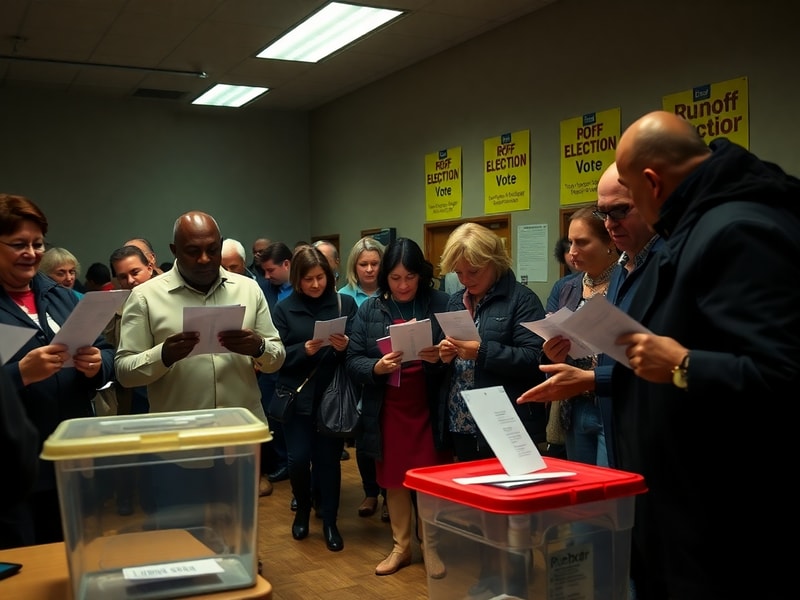
A runoff election is a second round of voting that occurs when no candidate secures a majority of the vote in the initial election. Unlike standard elections where a plurality may be enough, runoff elections ensure the winner has broad support. This process is common in many democracies, particularly in countries with multi-party systems or where majority rule is a legal requirement.
The concept is straightforward but carries significant implications for governance and representation. When multiple candidates split the vote, a runoff narrows the field to the top two contenders, forcing a decisive outcome. This system aims to prevent fragmented mandates and encourage consensus-building among voters.
The Purpose of Runoff Elections
Runoff elections serve several key functions in electoral systems. First, they uphold the principle of majority rule, ensuring that the winning candidate has the support of more than half the electorate. This is particularly important in presidential or parliamentary systems where a narrow plurality could lead to governance challenges.
Second, runoffs reduce the spoiler effect common in multi-candidate races. Without a runoff, a third-party candidate could draw votes from a major candidate, inadvertently handing victory to a less preferred option. By narrowing the field, runoffs help voters coalesce around the two strongest candidates.
Third, they provide a mechanism for resolving disputes when initial results are inconclusive. In some cases, candidates may be tied or separated by a margin so slim that a runoff offers clarity and legitimacy.
Where Runoff Elections Are Used
Runoff systems are not universal but are employed in various forms around the world. The most common variations include:
- Two-Round Systems: Used in countries like France for presidential elections, where if no candidate wins a majority in the first round, the top two advance to a runoff.
- Instant Runoff Voting (IRV): Also known as ranked-choice voting, this system allows voters to rank candidates in order of preference, eliminating the need for a separate runoff ballot.
- Legislative Runoffs: Some U.S. states, such as Georgia and Louisiana, use runoffs for primary or general elections when no candidate secures a majority.
- Parliamentary Systems: Countries like India and Brazil use runoffs in certain elections to ensure majority support for key positions.
Each variation adapts the runoff concept to fit the political and logistical needs of the jurisdiction. For example, IRV streamlines the process by avoiding a second election, while two-round systems provide a built-in period for campaigning and voter reconsideration.
How Runoff Elections Play Out in the United States
In the U.S., runoff elections are most commonly associated with Southern states, where they originated as a way to disenfranchise minority voters during the Jim Crow era. Today, however, they serve a different purpose: ensuring majority support in elections where multiple candidates split the vote.
Georgia is perhaps the most prominent example, using runoffs for both primary and general elections when no candidate secures over 50% of the vote. The state’s 2020 Senate runoff elections, which determined control of the U.S. Senate, drew national attention and highlighted the high-stakes nature of runoff contests.
Other states, like Louisiana and Mississippi, also employ runoff systems for certain elections. These states often hold runoffs several weeks after the initial vote, giving candidates time to campaign, debate, and appeal to undecided voters.
Key Features of U.S. Runoff Elections
Runoff elections in the U.S. share several characteristics:
- Timing: Runoffs typically occur 4–6 weeks after the initial election, allowing for campaigning and voter mobilization.
- Eligibility: Only the top two vote-getters in the initial round advance to the runoff, regardless of party affiliation.
- Voter Turnout: Turnout often drops in runoff elections, as voters may feel less motivated to participate in a second round.
- Campaign Strategies: Candidates must adapt their messaging to appeal to a narrower electorate, often focusing on swing voters and undecided blocs.
These features make runoff elections uniquely challenging for candidates and voters alike. The reduced field narrows the ideological spectrum, forcing candidates to moderate their positions or risk alienating key demographics.
The Broader Implications of Runoff Elections
Runoff elections are more than just a procedural quirk—they shape political dynamics in profound ways. One of the most significant impacts is on party strategy. In multi-candidate races, parties may encourage their supporters to coalesce around a single candidate in the initial round to avoid a fragmented vote. This can lead to strategic voting, where voters prioritize “electability” over personal preference.
Runoffs also influence campaign finance. Candidates who advance to the runoff often benefit from increased donations and media attention, as outside groups see them as viable contenders. Conversely, candidates who fail to qualify may struggle to secure funding for a second bid.
For voters, runoffs demand greater engagement. Unlike a single election day, runoffs require voters to return to the polls weeks later, which can suppress turnout. This is particularly true in local or low-salience elections, where voter fatigue sets in.
Moreover, runoffs can exacerbate polarization. In a two-candidate runoff, voters may feel compelled to choose the “lesser of two evils,” rather than their preferred option. This can deepen divisions within the electorate and fuel dissatisfaction with the political process.
The Debate Over Runoff Systems
Runoff elections are not without criticism. Opponents argue that they are costly, logistically complex, and prone to low turnout. Some reform advocates advocate for alternative systems, such as IRV, which eliminate the need for a second election while preserving the benefits of majority rule.
Proponents, however, contend that runoffs ensure legitimacy and prevent minority rule. They point to cases where a plurality winner might lack broad support, such as when a candidate wins with just 35% of the vote in a crowded field. In such scenarios, a runoff clarifies the will of the electorate.
The debate over runoff systems reflects broader tensions in democratic governance: between simplicity and inclusivity, between efficiency and thoroughness. Ultimately, the choice of electoral system shapes not just who wins, but how democracy functions.
What to Watch For in Upcoming Runoff Elections
As runoff elections continue to play a role in U.S. politics, several trends are worth monitoring. First, the rise of ranked-choice voting in cities like New York and Maine could reduce reliance on traditional runoffs, offering a more streamlined alternative. Second, the increasing polarization of the electorate may make runoffs more contentious, as voters grapple with binary choices in an otherwise fragmented political landscape.
Third, the role of third-party candidates remains a wildcard. In races with multiple candidates, a strong third-party showing could force a runoff, shifting the dynamics of the contest and forcing major-party candidates to rethink their strategies.
Finally, the legal and logistical challenges of running a second election cannot be ignored. From ballot access to campaign finance rules, runoff elections require careful planning to ensure fairness and accessibility.
For voters, the key takeaway is to stay informed. Runoff elections often hinge on turnout and second-choice preferences, making every vote—and every decision—critical to the outcome.
Conclusion: The Enduring Role of Runoff Elections
Runoff elections are a cornerstone of democratic electoral systems, ensuring that winners secure majority support and that fragmented votes do not distort representation. While they come with challenges—such as cost, complexity, and voter fatigue—they remain a vital tool for upholding the integrity of elections.
As political landscapes evolve, so too will the role of runoffs. Whether through traditional two-round systems or innovative alternatives like IRV, the core principle remains the same: democracy works best when winners have the broadest possible mandate. In an era of polarization and division, runoff elections offer a mechanism for consensus-building and clarity.
For candidates, runoffs demand adaptability and resilience. For voters, they require patience and engagement. And for democracy itself, they provide a safeguard against the pitfalls of plurality rule. In that sense, runoff elections are more than a procedural detail—they are a testament to the enduring power of majority rule.
For further reading on electoral systems and political analysis, visit Dave’s Locker Politics or explore our Analysis section for deeper insights into how elections shape governance.