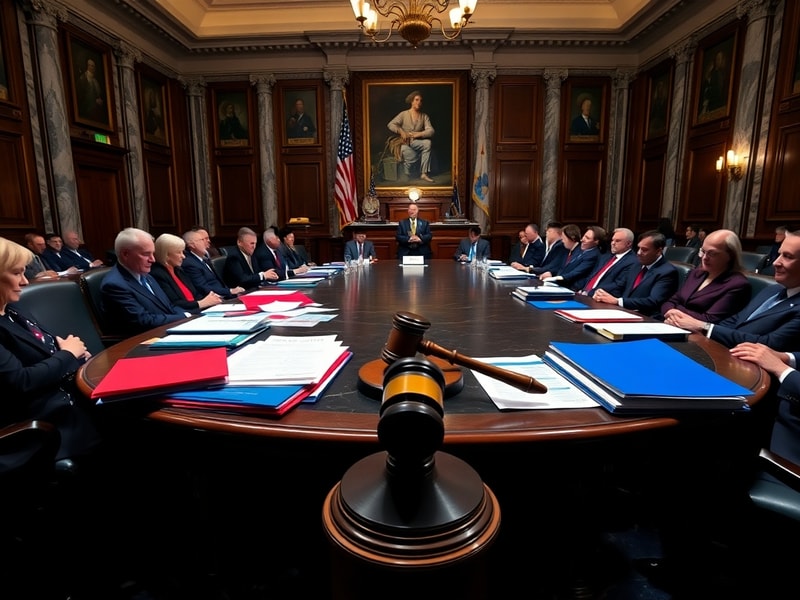
The Senate reconciliation bill has once again thrust immigration funding into the national spotlight, with lawmakers debating how to allocate billions in discretionary spending. This legislative vehicle, traditionally reserved for budgetary matters, has become a battleground for competing visions on immigration policy and enforcement priorities. The outcome could reshape federal funding for border security, visa processing, and immigrant services for years to come.
At the heart of the debate lies a $10 billion allocation proposed in the latest draft of the bill. This funding would be divided across several key areas, each reflecting different priorities among Senate factions. Homeland Security would receive the largest share, with $4.5 billion earmarked for border operations—a 12% increase over last fiscal year’s budget. Citizenship and Immigration Services (USCIS) would see its funding rise by 8%, totaling $1.2 billion, primarily to address backlogs in green card and work permit applications.
Breakdown of the Proposed Immigration Funding Allocations
The proposed allocations in the Senate reconciliation bill reflect a careful balance—or an uneasy compromise—between competing interests. Below is a detailed breakdown of how the $10 billion would be distributed across federal agencies and programs:
- U.S. Customs and Border Protection (CBP): $4.5 billion, with $3.2 billion allocated to operations at the southern border, including personnel, technology, and infrastructure upgrades. An additional $800 million is designated for fentanyl interdiction efforts.
- Immigration and Customs Enforcement (ICE): $2.1 billion, primarily for detention and removal operations. This includes funding for 34,000 average daily detention beds, a contentious figure that has drawn criticism from immigrant rights groups.
- Citizenship and Immigration Services (USCIS): $1.2 billion, with $900 million directed toward reducing processing backlogs for employment-based and family-based visas. The agency has faced persistent delays, with some applications waiting over five years for adjudication.
- Executive Office for Immigration Review (EOIR): $300 million to hire additional immigration judges and support staff, aiming to reduce the backlog of over 1.6 million pending immigration court cases.
- Office of Refugee Resettlement (ORR): $900 million to support unaccompanied minors in federal custody, including shelter operations and reunification efforts with family members in the U.S.
- Miscellaneous Programs: $1 billion for grants to state and local law enforcement agencies participating in federal immigration enforcement programs, such as 287(g) agreements.
The distribution reflects a clear emphasis on enforcement and border security, though some advocates argue that the funding for USCIS and EOIR represents a step toward addressing systemic inefficiencies. Critics, however, point out that the bill does not include provisions for expanding legal pathways for immigration, such as increasing the number of available visas or creating new temporary worker programs.
Partisan Divisions Over Immigration Funding Priorities
The Senate reconciliation bill’s immigration funding provisions have laid bare the deep partisan divides on immigration policy. Senate Democrats, who control the chamber with a narrow majority, have framed the funding as a necessary investment in a broken system. They argue that increased funding for USCIS and EOIR will help reduce backlogs and improve efficiency, while border security investments are justified by record-high migrant encounters at the southern border.
Senate Republicans, meanwhile, have largely opposed the bill, arguing that it does not go far enough to secure the border or deter illegal immigration. Many in the GOP have called for stricter enforcement measures, including mandatory detention policies and the resumption of controversial programs like “Remain in Mexico.” Some conservatives have also criticized the bill for not including provisions to end the Deferred Action for Childhood Arrivals (DACA) program, which they view as an unconstitutional amnesty.
The divisions extend beyond the Senate floor. Advocacy groups on both sides of the issue have mobilized to influence the debate. Immigration rights organizations, such as the American Immigration Council, have praised the funding for USCIS and EOIR but warned that the bill’s enforcement-heavy approach could lead to human rights abuses. Meanwhile, groups like the Federation for American Immigration Reform (FAIR) have argued that the funding fails to prioritize border security and law enforcement.
The Role of the Reconciliation Process in Immigration Debates
The Senate reconciliation process, which allows certain budget-related bills to bypass the filibuster, has become a critical tool for advancing immigration policy in recent years. Unlike traditional legislation, reconciliation bills require only a simple majority to pass, making them an attractive vehicle for contentious issues like immigration funding. However, the process also imposes strict limits on what can be included in the bill. Provisions must have a direct fiscal impact, meaning that policy changes—such as granting legal status to certain immigrants—are typically excluded unless they can be tied to revenue or spending.
This constraint has led to creative but often controversial interpretations of what constitutes “reconciliation-appropriate” immigration funding. For example, some advocates have pushed for including funding for programs that provide legal representation to detained immigrants, arguing that such efforts reduce long-term costs by preventing deportations. Others have proposed tying immigration enforcement funding to specific metrics, such as reducing migrant encounters at the border, to ensure accountability.
The reconciliation process also complicates the legislative timeline. The Senate must pass a budget resolution before reconciliation bills can move forward, and even then, the process is vulnerable to delays and procedural hurdles. In the case of the current immigration funding debate, lawmakers have struggled to reconcile their differences within the tight deadlines imposed by the reconciliation process, raising questions about whether the bill will ultimately pass in its current form.
Potential Outcomes and Long-Term Implications
The Senate reconciliation bill’s immigration funding provisions could have far-reaching consequences, depending on how the final package is structured. If the bill passes in its current form, it would represent a significant increase in federal spending on immigration enforcement and border security, while also providing modest relief for processing backlogs. However, the lack of provisions for expanding legal immigration pathways could leave many systemic issues unresolved.
One potential outcome is a bipartisan compromise that includes additional funding for USCIS and EOIR in exchange for stricter border enforcement measures. Such a deal could win the support of moderate Democrats and Republicans, though it would likely face opposition from progressive lawmakers and immigrant rights groups. Another possibility is that the bill fails to advance, leaving immigration funding in limbo until Congress passes a standalone appropriations bill later in the year.
The long-term implications of the bill’s passage—or failure—could shape immigration policy for years to come. Increased funding for border security could lead to higher migrant deterrence rates, though it could also exacerbate humanitarian concerns at the border. Meanwhile, funding for USCIS and EOIR could help reduce backlogs, but without addressing the root causes of immigration surges—such as economic instability and violence in sending countries—these improvements may only be temporary.
For advocates on both sides of the issue, the Senate reconciliation bill represents a critical moment in the ongoing debate over immigration funding. While the bill may not resolve the nation’s immigration challenges, its passage or failure could set the stage for future legislative battles.
What Comes Next for Immigration Funding?
The path forward for the Senate reconciliation bill remains uncertain, but several key developments could influence its fate. Lawmakers are expected to hold a series of hearings and markups in the coming weeks to refine the bill’s provisions. Meanwhile, advocacy groups on all sides of the issue are ramping up their lobbying efforts, with some pushing for additional amendments to expand legal immigration pathways or increase border security funding.
One wild card in the debate is the potential for a government funding crisis later this year. If Congress fails to pass a budget by the end of September, the federal government could face a shutdown, which could derail the reconciliation process entirely. Such a scenario would force lawmakers to prioritize must-pass legislation, leaving immigration funding in a precarious position.
Regardless of the outcome, the Senate reconciliation bill underscores the challenges of addressing immigration policy through the budgetary process. While funding can provide immediate relief for pressing issues, it cannot resolve the deeper political and humanitarian dilemmas that have defined the immigration debate for decades. For now, lawmakers will continue to grapple with these questions, knowing that the stakes extend far beyond the bottom line of a budget spreadsheet.
Key Takeaways for Stakeholders
For policymakers, the bill presents an opportunity to address critical needs in the immigration system, but it also risks entrenching partisan divides. Advocacy groups must decide whether to support incremental progress or hold out for more sweeping reforms. And for the millions of immigrants and families affected by these policies, the outcome could mean the difference between prolonged uncertainty and long-overdue relief.
To learn more about immigration policy and its impact on communities, visit our Politics and News sections for ongoing coverage and analysis.
© 2024 Dave’s Locker. All rights reserved.