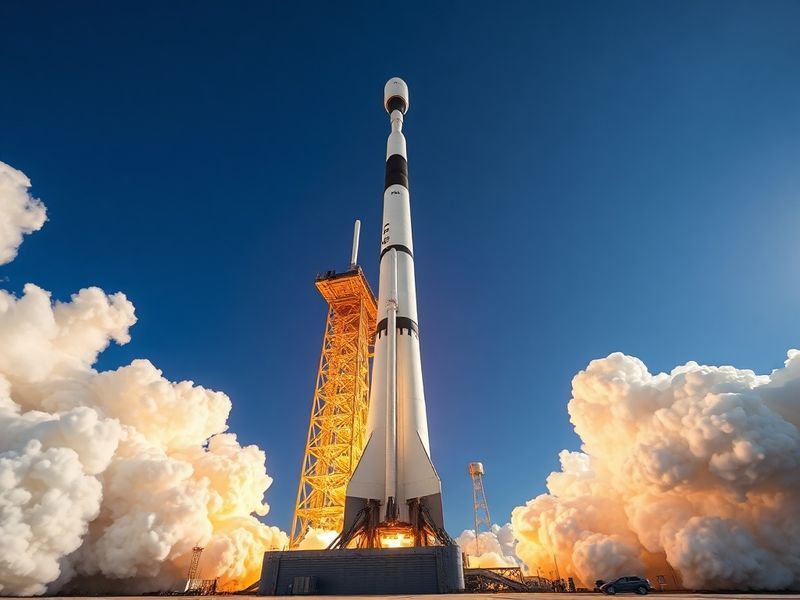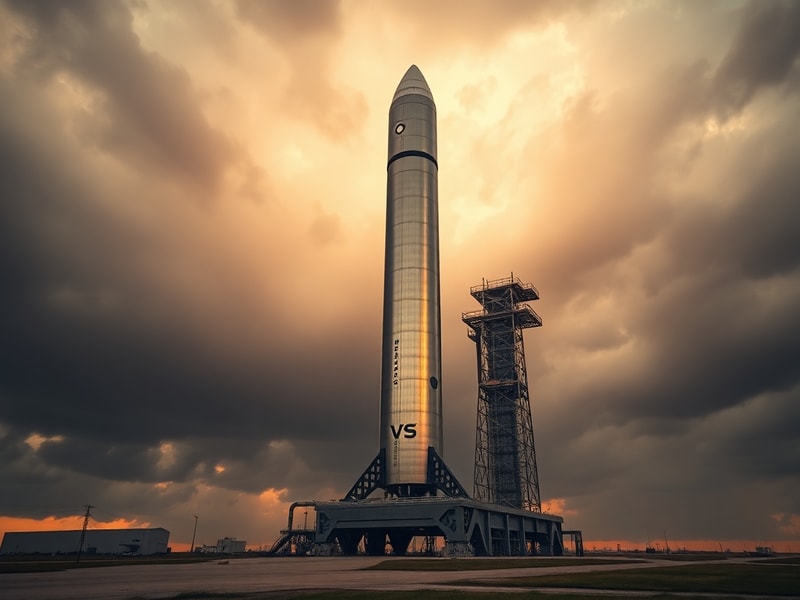
SpaceX’s potential initial public offering (IPO) has become one of the most anticipated financial events in technology and aerospace. While Elon Musk’s company has remained private for two decades, market pressures and ambitious expansion plans are pushing it closer to public markets. The implications stretch beyond Wall Street, touching global economies, scientific progress, and even cultural narratives about humanity’s future among the stars.
Unlike traditional corporate debuts, a SpaceX IPO would represent more than a financial transaction. It would signal the maturation of the commercial space industry and validate a business model built on reusable rockets, satellite internet, and interplanetary ambition. For years, SpaceX has operated with a Silicon Valley ethos—rapid iteration, bold risk-taking, and a disregard for convention. An IPO would force the company to balance that culture with the transparency and accountability demanded by public shareholders.
The Road to an IPO: A Timeline of Milestones
SpaceX was founded in 2002 with a single goal: making life multiplanetary. Two decades later, it has achieved milestones few thought possible. The company became the first privately funded entity to reach orbit in 2008 and sent the first commercial crew to the International Space Station in 2020. These successes, however, came with significant financial strain. SpaceX has operated largely through private funding rounds, raising billions from venture capitalists, sovereign wealth funds, and corporate backers.
In 2024, reports surfaced suggesting SpaceX was preparing for an IPO as early as 2025. While Musk has historically resisted public markets—citing regulatory scrutiny and loss of control—several factors are changing the calculus:
- Starlink’s growth: SpaceX’s satellite internet venture now serves over 3 million subscribers across 75 countries, generating recurring revenue streams that appeal to public investors.
- Starship’s progress: The fully reusable heavy-lift rocket, crucial for lunar and Mars missions, has seen rapid development. A successful orbital test would bolster confidence in long-term viability.
- Competitive pressure: Companies like Blue Origin and Rocket Lab are advancing, while traditional aerospace giants face delays. SpaceX needs capital to maintain its lead.
- Musk’s personal liquidity needs: With multiple ventures under Tesla, X (formerly Twitter), and The Boring Company, an IPO could provide liquidity without diluting his control.
Still, challenges loom. Regulatory hurdles, especially around Starlink’s global broadband operations, could complicate the process. Additionally, Musk’s unpredictable public statements and controversial leadership style may deter conservative institutional investors.
Global Reactions: From Silicon Valley to Shanghai
The potential IPO has sparked diverse reactions worldwide, reflecting how spaceflight has evolved from a government-led endeavor to a commercial enterprise with geopolitical weight.
In the United States, the IPO is seen as a litmus test for the commercial space sector. Analysts at Goldman Sachs and Morgan Stanley have highlighted SpaceX’s dominance in launch services, with over 80% market share in global orbital launches in 2023. A successful IPO could unlock billions in private investment for other space startups, creating a new wave of aerospace innovation.
In Europe, where governments are investing heavily in sovereign launch capabilities, reactions are mixed. The European Space Agency has accelerated plans for its Ariane 6 rocket amid concerns that SpaceX’s cost advantages could marginalize traditional players. Meanwhile, private European firms like Isar Aerospace and Rocket Factory Augsburg are positioning themselves as alternatives, hoping to attract capital from investors wary of Musk’s dominance.
In Asia, the response has been more pragmatic. China has accelerated its commercial space sector, with companies like Landspace and iSpace launching orbital missions. However, state-backed firms still dominate, and foreign investment in Chinese space ventures remains restricted. Japan and India, meanwhile, are exploring public-private partnerships to develop their own launch capabilities, seeing SpaceX’s IPO as both a threat and a model.
In the Middle East, sovereign wealth funds—particularly in Saudi Arabia and the UAE—have shown interest in pre-IPO investments. These funds see space as a strategic sector aligned with diversification efforts under Vision 2030 and similar national agendas. A SpaceX IPO could trigger a new wave of cross-border investment in aerospace.
The Cultural Impact: From Sci-Fi to Stock Ticker
SpaceX’s story resonates far beyond financial circles. It has become a modern myth—an embodiment of the belief that technology and audacity can solve humanity’s biggest challenges. This narrative has been amplified by Musk himself, who often frames SpaceX’s mission as existential: ensuring the survival of consciousness by becoming a multiplanetary species.
Popular culture has reinforced this vision. Films like Interstellar and The Martian depict a future where space travel is routine, while TV shows like For All Mankind explore alternate histories where space exploration thrives outside government control. SpaceX sits at the intersection of these dreams and reality. An IPO would transform the company from a visionary project into a corporate entity subject to quarterly earnings reports, market sentiment, and shareholder activism.
For many, this shift is bittersweet. The idea of Elon Musk—often portrayed as a real-life Tony Stark—answering to faceless investors may diminish the romanticism of spaceflight. Yet others argue that public markets could accelerate innovation by providing the capital needed for Mars colonization and beyond.
The cultural conversation extends to education and workforce development. SpaceX has inspired a generation of engineers, programmers, and entrepreneurs. A successful IPO could reinforce the idea that space is not just for governments or billionaires, but a viable industry where anyone can invest in humanity’s future.
What Investors Should Watch
For those considering an investment in a potential SpaceX IPO, several factors will be critical:
- Revenue diversification: While launch services and Starlink are core, new revenue streams like point-to-point Earth travel (via Starship) or lunar lander contracts (with NASA) could significantly boost valuation.
- Profitability timeline: SpaceX has historically prioritized growth over profitability. Investors will scrutinize margins, especially as competition increases.
- Leadership stability: Musk’s dual roles at Tesla and X, combined with his unpredictable online behavior, raise governance concerns. The board’s structure and independence will be closely examined.
- Regulatory environment: Starlink’s global operations face scrutiny from telecom regulators. Delays or restrictions could impact revenue projections.
- Technological breakthroughs: The success of Starship’s orbital tests and the deployment of the Starlink Gen2 constellation will be pivotal. Any failures could lead to significant volatility.
Investing in SpaceX would not be for the faint-hearted. The company operates in a high-risk, high-reward industry where setbacks are common and public perception can shift overnight. Yet the potential rewards—both financial and existential—are unparalleled. A successful IPO could redefine not just a company, but an entire sector.
As the countdown to a potential SpaceX IPO begins, one thing is clear: the intersection of space, finance, and culture has never been more dynamic. Whether it launches in 2025 or later, the event will be watched not just on Wall Street, but in classrooms, boardrooms, and living rooms around the world.
To stay updated on developments in aerospace and technology investment, follow our Technology section. For broader financial analysis, explore our Business coverage.