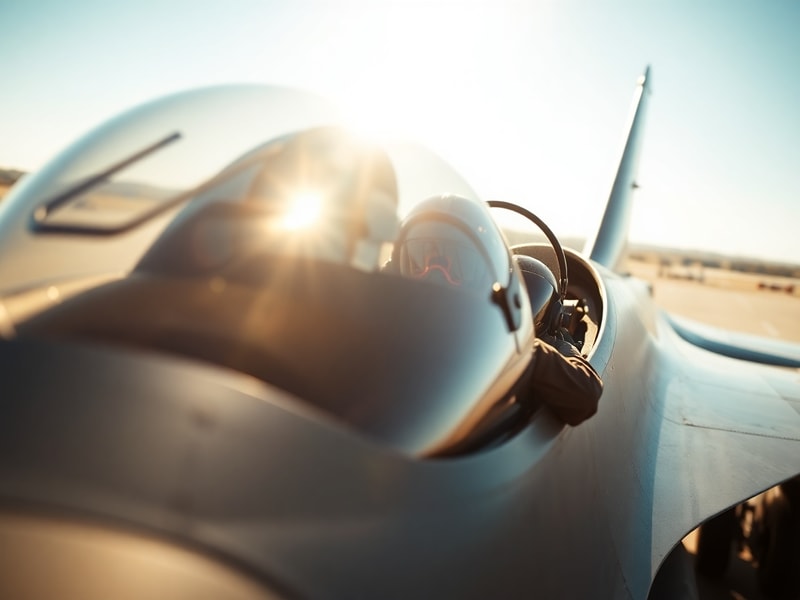
The life of a fighter pilot is one of precision, discipline, and split-second decision-making. These elite aviators operate some of the most advanced machinery in the world, often in high-stakes environments where every action counts. Their role extends beyond flying; they are strategists, technicians, and leaders who must balance physical endurance with mental acuity. The journey to earning those wings is long and demanding, requiring years of training and unwavering commitment.
To understand what it takes to become a fighter pilot, it’s worth examining the multifaceted demands of the role. From the rigorous selection process to the constant evolution of aerospace technology, this career path is as much about adaptability as it is about skill. Let’s explore what defines a fighter pilot and how one reaches this elite level of aviation.
What Does a Fighter Pilot Actually Do?
At its core, a fighter pilot’s job is to operate high-performance aircraft designed for air-to-air and air-to-ground combat. These missions can range from defensive patrols to precision strikes in hostile territories. The responsibilities extend far beyond simply flying the plane; pilots must manage complex weapons systems, interpret real-time data, and coordinate with ground crews and other aircraft.
Modern fighter jets like the F-35 Lightning II or the F-22 Raptor are marvels of engineering, equipped with advanced avionics, stealth capabilities, and networked systems. Pilots must master these technologies while maintaining situational awareness in dynamic combat environments. Their role often involves:
- Mission Planning: Analyzing objectives, weather conditions, and enemy threats before takeoff.
- Precision Flying: Executing maneuvers with extreme accuracy, often in high-G environments.
- Weapons Employment: Selecting and deploying ordnance with tactical precision.
- Team Coordination: Working alongside wingmen, AWACS operators, and ground support teams.
The physical and mental toll is significant. Pilots endure high G-forces during combat maneuvers, which can lead to blackouts if not managed properly. Stress levels are perpetually high, requiring exceptional focus and resilience. The job demands not just technical skill but also the ability to perform under pressure without compromising judgment.
The Selection Process: Who Makes the Cut?
Becoming a fighter pilot is highly competitive. Military branches like the U.S. Air Force, Navy, and Marines have stringent selection criteria that evaluate both physical and cognitive abilities. The process typically begins with an invitation to attend Officer Training School or a similar program for commissioned officers.
A candidate’s academic performance, leadership potential, and flight aptitude are scrutinized. Those who pass initial screenings undergo rigorous medical evaluations, including vision and hearing tests, as well as psychological assessments to ensure they can handle the mental demands of the role. Flight training itself is a multi-phase process, starting with basic flight instruction before advancing to more specialized training.
For civilians seeking to enter this field, pathways exist through programs like the U.S. Air Force’s ROTC or direct commissioning for experienced aviators. However, the majority of fighter pilots come from military backgrounds, where they’ve already proven their ability to thrive in high-pressure environments. The selection process is designed to weed out those who lack the discipline or adaptability to excel in this role.
The Training: From Novice to Combat-Ready
Flight training for fighter pilots is a grueling multi-year journey. After initial flight screening, candidates move on to advanced training programs tailored to specific aircraft. For example, U.S. Air Force pilots train at the Aviation Training Center in Laughlin AFB, Texas, where they learn to fly the T-38 Talon before transitioning to frontline fighters like the F-15 or F-16.
The curriculum is intense. Pilots undergo:
- Basic Flight Training: Learning aerodynamics, navigation, and emergency procedures.
- Advanced Tactics: Practicing dogfighting, surface-to-air missile evasion, and precision bombing.
- Weapons Systems Training: Simulating live-fire exercises to master weapons deployment.
- Survival and Evasion: Preparing for scenarios where they might need to evade capture or survive in hostile territory.
Simulator training plays a critical role in this process. Modern flight simulators replicate real-world combat scenarios with stunning accuracy, allowing pilots to practice responses to threats without the risks of live training. These simulations are often more demanding than actual flight hours, pushing pilots to their cognitive limits.
Even after completing initial training, pilots continue to hike their skills through regular evaluations and advanced courses. The learning never stops, as aircraft and tactics evolve continuously.
The Future of Fighter Pilots: Adapting to New Challenges
The role of the fighter pilot is undergoing significant transformation due to advancements in aerospace technology and the rise of unmanned systems. While drones like the MQ-9 Reaper have taken over some reconnaissance and strike missions, human pilots remain essential for complex decision-making and adaptability in unpredictable combat environments.
Emerging technologies such as artificial intelligence and hypersonic missiles are reshaping aerial warfare. Fighter pilots must now integrate with AI-driven systems, which assist in threat detection and mission planning. The F-35, for example, is designed to function as part of a networked combat ecosystem, where pilots rely on data fusion from multiple sources to make informed decisions.
Another evolving challenge is the proliferation of anti-access/area-denial (A2/AD) systems, which restrict freedom of movement in contested airspace. Fighter pilots must develop new tactics to operate in these environments, often leveraging stealth, electronic warfare, and long-range strike capabilities.
Despite these changes, the human element remains irreplaceable. The ability to process vast amounts of information, exercise judgment in ambiguous situations, and lead teams under pressure ensures that fighter pilots will continue to play a critical role in military aviation for decades to come.
Conclusion: A Career of Purpose and Sacrifice
Becoming a fighter pilot is a pursuit reserved for those willing to dedicate their lives to excellence. It’s a career defined by relentless training, unparalleled skill, and the courage to face uncertainty head-on. While the tools of the trade evolve, the core demands of the job remain unchanged: precision, adaptability, and unwavering resolve.
For those who succeed, the rewards are substantial—not just in terms of career opportunities, but in the knowledge that they serve at the highest levels of military aviation. Whether flying in peacetime exercises or real-world combat operations, fighter pilots represent the pinnacle of airmanship and leadership.
As technology advances and global security challenges grow more complex, the role of the fighter pilot will continue to adapt. Yet one thing is certain: the demand for skilled, disciplined aviators will never fade. For those with the drive to pursue this path, the skies are not the limit—they are the beginning.