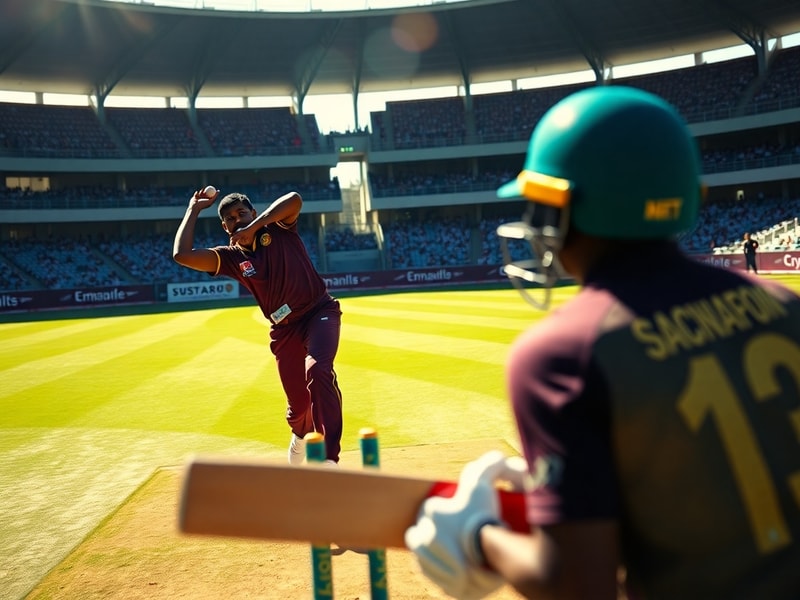
Cricket’s rich history is filled with rivalries that have shaped the sport’s legacy, but few have been as unpredictable or as fiercely contested as the battles between Sri Lanka and the West Indies. These teams, representing vastly different cricketing cultures, have produced some of the most dramatic matches in international cricket. Their encounters are not just contests of skill but also reflections of broader trends in the game—from the rise of spin bowling to the evolution of aggressive batting tactics. While the West Indies once dominated world cricket with their fearsome pace battery, Sri Lanka has carved its own identity through resilience and innovation.
The rivalry between these two teams transcends mere statistics. It embodies the spirit of cricket itself: a blend of tradition, adaptation, and sheer determination. Whether in Test matches, One-Day Internationals (ODIs), or Twenty20s, Sri Lanka and the West Indies have delivered performances that linger in the memories of fans. Their matches often hinge on moments of individual brilliance, tactical masterstrokes, or the sheer unpredictability that makes cricket the most captivating sport in the world.
The Historical Context: From West Indies Dominance to Sri Lanka’s Rise
The West Indies’ cricketing legacy is unparalleled. In the 1970s and 1980s, the Caribbean side was the undisputed force in world cricket, boasting a pace attack that struck fear into opposition teams. Players like Viv Richards, Clive Lloyd, and Malcolm Marshall became legends, redefining the game with their dominance. However, as the West Indies’ golden era waned in the late 1990s, Sri Lanka emerged as a new powerhouse, led by the charismatic Arjuna Ranatunga and later the genius of Muttiah Muralitharan.
Sri Lanka’s rise was not just about talent but about reimagining the game. The team introduced aggressive batting strategies, perfected the art of spin bowling, and cultivated a culture of fearlessness. This shift coincided with the West Indies’ struggles to maintain their former glory, creating a dynamic where Sri Lanka often held the upper hand. Yet, the West Indies remained a side capable of producing moments of brilliance, ensuring that their clashes with Sri Lanka were always fiercely competitive.
Their first Test match against each other in 1983 marked the beginning of a rivalry that would span decades. Since then, the two teams have faced off in numerous high-stakes encounters, each adding a new chapter to their storied history. The matches have been defined by contrasting styles—Sri Lanka’s methodical approach versus the West Indies’ flamboyant flair—yet both sides have shared a common trait: an unyielding desire to win.
Key Moments in Sri Lanka vs West Indies Cricket
- 1996 World Cup Final: Though not directly between these two teams, the 1996 World Cup showcased the rise of Sri Lanka and the enduring legacy of the West Indies. Sri Lanka’s victory in the final marked a turning point for Associate nations in cricket.
- 2001 Colombo Test: Sri Lanka’s 10-wicket victory in 2001 was a statement of intent, with Muralitharan’s 13-wicket haul dismantling the West Indies batting lineup.
- 2018 ODI Series: The West Indies’ 3-2 series win in 2018 was a reminder of their potential, with players like Shimron Hetmyer and Nicholas Pooran announcing their arrival on the international stage.
- 2021 T20 World Cup: A thrilling encounter where Sri Lanka’s spinners outclassed the West Indies’ power-hitters, highlighting the tactical nuances of modern T20 cricket.
Tactical Evolution: How Both Teams Have Adapted to Modern Cricket
The evolution of cricket has forced both Sri Lanka and the West Indies to adapt or risk being left behind. For Sri Lanka, the challenge has been maintaining their competitive edge amid financial constraints and the retirement of key players. The team’s reliance on spin bowling, once their greatest strength, has become both a blessing and a curse in an era where flat pitches and heavy bats dominate the game.
Muttiah Muralitharan’s retirement in 2011 marked the end of an era, but Sri Lanka has continued to produce world-class spinners like Rangana Herath and Wanindu Hasaranga. However, the decline in their pace bowling resources has exposed vulnerabilities, particularly in overseas conditions. The West Indies, on the other hand, have embraced a more aggressive approach, blending raw power with a new generation of fast bowlers like Shannon Gabriel and Alzarri Joseph.
The rise of T20 cricket has further influenced both teams. The West Indies, with their history of explosive batting, have thrived in the format, winning two T20 World Cups (2012 and 2016). Sri Lanka, while not as dominant, has produced match-winners like Kusal Perera and Dasun Shanaka, who have the ability to change games single-handedly. The tactical battles in T20s often revolve around bowling variations and powerplay dominance, elements where both teams have excelled in different phases of their histories.
Broader Implications: What This Rivalry Means for Global Cricket
The Sri Lanka vs West Indies rivalry is more than just a series of matches; it represents the broader shifts in world cricket. For decades, cricket was divided between the traditional powerhouses (Australia, England, India) and the underdogs (West Indies in the 1980s, Sri Lanka in the 1990s). Today, the rise of Associate nations like Afghanistan and Ireland, along with the financial struggles of traditional teams, has reshaped the landscape.
Sri Lanka’s struggles in recent years reflect the challenges faced by many cricket boards: balancing financial sustainability with on-field performance. The West Indies, meanwhile, have grappled with the dual pressures of maintaining their cricketing identity while dealing with governance issues and player availability. Their ability to produce thrilling cricket despite these challenges speaks to the resilience of Caribbean cricket culture.
Both teams also serve as a reminder of cricket’s global appeal. While India, Australia, and England dominate the financial and media landscape, Sri Lanka and the West Indies continue to produce players who capture the imagination of fans worldwide. Their matches, whether in packed stadiums or empty stands, carry a significance that transcends mere points on a table.
Looking Ahead: The Future of This Fiery Rivalry
The next chapter of the Sri Lanka vs West Indies rivalry promises to be as unpredictable as ever. Sri Lanka’s young talent, including Pathum Nissanka and Dunith Wellalage, represents a new generation eager to restore the team’s former glory. The West Indies, meanwhile, are in a transitional phase, with a mix of experienced campaigners and exciting newcomers like Brandon King and Yardeen Augustus.
One thing is certain: whenever these two teams meet, fans can expect drama. Whether it’s a Test match that stretches over five days or a T20 showdown decided in a few overs, the Sri Lanka vs West Indies clashes are a testament to cricket’s ability to surprise and delight. In an era where cricket is increasingly dominated by franchise leagues and player workloads, the traditional bilateral series between these two teams remain a vital part of the sport’s fabric.
For purists, there is something special about watching two teams with such distinct identities battle it out on the field. For younger fans, these matches offer a glimpse into cricket’s rich history and the enduring appeal of Test and ODI cricket. And for the players, representing their countries in such high-stakes encounters is the ultimate honor.
As the rivalry continues to evolve, one thing remains unchanged: the passion of the fans. Whether in Colombo, Gros Islet, or a neutral venue, the sight of Sri Lankan and West Indian supporters cheering for their teams is a reminder of why cricket is more than just a sport—it’s a celebration of culture, identity, and unrelenting competition.
For those looking to dive deeper into the world of cricket, explore more on Sports and Analysis at Dave’s Locker.
Conclusion
The Sri Lanka vs West Indies rivalry is a microcosm of cricket’s broader narrative—one of adaptation, resilience, and the enduring power of sport to unite and inspire. While the teams may not dominate the headlines as much as India or Australia, their battles on the field carry a significance that resonates with cricket lovers around the world. As both teams look to the future, their encounters will continue to shape the sport, proving that in cricket, history is always waiting to be rewritten.