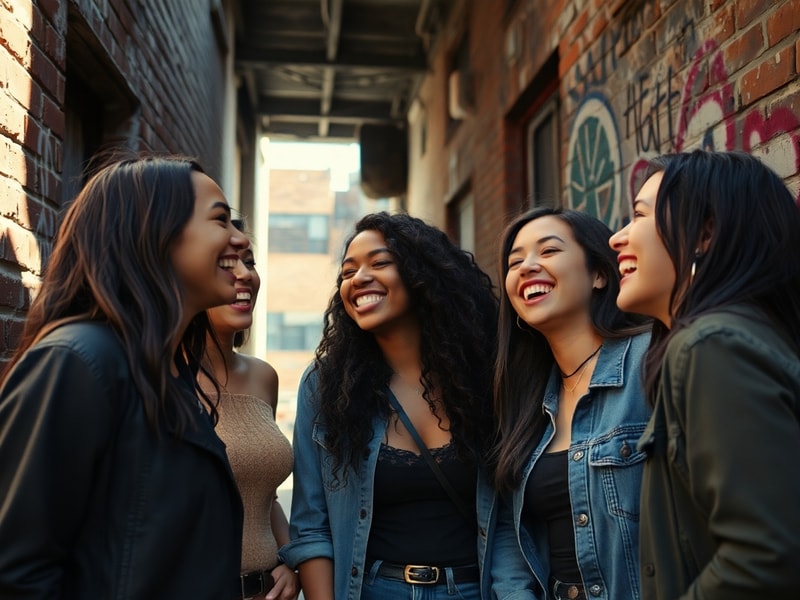
The Bring Me the Beauties documentary has emerged as a provocative exploration of beauty standards across cultures, challenging viewers to reconsider their perceptions of what makes someone beautiful. Directed by an independent filmmaker known for tackling societal taboos, the film traverses continents, interviewing women who defy conventional norms in their pursuit of self-expression. Through raw interviews and striking visuals, the documentary dismantles the idea that beauty is a monolithic concept.
What sets this documentary apart is its refusal to shy away from uncomfortable truths. It doesn’t just highlight the extremes of beauty—whether in fashion capitals like Paris or in communities where traditional practices still hold sway—it examines the psychological and emotional toll these standards can take. By centering the voices of the women themselves, the film avoids the pitfalls of outsider perspectives, instead offering an intimate, often jarring look at identity and autonomy.
The Global Stage of Beauty: Where Tradition Meets Modernity
Beauty standards are not static; they evolve with history, migration, and media influence. In Bring Me the Beauties, the director contrasts Western ideals of symmetry and youthfulness with practices in regions where beauty is tied to cultural heritage. For example, in parts of Southeast Asia, the practice of chua kucha—a traditional face-pulling ritual believed to enhance beauty—is documented alongside interviews with women who have undergone extensive cosmetic procedures to align with global trends.
The documentary also visits Brazil, where the concept of beleza is deeply intertwined with body positivity and the celebration of curves. Yet even here, the pressure to conform to certain body types persists, creating a paradox between cultural pride and external expectations. The film captures this tension through candid conversations, revealing how beauty ideals are both a source of empowerment and oppression.
In Africa, the documentary highlights the growing popularity of skin-lightening products, despite campaigns warning against the health risks. The filmmakers interview women who use these products, some of whom speak openly about the discrimination they face if their skin tone doesn’t meet Eurocentric standards. This segment underscores how globalization has accelerated the homogenization of beauty, often at the expense of local traditions.
The Psychological Toll: Beauty as a Double-Edged Sword
While beauty can be a form of self-expression, Bring Me the Beauties forces audiences to confront its darker side. The documentary doesn’t shy away from the mental health crisis linked to beauty standards, featuring interviews with psychologists and women who have struggled with body dysmorphia, eating disorders, and depression. One particularly haunting segment follows a young woman in South Korea, where the pressure to maintain a certain appearance has led to a surge in cosmetic surgeries—particularly double eyelid procedures and jawline contouring.
The film also delves into the rise of social media influencers who promote unrealistic beauty ideals, often blurring the line between empowerment and exploitation. In one scene, a Brazilian influencer known for her dramatic transformations admits that her content is curated to attract sponsorships, even if it means perpetuating harmful stereotypes. This segment serves as a stark reminder of how digital platforms have amplified the pressure to perform beauty, sometimes at the cost of authenticity.
For many women in the documentary, the pursuit of beauty is not just about vanity—it’s about survival. In regions where economic opportunities are scarce, conforming to beauty standards can mean the difference between landing a job or being overlooked. This economic angle adds another layer to the film’s critique, showing how beauty is commodified in ways that disproportionately affect marginalized communities.
The Filmmaker’s Vision: A Call for Critical Reflection
The director of Bring Me the Beauties has described the project as a “necessary provocation” rather than a definitive statement on beauty. By presenting multiple perspectives without judgment, the film invites viewers to question their own biases. The documentary’s structure is deliberate: it moves between cultural contexts, allowing audiences to draw their own conclusions rather than being spoon-fed a narrative.
One of the most compelling aspects of the film is its visual storytelling. The cinematography contrasts the artificial perfection of glossy advertisements with the raw, unfiltered reality of the women’s lives. For instance, a scene in a Tokyo subway station, where a woman applies makeup with surgical precision, is juxtaposed with a later shot of her breaking down in her apartment, questioning whether any of it is truly for herself.
The film’s soundtrack, composed of ambient sounds and minimalist scores, further enhances its introspective tone. There are no dramatic scores to manipulate emotions—instead, the audience is left to sit with the discomfort of the subjects’ stories. This approach aligns with the director’s belief that beauty is a deeply personal and subjective experience, one that cannot be reduced to a checklist of desirable traits.
Why This Documentary Matters Now
In an era where beauty filters and AI-generated images are blurring the line between reality and illusion, Bring Me the Beauties arrives at a critical moment. It challenges the notion that beauty is a universal language, instead presenting it as a complex, often contradictory construct shaped by history, economics, and power dynamics. The documentary doesn’t offer solutions—instead, it sparks a conversation that is long overdue.
For those interested in the intersection of culture and identity, this film is a must-watch. It’s particularly relevant for readers who follow trends in Culture or Entertainment, as it bridges the gap between art and activism. The documentary also serves as a reminder that beauty is not just about aesthetics; it’s about agency, resistance, and the right to define oneself on one’s own terms.
As the film’s tagline suggests, beauty is not something to be “brought” to us—it’s something we must redefine for ourselves. Bring Me the Beauties doesn’t just document the extremes of beauty; it asks us to confront our own complicity in upholding or challenging these standards. In doing so, it leaves viewers with more questions than answers—a testament to its power as a work of art.
The documentary has already sparked discussions in film festivals and academic circles, with some critics hailing it as a modern classic in the genre of socially conscious filmmaking. Whether it will inspire real-world change remains to be seen, but its impact on audiences is undeniable. For anyone who has ever felt the weight of beauty standards, this film is a mirror—and a call to action.