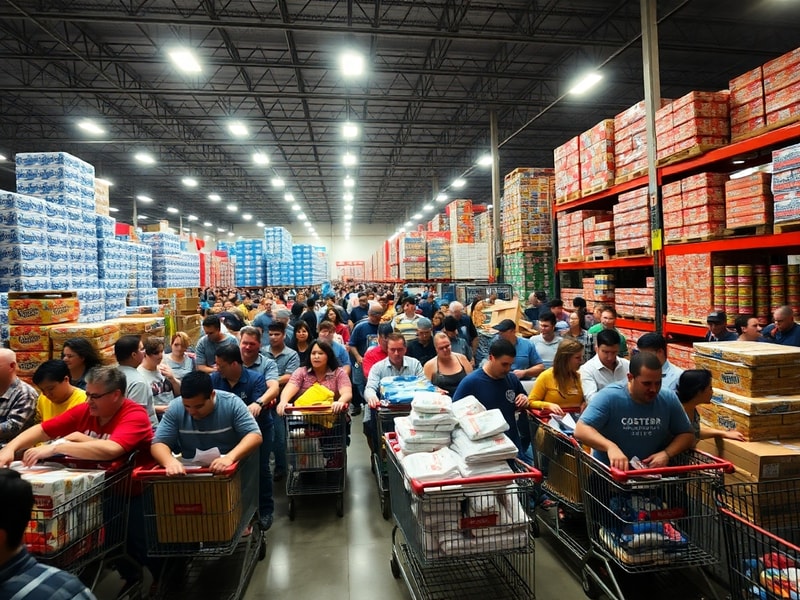
Panic buying at Costco is more than just a shopping spree—it’s a cultural phenomenon that reveals how people respond to uncertainty. When global crises strike or supply chains wobble, warehouse club shoppers transform into strategists, stockpiling bulk goods with the urgency of preparing for a siege. This behavior isn’t limited to one country or crisis; it’s a global pattern that reflects economic anxiety, social trust, and even psychological comfort.
Costco, with its cavernous aisles and pallet-load deals, becomes a battleground where shoppers compete not just for value, but for perceived security. The sight of empty toilet paper aisles or stripped-down bulk bins tells a story far beyond retail—it’s a mirror of collective behavior under pressure.
The Psychology Behind Bulk Buying: Why We Overstock
At its core, panic buying is a survival instinct dressed in consumer clothing. Behavioral psychologists point to several key drivers: loss aversion, herd mentality, and the illusion of control. When people fear scarcity—whether real or amplified by media—they act to regain agency. Buying in bulk provides a sense of preparedness that small, frequent purchases cannot.
During the COVID-19 pandemic, Costco shoppers weren’t just buying toilet paper; they were buying time. A 2020 study published in Psychological Science found that people over-purchased essentials not only because they feared running out but because bulk buying felt like an investment in stability. The same logic applies to other crises, from natural disasters to economic downturns.
The warehouse aesthetic—bright lights, towering shelves, and the promise of low prices—adds to the ritual. Shoppers move through the store with a mission, guided by gut feeling more than rational need. After all, who hasn’t felt a pang of guilt returning home with a 40-pound bag of rice they’ll never finish? Yet the purchase feels justified in the moment.
A Global Pattern: When Costco Becomes a Refuge
Costco’s international presence offers a fascinating case study in how panic buying transcends borders. In Japan, where the retailer operates under the name Costco Wholesale Japan, shoppers famously cleared shelves of toilet paper and instant ramen during the 2011 earthquake and tsunami. The pattern repeated in 2020, with bulk rice and disinfectants flying off shelves within hours of lockdown announcements.
In Canada, Costco locations near major cities became early indicators of public anxiety. During the 2008 financial crisis, shoppers loaded up on bulk groceries and household staples, treating the warehouse like a financial safe haven. A Costco employee in Toronto recalled, “People were buying enough to last six months. Not because they needed it, but because they didn’t know what was coming.”
Even in countries where Costco isn’t the dominant retailer, its presence sparks similar behavior. In Australia, where Costco has a growing footprint, shoppers have been known to clear out bulk meat and canned goods during bushfire season, treating the store as a community lifeline.
This global consistency suggests that panic buying isn’t about Costco specifically—it’s about the warehouse model itself. The bulk format, combined with membership psychology, creates a sense of urgency and exclusivity that smaller stores lack. When panic hits, Costco becomes a fortress of abundance.
How Costco Adapts: Inventory, Communication, and Crisis Response
Costco’s ability to weather panic-buying storms stems from a mix of operational discipline and customer psychology management. The company doesn’t just restock shelves; it reassures shoppers through subtle cues. During the pandemic, Costco limited purchases of high-demand items like hand sanitizer and paper products, not to stoke fear, but to prevent hoarding.
Internally, Costco relies on real-time data to predict demand spikes. According to former executives, the company tracks sales patterns across regions, allowing it to reroute inventory from less affected areas. This agility prevents the kind of empty-shelf chaos seen in traditional supermarkets.
Communication also plays a role. Costco’s emails to members during crises often include practical advice: “Buy what you need for two weeks, not two months.” This messaging balances urgency with responsibility, a delicate act that prevents total system collapse.
The Ripple Effect: How Panic Buying Reshapes Communities
Beyond the store, panic buying creates subtle shifts in social behavior. When Costco shoppers clear out bulk meat, local butchers and grocers see an uptick in customers seeking smaller, more sustainable purchases. Conversely, when Costco restocks, the return of abundance can feel like a collective sigh of relief.
In some cases, panic buying fosters community resilience. During the 2019 protests in Hong Kong, Costco shoppers formed buying groups to split bulk purchases, ensuring no one went without essentials. Similar patterns emerged in the U.S. during the 2020 racial justice protests, where shoppers coordinated bulk purchases to support local food banks.
Yet the ripple effects aren’t always positive. Small businesses struggle to compete when Costco’s bulk pricing draws customers away. And when panic buying leads to price gouging or reselling, trust in the system erodes. A 2021 survey by Consumer Reports found that 42% of Americans who engaged in panic buying later regretted their purchases, citing waste and financial strain.
Lessons from the Aisles: What Panic Buying Teaches Us
Costco panic buying isn’t just about toilet paper or bulk mac and cheese—it’s a reflection of how people navigate uncertainty. The behavior reveals deep-seated fears about scarcity, control, and the reliability of systems we often take for granted. In an era of climate change, pandemics, and economic volatility, these instincts aren’t going away.
For retailers, the challenge is to balance abundance with responsibility. For shoppers, the lesson is to buy mindfully, even in a crisis. And for society, the takeaway is clear: our shopping carts don’t just hold goods—they hold the anxieties and hopes of the times we live in.
Next time you see a Costco aisle stripped bare, remember: it’s not just about the product. It’s about the story we’re all trying to write in uncertain times.
For more on retail trends and consumer behavior, explore our Business and Culture sections.