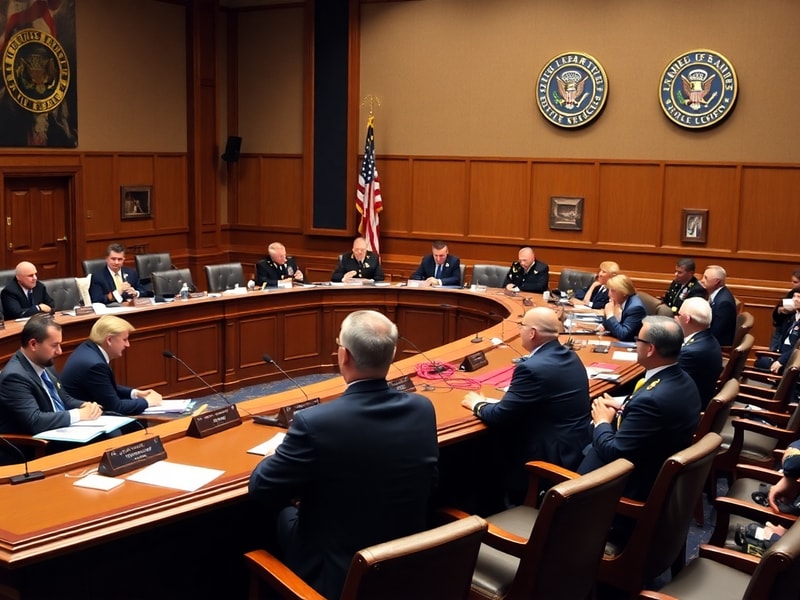
The House Committee on Armed Services (HASC) stands as one of the most powerful and influential panels in the U.S. Congress. Established to oversee the nation’s military and defense policies, the committee plays a critical role in shaping national security, military budgets, and strategic priorities. Its decisions impact everything from troop deployments to weapons procurement, making it a focal point for both policymakers and the public.
With jurisdiction over the Department of Defense (DoD), the committee’s influence extends across all branches of the armed forces. Members of the HASC are tasked with reviewing legislation, conducting oversight hearings, and ensuring that military operations align with congressional intent. Given its broad mandate, the committee often becomes a battleground for debates on defense spending, modernization, and the ethical implications of military actions.
Understanding how the House Committee on Armed Services operates provides insight into how U.S. defense policy is crafted. This article explores its structure, key responsibilities, recent legislative activity, and the challenges it faces in an era of evolving global threats.
The Structure and Leadership of the House Committee on Armed Services
The HASC is composed of 71 members, with 35 Republicans and 35 Democrats as of the 2023-2024 session. The committee is led by a chair and a ranking member, positions that carry significant weight in determining legislative priorities. The chair, currently Rep. Mike Rogers (R-AL), sets the agenda, schedules hearings, and guides the committee’s legislative efforts.
Subcommittees within the HASC further divide responsibilities, allowing members to specialize in specific areas. These include:
- Seapower and Projection Forces: Oversees naval operations, shipbuilding, and maritime strategy.
- Strategic Forces: Focuses on nuclear weapons, missile defense, and space-based defense systems.
- Tactical Air and Land Forces: Examines fighter jets, armored vehicles, and ground combat systems.
- Readiness: Assesses military training, equipment readiness, and deployment cycles.
- Intelligence and Special Operations Forces: Monitors covert operations, cyber warfare, and special forces activities.
The committee’s bipartisan nature means that while leadership often shifts with congressional control, its core functions remain consistent. However, ideological divides—particularly on issues like defense spending and military intervention—can lead to contentious debates and protracted negotiations.
Key Responsibilities and Legislative Powers
The HASC’s primary responsibility is the annual National Defense Authorization Act (NDAA), a sweeping piece of legislation that authorizes military spending and sets defense policies for the fiscal year. The NDAA is one of the few bills that typically passes Congress with strong bipartisan support, though contentious provisions occasionally spark controversy.
Beyond the NDAA, the committee exercises oversight over the DoD through hearings, investigations, and reports. Recent years have seen increased scrutiny on issues such as:
- Military recruitment and retention challenges.
- The ethical implications of autonomous weapons systems.
- Supply chain vulnerabilities in defense manufacturing.
- Climate change’s impact on military installations.
The committee also plays a role in confirming senior military leaders, including the Chairman of the Joint Chiefs of Staff and service branch chiefs. These confirmation hearings provide an opportunity for members to question nominees on their strategic visions and preparedness for future conflicts.
Recent Legislative Activity and Policy Debates
The 2023 NDAA, signed into law in December 2022, authorized $858 billion in defense spending, a record high that reflected growing concerns over global instability. Key provisions included:
- Support for Ukraine: The bill included $45 billion in aid for Ukraine’s war effort against Russia, signaling strong congressional support for NATO allies.
- Countering China: Funding for hypersonic missile defense, semiconductor manufacturing incentives, and Pacific military posture adjustments.
- Military Modernization: Investments in next-generation fighter programs, nuclear submarine upgrades, and artificial intelligence-driven defense systems.
- Personnel Reforms: Expanding mental health services, addressing sexual assault in the ranks, and improving housing conditions for service members.
However, the NDAA process has not been without friction. Progressive Democrats and fiscal conservatives have clashed over spending levels, with some arguing that the Pentagon’s budget is excessive and lacks sufficient accountability. Meanwhile, hawkish members push for even greater investment in deterrence capabilities amid rising tensions with China and Russia.
Another contentious issue is the committee’s role in shaping policy on controversial military technologies. The rise of drone warfare, cyber capabilities, and AI-driven decision-making has raised ethical questions about accountability and proportionality in modern conflict. The HASC has held hearings on these topics, but disagreements persist over how to balance innovation with moral responsibility.
Challenges and Future Directions
The House Committee on Armed Services faces a complex landscape as it navigates an era of great-power competition. The committee must address several pressing challenges:
- Budget Constraints vs. Strategic Ambitions: Balancing the need for modernization with fiscal responsibility remains a persistent dilemma.
- Technological Disruption: Keeping pace with rapid advancements in AI, cyber warfare, and hypersonic weapons requires agility and foresight.
- Civil-Military Relations: Ensuring civilian oversight while respecting the military’s professional autonomy is an ongoing debate.
- Global Hotspots: The committee must respond to crises in Ukraine, the Middle East, and the Indo-Pacific without overextending U.S. forces.
Looking ahead, the HASC is likely to play a pivotal role in shaping the Pentagon’s response to emerging threats. The committee’s annual NDAA will continue to serve as a barometer for congressional priorities, while its oversight functions will scrutinize the military’s adaptation to new challenges.
For those interested in defense policy, the HASC’s work offers a window into the inner workings of U.S. military strategy. Whether through legislative battles or oversight hearings, the committee’s decisions will have far-reaching consequences for national security and global stability.
To explore more about defense policies and their implications, visit our News and Politics sections for ongoing coverage.