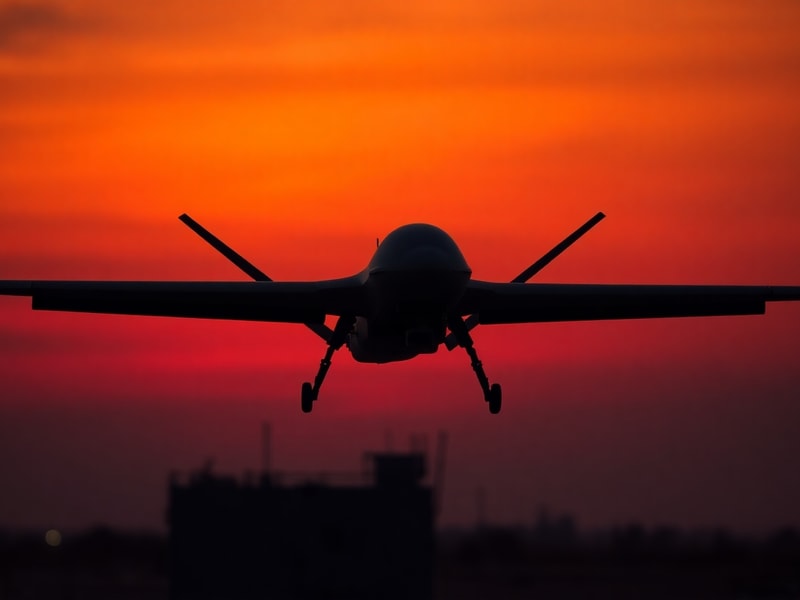
How Drones Are Changing Modern Warfare in the 21st Century
“`html
Drone Warfare: The New Battlefield of the 21st Century
Drone warfare has reshaped modern conflict, blurring the lines between front lines and remote operations. These unmanned aerial systems, once confined to surveillance, now carry weapons, gather intelligence, and redefine military strategy. From the deserts of the Middle East to the skies over Ukraine, drones have become a defining feature of 21st-century warfare.
The evolution of drone technology has been rapid. Early models were little more than flying cameras, but today’s drones can strike targets with precision, jam communications, and even conduct electronic warfare. This shift has democratized military power, allowing smaller nations and non-state actors to project force in ways previously unimaginable. The implications are profound, altering not just how wars are fought but who fights them.
The Rise of Unmanned Systems in Modern Conflict
Drones first gained prominence during the Cold War, primarily as reconnaissance tools. The U.S. military’s use of the Predator drone in the 1990s marked a turning point, proving that unmanned systems could be both effective and controversial. The post-9/11 era accelerated their adoption, with drones becoming central to counterterrorism operations in Afghanistan, Pakistan, and Yemen.
Nations like Israel, China, and Turkey have since developed their own drone programs, each tailored to their strategic needs. Israel’s use of drones in the 2006 Lebanon War demonstrated their value in suppressing enemy air defenses. Meanwhile, Turkey’s Bayraktar TB2 became a symbol of modern asymmetric warfare during the 2020 Nagorno-Karabakh conflict, where it helped Azerbaijan secure a decisive advantage over Armenia.
The proliferation of drones has also led to ethical dilemmas. Civilian casualties in drone strikes have sparked international outrage, particularly in regions like Pakistan and Somalia. The lack of transparency surrounding these operations has fueled debates about accountability and the rule of law in warfare.
Drones in Ukraine: A New Model for Warfare
The war in Ukraine has become a testing ground for drone warfare. Both Russia and Ukraine have deployed drones for surveillance, strikes, and electronic warfare, creating a dynamic where technology often outpaces traditional military doctrine. Ukrainian forces, in particular, have leveraged commercial drones like the DJI Mavic for reconnaissance and first-person-view (FPV) drones for precision strikes.
Russia, meanwhile, has relied heavily on Iranian-made Shahed-136 drones, which have become notorious for their long-range strikes against Ukrainian infrastructure. These drones, though relatively slow and vulnerable, have forced Ukraine to invest heavily in air defense systems. The conflict has also seen the use of naval drones, with Ukraine conducting daring attacks on Russia’s Black Sea Fleet.
The drone war in Ukraine has highlighted several key trends:
- Decentralization of warfare: Drones allow small units to conduct high-impact operations without large-scale deployments.
- Hybrid tactics: Combining drones with traditional artillery and electronic warfare has created a layered approach to combat.
- Commercial off-the-shelf (COTS) innovation: Civilian drones, adapted for military use, are closing the gap between high-end military tech and accessible solutions.
This conflict has demonstrated that drone warfare is no longer the exclusive domain of superpowers. Even non-state actors, such as Hezbollah and Houthi rebels, have integrated drones into their arsenals, signaling a shift toward a more fragmented and unpredictable battlefield.
The Global Drone Arms Race
The militarization of drones has sparked a global arms race. The U.S., China, and Israel remain the top exporters, but countries like Iran, Turkey, and South Korea are rapidly expanding their drone industries. This competition has led to a diversification of drone capabilities, from loitering munitions like the Turkish Kargu-2 to swarming drones designed to overwhelm enemy defenses.
China’s rise as a drone powerhouse has been particularly notable. Its Wing Loong drones have been deployed in conflicts across Africa and the Middle East, often under the guise of counterterrorism. Meanwhile, Iran’s drone exports have strengthened its influence in proxy conflicts, from Yemen to Syria. The global market for military drones is projected to exceed $20 billion by 2030, driven by demand from both state and non-state actors.
This arms race is not without risks. The proliferation of drones has increased the likelihood of miscalculation, particularly in tense regions like the South China Sea or the Korean Peninsula. There are also concerns about drones being used for domestic repression, as seen in the reported use of Chinese-made drones by governments in Africa and Central Asia.
The Future of Drone Warfare
The next frontier of drone warfare lies in autonomy and artificial intelligence. The U.S. military’s Replicator initiative aims to field thousands of AI-driven drones by 2025, capable of operating in swarms without direct human control. Similarly, China has invested heavily in swarming drone technology, with demonstrations showing hundreds of drones coordinating in real time.
However, the rise of autonomous drones raises ethical and legal questions. Who is responsible when an AI-driven drone causes civilian casualties? How do existing laws of war apply to machines that make their own targeting decisions? These questions remain unresolved, leaving the future of drone warfare shrouded in uncertainty.
Another emerging trend is the use of drones in hybrid warfare. Russia’s use of drones in Ukraine, combined with cyberattacks and disinformation, illustrates how unmanned systems can be integrated into broader strategies of coercion and destabilization. This blurring of lines between war and peace complicates international responses, as traditional frameworks struggle to address these new forms of conflict.
The cultural impact of drones is also worth noting. In many parts of the world, drones have become symbols of both technological progress and imperial overreach. In the West, they are often framed as tools of precision and restraint, while in regions affected by drone strikes, they are seen as instruments of terror. This dichotomy underscores the complex role drones play in shaping global perceptions of power and justice.
Conclusion: A Double-Edged Sword
Drone warfare has transformed the nature of conflict, offering unprecedented capabilities while introducing new risks. From the battlefields of Ukraine to the streets of war-torn cities, drones have become a ubiquitous presence, reshaping how wars are fought and perceived. Their proliferation has democratized military power, but it has also lowered the threshold for violence, making war more accessible and less predictable.
The future of drone warfare will likely be defined by three key factors: technological advancement, ethical debate, and geopolitical competition. As drones become faster, smarter, and more autonomous, the world will need to grapple with the consequences of a battlefield where machines play an ever-larger role. Whether this leads to greater precision in warfare or simply more efficient destruction remains an open question.
One thing is certain: drones are here to stay. The question is not whether they will continue to shape warfare, but how the world will adapt to their presence.