Why the Monaco Grand Prix is Formula 1’s Most Iconic Race
“`html
The Monaco Grand Prix: A Race Unlike Any Other
The Monaco Grand Prix stands as the crown jewel of Formula 1, a race that blends speed, precision, and sheer drama into a three-weekend spectacle unlike any other in motorsport. Held annually on the streets of Monte Carlo, this event transforms the glamorous Riviera into a high-stakes battleground where the world’s best drivers navigate a labyrinth of tight corners, elevation changes, and unforgiving barriers. More than just a race, the Monaco Grand Prix is a celebration of Formula 1’s unique blend of athleticism, engineering, and showmanship.
The History and Prestige of Monaco
First held in 1929, the Monaco Grand Prix predates the modern Formula 1 World Championship by nearly two decades. Its creation was the brainchild of Antony Noghès, a member of Monaco’s Automobile Club, who envisioned a race that would showcase the principality’s prestige and technical challenges. The inaugural event was won by William Grover-Williams, driving a Bugatti, in a race that immediately set the tone for Monaco’s reputation as a race where mistakes are unforgiving and glory is eternal.
By the time Formula 1 was established in 1950, Monaco was already a fixture in the racing calendar. The race joined the championship in 1955 and has remained a constant ever since, its status elevated by its unique street circuit. The circuit’s layout, unchanged in its essential form since 1955, winds through the heart of Monte Carlo, passing landmarks like the Casino, the Hotel de Paris, and the Prince’s Palace. This juxtaposition of speed and luxury has made Monaco the most iconic race in Formula 1, a status underscored by its place as the only Grand Prix to be held on the same weekend as the Monaco Yacht Show and the Cannes Film Festival.
- 1929: First Monaco Grand Prix held, won by William Grover-Williams.
- 1950: Monaco joins the Formula 1 World Championship.
- 1955: The circuit’s layout is finalized, remaining largely unchanged to this day.
- 1961: Stirling Moss wins in a Lotus, cementing Monaco’s reputation for unpredictability.
- 1984: Alain Prost wins in the rain, a race remembered for Nigel Mansell’s dramatic crash.
- 2008: Lewis Hamilton becomes the first black driver to win the Monaco Grand Prix.
The Circuit: A Street Track Like No Other
The Circuit de Monaco is a paradox—a race track that is simultaneously one of the slowest and most technically demanding in Formula 1. Measuring just 3.337 kilometers, it is the shortest circuit on the calendar, yet its narrow streets and elevation changes demand a level of precision that few other tracks can match. The race distance, set at 78 laps, covers 260.286 kilometers, a marathon in a sport where every millisecond counts.
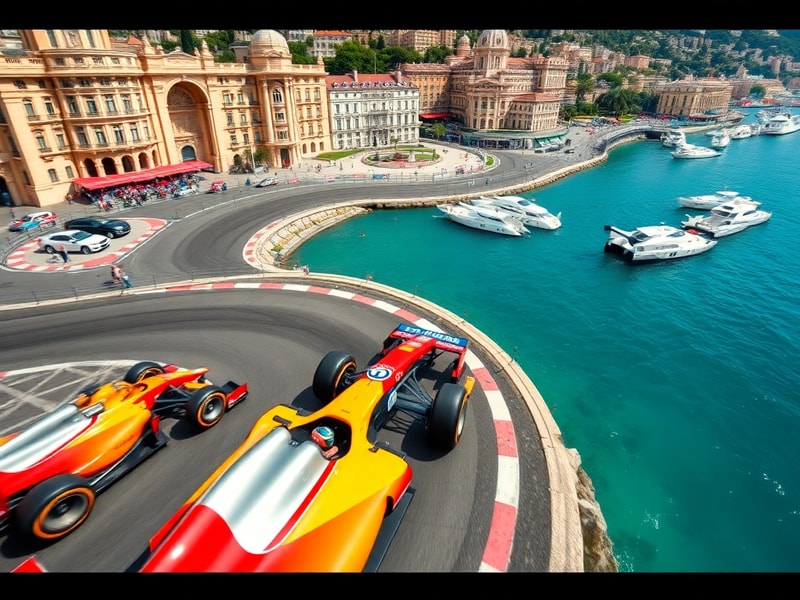
The circuit’s most famous section is the start-finish straight, which runs along the harbor before plunging into the tunnel beneath the Fairmont Hotel. This tunnel, where speeds can exceed 160 km/h in the dark, is one of the most treacherous parts of the track. Drivers emerge into the sunlight at the chicane, a section that has witnessed countless crashes over the years. Other notable corners include the Loews hairpin, the slowest corner in Formula 1, and the swimming pool complex, where the track dips down to the water’s edge before climbing back up to the Casino.
Qualifying at Monaco is particularly critical. With so little room for error, the pole position is often the difference between a podium finish and a weekend of frustration. The Saturday session is split into three parts, each lasting 15 minutes, with the fastest drivers progressing to the next phase. The final segment, known as Q3, is where the fastest lap times are set, and the grid is determined. A mistake here can cost a driver dearly, as overtaking on race day is nearly impossible at Monaco.
The Race: Where Strategy and Luck Collide
Winning the Monaco Grand Prix is as much about strategy as it is about raw speed. The race is a chess match played at 300 km/h, where pit stops, tire choices, and fuel loads can make or break a driver’s chances. The narrow streets and lack of runoff areas mean that one mistake can end a race instantly, making reliability and consistency paramount. Pit stops are critical, as the time lost in the pits can be the difference between victory and defeat.
One of the most famous examples of Monaco’s strategic complexity came in 1996, when Olivier Panis took an unexpected victory in the rain. Starting 14th, Panis benefited from a chaotic race where multiple favorites crashed or retired. His strategy, which included a late pit stop for dry tires as the track dried, allowed him to capitalize on the conditions and secure a historic win. This race underscored Monaco’s reputation as a race where anything can happen, and where the underdog can rise to the occasion.
Another defining feature of the Monaco Grand Prix is the safety car. The narrow streets and lack of runoff mean that even minor incidents can bring out the safety car, which can dramatically alter the outcome of the race. In 2008, Lewis Hamilton capitalized on a late safety car to overtake Felipe Massa and secure his first Monaco victory. The race also saw Nelson Piquet Jr. crash out while running second, a reminder of the circuit’s unforgiving nature.
The Glamour and the Challenges of Monaco
Beyond the racing, the Monaco Grand Prix is a cultural phenomenon, a three-weekend extravaganza that blends sport, luxury, and high society. The paddock is a who’s who of the Formula 1 world, with team principals, sponsors, and celebrities rubbing shoulders in the yacht-lined harbor. The VIP hospitality suites are some of the most exclusive in the world, hosting everyone from Hollywood stars to royalty. The race weekend is as much about the after-parties as it is about the on-track action, with events like the F1 Paddock Club and the Monaco Grand Prix Gala raising millions for charity.
Yet, Monaco’s glamour comes with its challenges. The race is a logistical nightmare, with teams and equipment transported to the principality via a fleet of trucks and planes. The circuit’s tight confines make it difficult for spectators to get close to the action, and the cost of attending is among the highest in Formula 1. For drivers, the pressure is immense. The race is a career-defining event, and the scrutiny from fans and media is relentless. A win at Monaco can elevate a driver to legendary status, while a mistake can tarnish their reputation for years.
The Monaco Grand Prix is also a test of endurance. The race is held in late May, a time when the Mediterranean heat can be oppressive. Drivers must contend with temperatures that can exceed 30°C in the cockpit, while the physical demands of navigating the circuit’s tight corners for nearly two hours can be exhausting. The race is a reminder that Formula 1 is not just a test of speed, but of mental and physical resilience.
Why Monaco Matters in Formula 1
The Monaco Grand Prix is more than just a race; it is a symbol of Formula 1’s unique blend of speed, spectacle, and tradition. It is the only race where the pit lane is longer than the race track itself, where the barriers are just inches from the racing line, and where the difference between success and failure can come down to a single corner. For drivers, winning at Monaco is the pinnacle of their careers. For teams, it is a chance to showcase their engineering prowess in one of the most demanding environments in motorsport. For fans, it is a spectacle unlike any other, a three-weekend extravaganza that captures the essence of Formula 1.
In an era where Formula 1 is constantly evolving, with new circuits and technologies reshaping the sport, Monaco remains a constant. Its unique challenges and iconic status ensure that it will always hold a special place in the hearts of drivers and fans alike. As Lewis Hamilton once said, “Monaco is the race that every driver wants to win. It’s the most prestigious race on the calendar, and it’s a race that defines your career.”
For those who have never experienced the Monaco Grand Prix, it is more than just a race; it is an event that must be seen to be believed. From the roar of the engines echoing off the buildings to the dazzling displays of speed and precision, Monaco is a testament to the thrill of Formula 1. It is a race where the past and present collide, where the glitz of Monte Carlo meets the grit of motorsport, and where legends are made.
As Formula 1 continues to grow and change, the Monaco Grand Prix will remain a cornerstone of the sport, a reminder of why this incredible spectacle captivates millions around the world. Whether you’re a lifelong fan or a casual observer, the Monaco Grand Prix is an event that demands your attention, a race that will leave you on the edge of your seat and begging for more.
For more insights into the world of Formula 1, visit our Sports section, where we cover the latest news, analysis, and stories from the world of motorsport.