The Arizona Attorney General’s office has taken a significant step in the ongoing fallout from the 2020 election by prosecuting a group of individuals accused of participating in a scheme to submit false electoral votes for Donald Trump. This case, unfolding in a state that played a pivotal role in the election’s outcome, carries implications that extend far beyond Arizona’s borders. The prosecution represents one of the most concrete legal responses to efforts that sought to overturn the certified results of the 2020 presidential election.
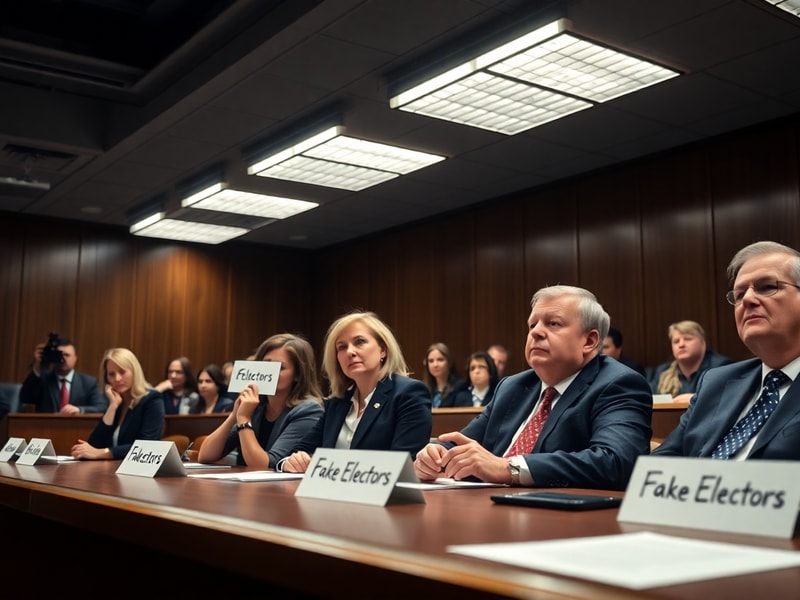
At the heart of the case are allegations that a slate of individuals presented themselves as legitimate electors from Arizona, even though the state’s official electoral votes had already been certified for Joe Biden. The defendants, including prominent figures within the state’s Republican Party, stand accused of forging documents and conspiring to interfere with the certification process. The charges carry potential penalties that include felony convictions and significant prison time, underscoring the gravity of the allegations.
The Legal Framework Behind the Charges
Arizona’s legal team has built its case around several statutes, including forgery, conspiracy, and election fraud. The prosecution argues that the defendants knowingly participated in a coordinated effort to undermine the integrity of the election by presenting fraudulent electoral certificates to Congress and the National Archives. These documents, which mirrored the format of legitimate electoral votes, were intended to create an alternate reality in which Trump, rather than Biden, had won Arizona’s 11 electoral votes.
The legal strategy employed by the state hinges on the distinction between legitimate and fraudulent electoral processes. Arizona’s election laws are clear: only electors chosen by the certified winner of the popular vote in the state are legally authorized to cast votes for president. The prosecution contends that the defendants deliberately ignored this process, instead submitting documents that falsely claimed Trump had won the state. This act, according to the state’s legal team, constitutes a direct violation of Arizona’s election statutes.
One of the most critical aspects of the case is the evidence presented by the prosecution. Investigators have relied on a combination of digital records, witness testimonies, and documentary evidence to build their argument. For example, the prosecution has highlighted the fact that the false certificates included signatures from individuals who were not certified electors, as well as dates and details that did not align with the actual certification timeline. These discrepancies, the state argues, are indicative of a deliberate attempt to deceive.
Key Evidence in the Prosecution’s Case
- Forged Certificates: The false electoral certificates submitted by the defendants featured signatures from individuals who were not part of the certified slate of electors. Additionally, the documents contained errors in dates and formatting that did not match the official records.
- Digital Trails: Investigators have traced the creation and distribution of these documents through digital records, including emails and text messages that reveal the coordination among the defendants.
- Witness Testimonies: Several individuals involved in the scheme have provided testimony to prosecutors, detailing the planning and execution of the false electors’ scheme. These testimonies have been corroborated by documentary evidence.
- Lack of Legal Authority: The prosecution has emphasized that the defendants lacked any legal authority to act as electors. Arizona’s election laws explicitly state that only the certified winner’s electors can cast votes, a fact the defendants allegedly disregarded.
Political Context and Broader Implications
The prosecution of the fake electors in Arizona is not occurring in a vacuum. It is part of a broader effort by state and federal authorities to hold accountable those who participated in efforts to overturn the results of the 2020 election. Arizona, a state that has been at the center of election-related controversies, serves as a testing ground for the legal and political consequences of such actions. The outcome of this case could set a precedent for similar prosecutions in other states, including Georgia and Michigan, where fake electors schemes were also attempted.
Politically, the case has reignited debates about election integrity and the role of partisanship in the electoral process. Supporters of the defendants argue that their actions were a legitimate protest against what they perceived as widespread election fraud, a claim that has been repeatedly debunked by courts and election officials. Critics, however, view the scheme as a blatant attempt to subvert democracy and undermine the will of the voters. The prosecution’s decision to pursue felony charges reflects a broader commitment to upholding the rule of law, even in cases where the motivations are politically charged.
The timing of the prosecution adds another layer of complexity. With the 2024 election on the horizon, the case has become a focal point for discussions about election security and the potential for future attempts to manipulate electoral processes. Legal experts note that the outcome of this case could influence how similar schemes are addressed in the future, particularly as partisan tensions continue to escalate.
The Role of Arizona in the 2020 Election
Arizona’s significance in the 2020 election cannot be overstated. The state, which had not voted for a Democratic presidential candidate since 1996, flipped to Biden by a narrow margin of just over 10,000 votes. This shift was pivotal in securing Biden’s victory, as it contributed to his Electoral College total. The false electors scheme in Arizona was one of several attempts to challenge the state’s certified results, and it reflects broader efforts to overturn the election outcome in key battleground states.
The prosecution’s decision to pursue this case in Arizona underscores the state’s role as a microcosm of the larger battle over election integrity. While Arizona’s certification process remained intact, the fake electors scheme highlights the vulnerabilities within the electoral system and the potential for partisan actors to exploit these weaknesses. The legal proceedings in Arizona serve as a reminder that the sanctity of the electoral process is not guaranteed and requires constant vigilance.
Moreover, the case has drawn attention to the role of state officials in upholding election laws. Arizona’s Attorney General, Kris Mayes, has been vocal in her commitment to pursuing justice in this matter, emphasizing that no one is above the law. Her office’s decision to prosecute the fake electors reflects a broader trend among state officials to hold individuals accountable for actions that threaten the integrity of the electoral process.
What’s Next for the Defendants and the Case
The legal journey for the defendants is far from over. As the case progresses through the court system, the defendants will have the opportunity to mount a defense against the charges. Legal experts anticipate that the defense may argue that the defendants acted in good faith, believing that Trump had legitimately won the election. However, the prosecution has already dismissed this argument, pointing to the lack of evidence supporting widespread election fraud in Arizona and the clear legal framework governing the certification of electors.
The potential penalties for the defendants are severe. If convicted, they could face felony charges that carry penalties of up to 2.5 years in prison for each count, in addition to fines and other legal consequences. The severity of these penalties underscores the gravity of the charges and the state’s determination to send a message about the consequences of attempting to undermine the electoral process.
Beyond the legal repercussions, the case has already had a significant impact on the defendants’ personal and professional lives. Several of the individuals involved have faced public scrutiny, loss of employment, and reputational damage. For some, the prosecution has served as a cautionary tale about the risks of engaging in activities that challenge the legitimacy of the electoral process.
As the case unfolds, it will be closely watched by legal scholars, political analysts, and the public alike. The outcome could have far-reaching implications for how similar cases are handled in the future and may set a precedent for the prosecution of election-related crimes. Regardless of the final verdict, the Arizona fake electors case serves as a stark reminder of the importance of upholding the integrity of the electoral process and the consequences of attempting to subvert it.
Conclusion
The prosecution of the fake electors in Arizona represents a critical moment in the ongoing effort to address the fallout from the 2020 election. By pursuing felony charges against individuals who participated in a scheme to submit false electoral votes, the state has sent a clear message about the importance of upholding the rule of law. The case also highlights the vulnerabilities within the electoral system and the potential for partisan actors to exploit these weaknesses. As the legal proceedings continue, the outcome will be closely watched, not only in Arizona but across the country. It serves as a reminder that the integrity of the electoral process is a cornerstone of democracy and must be protected at all costs.
For those interested in the broader implications of this case, Dave’s Locker News provides ongoing coverage of election-related developments and legal proceedings. Additionally, Dave’s Locker Politics offers analysis and insights into the political fallout from cases like this one.