Hulk Hogan: The Immortal Legacy of Wrestling’s Most Iconic Star
“`html
Hulk Hogan: The Immortal Legacy of Wrestling’s Most Colorful Icon
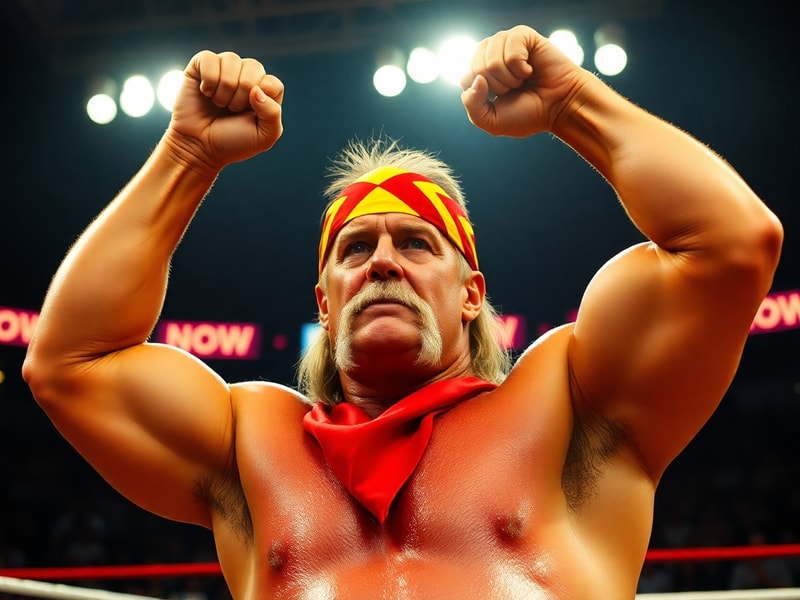
Terry Bollea, better known to millions as Hulk Hogan, remains one of the most recognizable figures in professional wrestling history. With his signature bleach-blonde mustache, red and yellow bandanas, and an unmistakable swagger, Hogan didn’t just perform in the squared circle—he became a cultural symbol. His larger-than-life persona transcended sports entertainment, making him a household name long before wrestlers were treated as global superstars.
Born in 1953 in Augusta, Georgia, Hogan grew up in a working-class family before finding his calling in wrestling. He began training in the early 1970s under the guidance of veteran grapplers like Hiro Matsuda. By the late 1970s, he was competing in regional promotions, slowly building a reputation as a charismatic performer with a knack for connecting with audiences. But it wasn’t until his move to the World Wrestling Federation (WWF, now WWE) in the early 1980s that Hogan’s legend truly took flight.
The Rise of the Hulkster: How Hogan Became a Household Name
Hogan’s breakthrough came in 1983 when he won his first WWF Championship, defeating The Iron Sheik. This victory marked the beginning of what would become known as the “Hulkamania” era—a period of unprecedented popularity for professional wrestling. His feuds with legends like Andre the Giant, Randy “Macho Man” Savage, and “Rowdy” Roddy Piper drew record-breaking audiences and helped turn WrestleMania into the “Super Bowl of Sports Entertainment.”
Hogan’s in-ring style was simple but effective. He relied on power moves like the leg drop and boulder-hold suplex, delivering them with a commanding presence that made him seem invincible. His promos were equally compelling. Whether he was challenging opponents or rallying fans with his famous catchphrases—”Whatcha gonna do, brother?” and “Train, say your prayers, and eat your vitamins”—Hogan knew how to work a crowd.
His most iconic moment came at WrestleMania III in 1987, where he faced Andre the Giant in one of the most legendary matches in wrestling history. In front of 93,000 fans at the Pontiac Silverdome, Hogan bodyslammed the 520-pound Giant and delivered a leg drop to retain his title. The victory cemented Hogan’s status as an American hero and ensured WrestleMania’s place in pop culture.
Beyond the Ring: Hogan’s Influence on Pop Culture and Media
Hogan’s impact extended far beyond the wrestling ring. In the 1980s and 1990s, he became a mainstream celebrity, appearing in films like No Holds Barred and Suburban Commando, as well as hosting the popular reality show Hulk Hogan’s Celebrity Championship Wrestling. His catchphrases and persona were parodied in TV shows like The A-Team and Married… with Children, proving his cultural saturation.
He also ventured into music, releasing the novelty song “Hulk Hogan’s Theme” and even recording a rap track titled “Hulkamania.” While these efforts were met with mixed reactions, they underscored Hogan’s willingness to embrace all aspects of entertainment—a trait that endeared him to fans and frustrated critics in equal measure.
Hogan’s crossover appeal was unparalleled. He appeared on talk shows, in commercials, and even had his own cereal, Hulkster’s Crunch. His influence was so pervasive that he became a symbol of 1980s excess, embodying the era’s bold, brash aesthetic. For better or worse, Hogan was wrestling’s first true crossover star, paving the way for future athletes-turned-celebrities.
The Controversies and Comebacks That Defined a Career
Despite his success, Hogan’s career was not without controversy. In the late 1990s, he left WWF for rival promotion World Championship Wrestling (WCW), where he became embroiled in one of wrestling’s most infamous storylines: the nWo (New World Order). Hogan’s heel turn—where he betrayed his loyal fans by joining the villainous faction—shocked audiences and remains one of the most talked-about moments in wrestling history.
His WCW run was marked by both triumphs and scandals. While he won multiple championships and headlined major events, his personal life also made headlines. In 2007, a leaked sex tape involving Hogan and a friend’s wife led to his firing from WWE. The scandal tarnished his squeaky-clean image and left many questioning his legacy. Yet, true to form, Hogan made a dramatic comeback, returning to WWE in 2012 and even appearing at WrestleMania XXX in 2014.
Hogan’s ability to reinvent himself time and again speaks to his resilience. Whether as a hero, a villain, or a lovable rogue, he always found a way to stay relevant. His later years included appearances on reality shows like Hogan Knows Best, which followed his family life, and a brief stint as a commentator for TNA Wrestling (now Impact Wrestling).
The Legacy of Hulk Hogan: A Titan of Wrestling’s Golden Era
Hogan’s legacy is a tapestry of triumphs, controversies, and cultural milestones. He was the face of wrestling during its most explosive growth period, helping to transform it from a regional spectacle into a global phenomenon. His influence can be seen in the careers of countless wrestlers who followed in his footsteps, from “Stone Cold” Steve Austin to John Cena, all of whom owe a debt to Hogan’s ability to connect with audiences.
Yet, Hogan’s impact goes beyond wrestling. He was a product of his time—a larger-than-life figure who embodied the excess and optimism of the 1980s. His persona was a carefully crafted mix of strength, humor, and defiance, making him a hero to millions of fans who saw him as the ultimate underdog. Even today, his name evokes nostalgia and a sense of nostalgia for a bygone era of wrestling.
While his career had its share of ups and downs, Hogan’s contributions to sports entertainment are undeniable. He wasn’t just a wrestler; he was a cultural icon whose influence extended into music, film, television, and even fashion. His red and yellow bandana became a symbol of resilience, and his catchphrases entered the lexicon of American pop culture.
As wrestling continues to evolve, Hogan’s legacy remains a touchstone for fans and performers alike. Whether remembered for his in-ring heroics, his larger-than-life persona, or his many comebacks, Hogan’s place in history is secure. He wasn’t just a part of wrestling’s golden era—he helped define it.
For those looking to explore more about wrestling’s history and its most iconic figures, Dave’s Locker offers a deep dive into the world of sports entertainment, featuring articles, interviews, and analysis on the legends who shaped the industry.
Hulk Hogan may no longer be the dominant force he once was, but his legacy endures. He was, and always will be, the immortal Hulkamaniac.