Kurt Angle’s journey from amateur wrestling prodigy to one of the most decorated figures in professional wrestling reads like a scripted underdog story—except every moment of it was real. Born in Mount Lebanon, Pennsylvania, in 1968, Angle’s early life was shaped by discipline, sacrifice, and an unshakable work ethic instilled by his parents. Wrestling wasn’t just a sport for him; it was an identity forged through relentless training and an unyielding pursuit of greatness.
Before stepping into the squared circle of WWE or TNA, Angle cemented his legacy in the amateur ranks. His crowning achievement came at the 1996 Summer Olympics in Atlanta, where he captured gold in the freestyle wrestling competition at 100 kg (220 lbs). This victory wasn’t just a personal triumph—it was a statement. Angle defeated opponents with near-surgical precision, showcasing a blend of technical mastery and physical dominance that would later define his professional career. The Olympic gold medal hung around his neck not as a symbol of past glory, but as a passport to an entirely new kind of arena.
The Transition: From Olympic Champion to WWE Superstar
Angle’s transition from Olympic champion to WWE star in 1999 was nothing short of seismic. Vince McMahon, ever the visionary in talent acquisition, saw potential in Angle’s Olympic pedigree and marketable intensity. But the path wasn’t immediate. Angle suffered a severe neck injury during his amateur career, a condition that required a titanium neck brace and posed serious risks during high-impact wrestling. WWE took a calculated gamble, and it paid off.
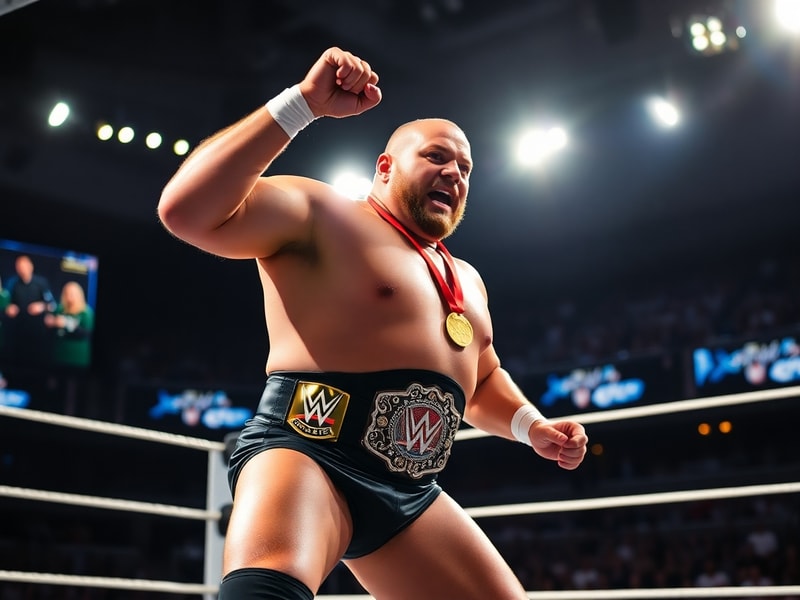
His debut at WWE was theatrics at their finest. Angle entered as an Olympic hero, donning his gold medal around his neck and declaring himself “the most dominant force in sports entertainment.” The crowd, initially skeptical of this brash newcomer, was quickly silenced. His technical wrestling, combined with an unrelenting intensity and signature ankle lock, made him an instant sensation. Within months, he headlined WrestleMania XV, defeating The Rock to win the Intercontinental Championship—a feat unheard of for a rookie.
The following year, Angle won the 2000 King of the Ring tournament and embarked on a historic reign as WWE Champion. His rivalry with Triple H, The Rock, and Stone Cold Steve Austin elevated the entire roster, proving that credibility could coexist with spectacle. Angle’s ability to blend amateur wrestling’s technical fundamentals with the drama of pro wrestling set a new standard for in-ring performers.
The Anatomy of a Wrestling Icon: In-Ring Style and Legacy
Kurt Angle’s in-ring style was a fusion of Olympic-level fundamentals and hard-hitting brawling. He didn’t rely on flashy moves or high-flying antics; instead, he dominated through chain wrestling, mat control, and precise submissions. His signature moves—the Angle Slam, the ankle lock, and the Angle Press—became staples of his offense, each move executed with surgical precision. Opponents often left matches with bruises, strained limbs, and a newfound respect for Angle’s intensity.
Angle’s legacy isn’t confined to his championship reigns or signature moves. It’s rooted in his ability to elevate every opponent he faced. Wrestlers like Chris Benoit, Eddie Guerrero, and Shawn Michaels thrived under his guidance, benefiting from the credibility and competition Angle provided. His matches against The Undertaker at WrestleMania 21 and against Shawn Michaels at Survivor Series 2005 are still revered as modern classics—proof that greatness is measured not just in wins, but in the quality of the battles fought.
Beyond the ring, Angle’s persona was equally compelling. His “Olymic Hero” gimmick, complete with the gold medal and patriotic attire, resonated with fans who admired his authenticity. Later, his heel turn—where he embraced villainy with a villainous smirk and a disdain for fans—showcased his range as a performer. Whether as a hero or a villain, Angle commanded attention, proving that charisma could be as potent as athleticism.
Life Beyond Wrestling: Challenges and Triumphs
Angle’s personal life has been as tumultuous as his professional career. His battle with addiction—particularly to prescription painkillers—became public knowledge, a consequence of years of high-impact wrestling and untreated injuries. In a 2016 interview with ESPN, Angle revealed that he had been addicted to opioids for over a decade, a dependency that nearly cost him his life and his family. His candor about this struggle brought much-needed awareness to the issue of painkiller addiction in professional wrestling.
Recovery became another chapter in Angle’s life story. He checked into rehab, embraced sobriety, and began sharing his journey to inspire others. His transparency about his addiction and subsequent triumph over it added depth to his public persona. Fans who once cheered him as a wrestling hero now respected him as a real-life warrior—one who fought battles far beyond the squared circle.
In 2017, Angle returned to WWE as a full-time performer, reuniting with his Olympic teammate and friend, Daniel Bryan. The storyline was emotional and nostalgic, a full-circle moment for fans who had watched Angle’s career unfold over nearly two decades. His return wasn’t just a gimmick; it was a testament to his enduring love for the sport and his ability to reinvent himself time and again.
Kurt Angle’s Enduring Influence on Wrestling
Kurt Angle’s impact on professional wrestling is immeasurable. He bridged the gap between amateur and professional wrestling, proving that technical mastery could coexist with mainstream entertainment. His matches elevated the standard for in-ring work, while his persona elevated the emotional stakes of storytelling in wrestling. For a generation of fans, Angle wasn’t just a wrestler—he was a teacher, a rival, a mentor, and a hero.
Angle’s influence extends beyond his accolades. He inspired a wave of wrestlers who prioritized technical wrestling and credibility over flash. Wrestlers like Daniel Bryan, Chad Gable, and Sami Zayn have cited Angle as a major influence, acknowledging his role in shaping modern wrestling’s emphasis on athleticism and realism. Even in his post-WWE career, Angle has continued to mentor young talent, proving that his legacy isn’t confined to a specific era.
His induction into the WWE Hall of Fame in 2017 solidified his place among the all-time greats. But perhaps his most enduring contribution is the way he redefined what it meant to be a wrestling champion. Angle wasn’t just a titleholder; he was a symbol of perseverance, authenticity, and relentless dedication to the craft.
A Look at Angle’s Championship Accolades
Angle’s championship resume is a testament to his dominance across multiple organizations:
- WWE: 4-time World Heavyweight Champion (1x WWE Champion, 3x World Heavyweight Champion)
- WWE: 1x Intercontinental Champion
- WWE: 1x United States Champion
- WWE: King of the Ring 2000
- TNA: 6-time World Heavyweight Champion
- TNA: 2007 TNA World Heavyweight Championship Tournament Winner
- Olympic Gold Medalist: 1996 Summer Olympics, Freestyle Wrestling (100 kg)
His 2000 King of the Ring win remains one of the most iconic moments in WWE history, a tournament that also launched the careers of future stars like Chris Jericho and Edge. Angle’s victory was a statement—he wasn’t just entering the wrestling world; he was reshaping it.
Conclusion: The Kurt Angle Effect
Kurt Angle’s story is one of triumph, adversity, and reinvention. From the Olympic stage to the wrestling ring, from addiction to recovery, and from hero to villain and back again, Angle has lived a life that defies simple categorization. He is a champion in every sense of the word—a title he has earned not just in the ring, but in the hearts of fans who admire his authenticity and resilience.
For aspiring wrestlers, Angle’s career offers a blueprint for success: work ethic trumps shortcuts, credibility trumps gimmicks, and perseverance trumps adversity. For fans, his matches remain timeless reminders of what wrestling can achieve when it prioritizes athleticism, storytelling, and emotional investment.
As Kurt Angle continues to mentor new generations and share his story, his legacy grows not just as a wrestling legend, but as a human being who has overcome extraordinary challenges. In a world where wrestling often blurs the line between fantasy and reality, Angle’s life and career stand as a testament to the power of truth—both in sport and in storytelling.