In the sprawling landscape of digital creators and cultural influencers, few names resonate as quietly yet profoundly as Jared Young. Not a household name in the traditional sense, Young’s impact unfolds through the subtle yet seismic shifts he has introduced across music, fashion, and digital communication. His work bridges gaps between generations, cultures, and platforms, making him a pivotal figure in understanding how today’s youth express identity and belonging.
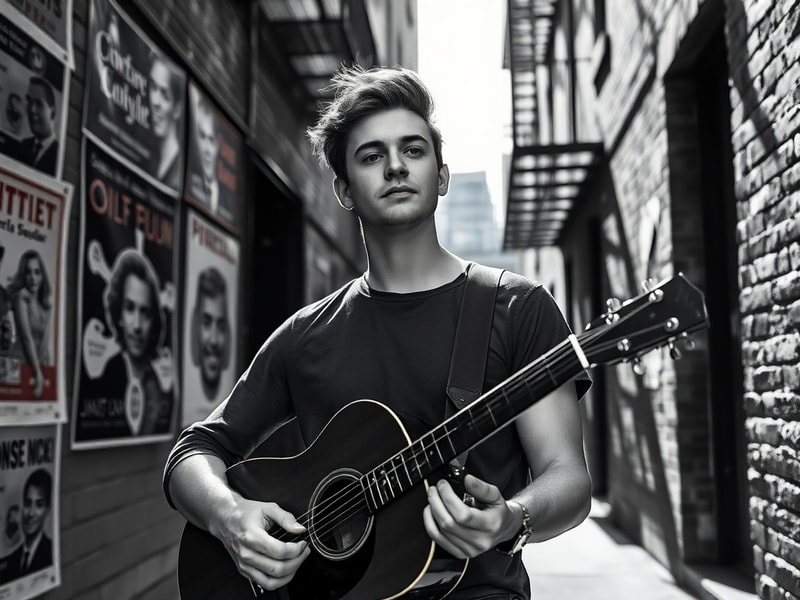
Born and raised in the American Midwest, Young’s early life was a blend of artistic exploration and academic rigor. He studied comparative literature at a state university, where his thesis on the intersection of hip-hop and post-colonial theory hinted at the interdisciplinary approach that would later define his career. By his mid-20s, he had transitioned from academia to digital media, leveraging platforms like YouTube and SoundCloud to share his perspectives on culture, identity, and creativity. His content, often raw and introspective, struck a chord with a generation craving authenticity over polish.
The Evolution of a Digital Native
Young’s rise mirrors the broader evolution of digital natives who have redefined cultural production. Unlike the polished, corporate-driven content of the early 2010s, his work thrived in the unfiltered corners of the internet—long before algorithmic curation became the norm. His early videos, often filmed in his bedroom or local cafes, explored themes of alienation, self-discovery, and the absurdity of modern life. These themes, though not novel, found new urgency in the echo chambers of social media.
By 2018, Young had cultivated a niche following among Gen Z and millennial audiences, particularly those drawn to the “alt-culture” movement. His collaborations with underground musicians, visual artists, and writers created a feedback loop that amplified his reach. Unlike influencers who chased virality, Young focused on consistency and depth, building trust with his audience over time. This approach set him apart in an era where attention spans are measured in seconds.
Cultural Translation and Global Influence
What makes Jared Young’s influence particularly noteworthy is its global reach. While he is rooted in American subcultures, his work transcends borders, resonating with young people in Europe, Southeast Asia, and Latin America. This phenomenon reflects a broader trend: the decentralization of cultural authority. Platforms like TikTok and Instagram have democratized influence, allowing creators like Young to bypass traditional gatekeepers and connect directly with audiences worldwide.
In 2020, Young launched a podcast series titled Third Culture, which brought together voices from diverse backgrounds to discuss identity in a globalized world. The podcast’s success—amassing millions of streams—highlighted a hunger for conversations that move beyond nationalistic or ideological divides. Episodes often featured artists, academics, and activists from regions as varied as Nigeria, Japan, and Brazil, underscoring Young’s commitment to fostering cross-cultural dialogue.
- Cross-cultural collaborations: Young frequently partners with creators from different regions, blending musical styles, fashion aesthetics, and linguistic elements. For example, his 2022 track Midwest Meets Mombasa fused Kenyan Benga rhythms with Midwest rap cadences, creating a sound that felt both local and transnational.
- Linguistic fluidity: Young’s content often switches between English and other languages, reflecting the multilingual realities of his audience. This approach not only broadens his appeal but also challenges the dominance of English as the default language of digital culture.
- Localization of trends: While trends like “quiet luxury” or “cottagecore” often originate in the West, Young adapts them to fit local contexts. In Japan, for instance, he collaborated with streetwear brands to reinterpret these trends through a distinctly Japanese lens.
Beyond the Algorithm: The Substance Behind the Influence
In an era where digital fame is often synonymous with fleeting virality, Jared Young’s longevity stems from his refusal to prioritize algorithms over authenticity. His content is marked by a deliberate slowness—a stark contrast to the relentless pace of platforms like TikTok. This approach has earned him a reputation as a “slow influencer,” a label that underscores his commitment to quality and substance.
Young’s 2023 essay series, Notes on the New Nihilism, explored the existential questions facing young people in a world saturated with information but starved for meaning. The series, published on his Substack, went viral not because it offered easy answers but because it articulated the frustrations of a generation grappling with climate anxiety, economic instability, and the erosion of traditional institutions. Critics praised the work for its intellectual rigor, while casual readers found solace in its honesty.
The Role of Fashion in His Cultural Narrative
Fashion has always been a language, and for Jared Young, it’s a primary dialect. His personal style—a mix of thrifted vintage, streetwear, and high-fashion pieces—reflects his belief in fashion as a form of self-expression rather than mere consumption. This philosophy has translated into his collaborations with brands like Streetwear Collective and Vintage Archive, both of which align with his ethos of sustainability and individuality.
In 2024, Young launched a limited-edition clothing line in partnership with a Berlin-based label. The collection, titled Neon Nostalgia, drew inspiration from the cyberpunk aesthetics of the 1990s and the DIY ethos of punk culture. What set the line apart was its emphasis on modularity—each piece was designed to be mixed and matched, encouraging wearers to create their own narratives through clothing. The collection sold out within hours, a testament to the demand for fashion that speaks to individuality rather than conformity.
The Criticisms and Controversies
No discussion of Jared Young would be complete without acknowledging the criticisms that have shadowed his career. Some detractors argue that his work lacks the radical edge of earlier countercultural movements, instead opting for a more palatable, market-friendly approach. Others point to his privilege as a white, cisgender man navigating spaces that remain dominated by marginalized voices, questioning whether his influence is truly as inclusive as it appears.
In 2021, Young faced backlash after a 2017 blog post resurfaced, in which he made a comment about cultural appropriation that many deemed tone-deaf. He responded with a public apology and a commitment to educating himself, a move that both critics and supporters acknowledged as sincere. This incident highlighted the challenges of navigating cultural responsibility in an increasingly interconnected world, where old statements can resurface with new contexts.
- Privilege and representation: While Young’s work often centers on marginalized voices, some argue that his position of privilege allows him to occupy spaces that these voices are often excluded from. The question remains: Can a figure like Young truly amplify others, or does his presence inherently center himself?
- Commercialization vs. authenticity: As his audience has grown, so has the temptation to monetize his influence. Critics question whether his recent collaborations with major brands stray too far from his roots in underground culture.
- Cultural appropriation debates: Young’s use of non-Western musical and visual elements has sparked debates about who has the right to tell whose stories, particularly when those stories are commodified for Western audiences.
Looking Ahead: The Future of Jared Young
As Jared Young approaches his fourth decade, his trajectory shows no signs of slowing down. His latest project, a multimedia platform called Third Space, aims to create a digital hub where art, music, and discourse intersect. The platform, still in its beta phase, promises to be a space for young creators to experiment without the constraints of algorithmic pressure. Early adopters describe it as a “digital salon,” a throwback to the intellectual salons of the Enlightenment but adapted for the 21st century.
Young’s influence extends beyond his own projects. He has become a mentor to a new generation of creators, many of whom cite him as a model for how to build a sustainable career in the arts. His emphasis on community over competition has fostered a loyal following that extends beyond his immediate audience. In an era where individualism often trumps collectivism, Young’s approach feels almost radical.
Looking ahead, Young’s work will likely continue to explore the tensions between individual expression and collective identity. As global crises—climate change, political polarization, economic inequality—intensify, the need for spaces that foster dialogue and creativity has never been greater. Whether through his podcast, fashion collaborations, or upcoming platform, Young seems poised to remain a quiet but persistent force in shaping the cultural landscape of the future.
For those observing from the sidelines, Jared Young’s story is a reminder that influence is not always loud or immediate. Sometimes, it’s the steady hum of a voice that resonates because it feels like it’s speaking directly to you—and to the complexities of the world we inhabit.