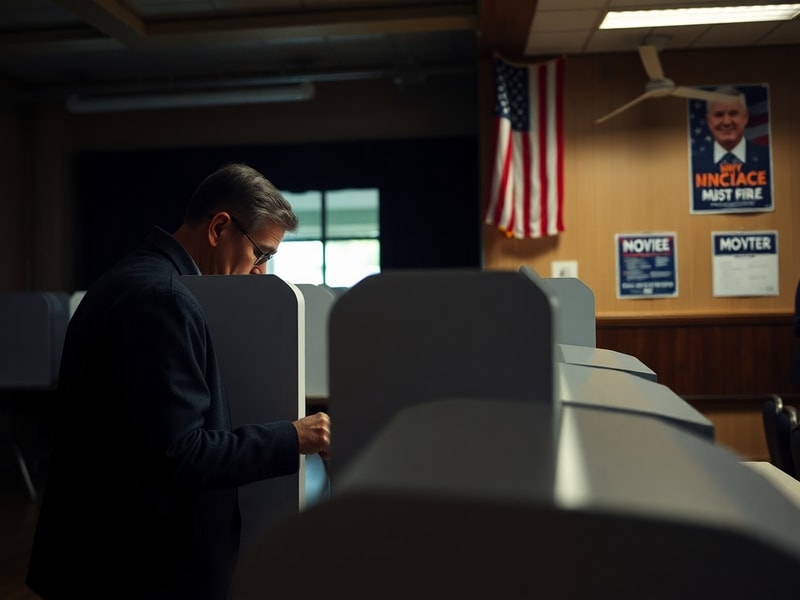
Primary elections serve as the backbone of the American political system, determining which candidates will represent each party on the general election ballot. These contests often draw less attention than general elections, yet their outcomes frequently shape the political landscape for years to come. The process varies significantly by state, with some holding open primaries where any registered voter can participate, while others restrict voting to party members only. This variation creates a patchwork of rules that can influence voter turnout and candidate strategy.
How Primary Elections Work
At their core, primary elections are intra-party contests where voters select their preferred candidate to advance to the general election. The system wasn’t always this way—before the early 20th century, party leaders typically chose nominees in closed meetings known as caucuses. The shift toward primary elections began in the 1900s as part of the Progressive Era reforms aimed at reducing political corruption and increasing voter participation. Today, most states use one of several primary systems:
- Closed primaries: Only voters registered with a particular party can participate in that party’s primary.
- Open primaries: Any registered voter can choose which party’s primary to vote in, regardless of their own party affiliation.
- Semi-closed primaries: Party members must vote in their own primary, but unaffiliated voters may choose which primary to participate in.
- Top-two primaries: All candidates appear on the same ballot regardless of party, and the top two vote-getters advance to the general election.
Each system has its own advantages and drawbacks. Closed primaries tend to produce more ideologically extreme candidates, as they appeal primarily to a party’s base voters. Open primaries, by contrast, often result in more moderate nominees who must appeal to a broader electorate. The top-two primary system, used in states like California and Washington, has fundamentally altered campaign dynamics by forcing candidates to consider the preferences of voters outside their traditional base.
The Strategic Importance of Primary Elections
Primary elections often prove more consequential than general elections because they determine which candidates will appear on the ballot in November. In safe districts where one party dominates, the primary effectively decides the winner. This reality has led to increasingly polarized politics, as candidates focus their energies on appealing to their party’s most committed voters rather than the broader electorate.
Money plays an outsized role in primary campaigns, particularly in states with early primaries. The “invisible primary”—the period before voting begins when candidates raise money and build support—often determines which contenders have a realistic shot at victory. This dynamic has contributed to the rise of political action committees (PACs) and “super PACs” that can spend unlimited amounts supporting or opposing candidates. The 2020 Democratic primary saw record-breaking fundraising, with candidates like Bernie Sanders and Joe Biden raising hundreds of millions before any votes were cast.
Primary elections also serve as testing grounds for campaign strategies and messaging. A candidate’s performance in early contests can establish momentum, while poor showings often lead to withdrawal from the race. The 2016 Republican primary demonstrated this principle vividly, as Donald Trump’s unexpected victories in states like New Hampshire and South Carolina propelled him to the nomination despite initial skepticism from party establishment figures.
Broader Implications and Ongoing Debates
The primary system faces growing criticism from both ends of the political spectrum. Democrats often argue that closed primaries disenfranchise independent voters, who make up nearly 40% of the electorate in some states. Republicans, meanwhile, have expressed concerns about open primaries potentially allowing strategic voting by members of the opposition party. These debates have led to calls for reform, including proposals for a national primary day or a ranked-choice voting system.
Another contentious issue involves the role of party leadership in primary elections. While parties cannot legally dictate their nominees, they often exert influence through endorsements, financial support, and grassroots organizing. The 2020 Democratic primaries saw significant intervention from party leaders, who coalesced around Joe Biden after early losses to Bernie Sanders. This intervention raised questions about whether parties should have more formal control over their nominating processes.
The primary system also interacts with broader trends in American politics, including the rise of social media and the decline of local news. Candidates who excel at viral moments and online fundraising can leverage these tools to overcome traditional party structures. The 2018 and 2020 elections demonstrated how digital organizing could mobilize new voters and reshape primary campaigns, particularly among younger demographics.
Looking Ahead: The Future of Primary Elections
As the 2024 election cycle approaches, primary elections will once again take center stage in American politics. The outcome of these contests will determine not just which candidates appear on ballots, but also the ideological direction of both major parties. Democrats face questions about whether to double down on progressive policies or appeal to more moderate voters, while Republicans grapple with the legacy of Trumpism and its influence on the party’s future.
The primary system’s future may hinge on technological innovations that could make voting more accessible and transparent. Online voting, blockchain-based systems, and expanded mail-in voting are all being discussed as potential reforms. However, these changes also raise concerns about security and the integrity of the electoral process. Whatever direction reforms take, one thing remains clear: primary elections will continue to shape the trajectory of American democracy for decades to come.
For those interested in understanding how these processes play out in real time, Dave’s Locker Politics section offers comprehensive coverage of primary elections and their broader implications. The site’s Analysis category also provides deeper insights into the strategic and historical context of these contests.