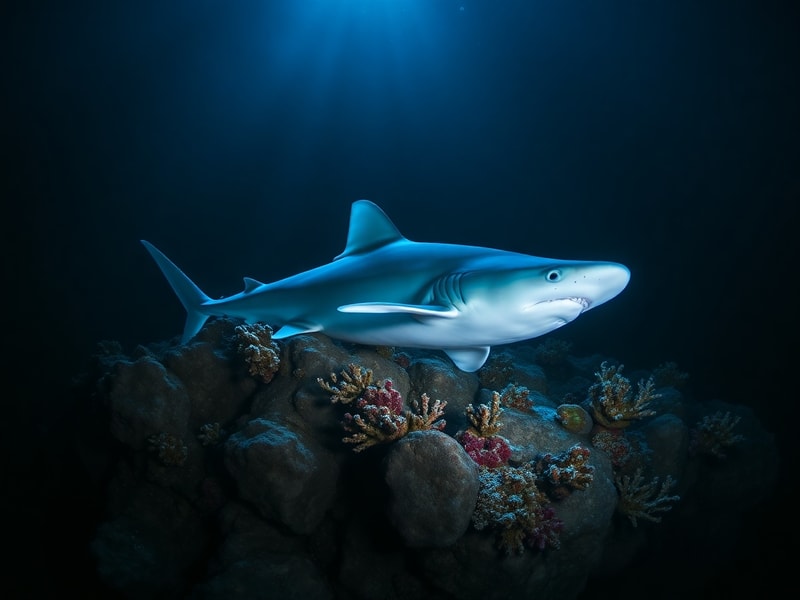
In the inky blackness of the Eastern Pacific Ocean, just off the coast of Costa Rica, a pale, ghostly figure glides through the water. This isn’t the stuff of maritime legend—it’s the rare deep-sea discovery that has sent ripples through the scientific community. The creature in question is the ghost shark, or more formally, a chimaera, a group of deep-sea cartilaginous fish distantly related to sharks and rays. In 2023, researchers from the Smithsonian Tropical Research Institute and the University of Costa Rica documented the presence of at least three species of these elusive fish in the region, including one potentially new to science.
What Makes the Ghost Shark So Elusive?
Ghost sharks, or chimaeras, are among the ocean’s most enigmatic inhabitants. Unlike their more famous cousins, sharks, these creatures thrive in the deep sea, typically at depths between 200 and 2,600 meters. Their pale, elongated bodies and large, rabbit-like eyes give them an otherworldly appearance, earning them their spectral nickname. But their rarity isn’t just a product of their habitat—it’s also tied to their biology. Ghost sharks reproduce slowly, with females laying only a few leathery egg cases at a time. This makes population recovery difficult, especially in the face of deep-sea fishing pressures.
The deep sea itself is one of the least explored environments on Earth. With crushing pressures, near-freezing temperatures, and absolute darkness, it’s a place where most humans would struggle to survive. Yet, for ghost sharks, these conditions are ideal. Their gelatinous flesh and low metabolic rates allow them to conserve energy in an environment where food is scarce. Their diet primarily consists of small fish, crustaceans, and mollusks, which they detect using specialized sensory organs.
Documenting these creatures is no small feat. Most sightings occur when chimaeras are accidentally caught in deep-sea trawl nets or observed by deep-diving submersibles. The Costa Rican sightings were made possible by a combination of advanced sonar imaging and deep-sea ROV (remotely operated vehicle) expeditions, which allowed researchers to capture high-resolution footage of the sharks in their natural habitat without disturbing them.
Why Costa Rica’s Waters Are a Hotspot for Discovery
Costa Rica’s position in the Eastern Pacific makes it a biodiversity hotspot for deep-sea species. The country’s continental shelf drops off steeply into the abyssal plain, creating a variety of habitats that support a wide range of marine life. The upwelling of nutrient-rich waters along the coast further enhances this diversity, attracting both prey and predators to the region.
The 2023 expedition that documented the ghost sharks was part of a broader effort to map Costa Rica’s deep-sea ecosystems. Researchers used a combination of baited cameras, trawl nets, and sonar to survey the area. What they found was surprising: not only were ghost sharks present, but they appeared to be thriving in an environment where deep-sea fishing is minimal. This suggests that Costa Rica’s deep-sea reserves may serve as critical refuges for these fragile species.
One of the most intriguing discoveries was the presence of a chimaera species that may be new to science. Preliminary genetic analysis indicates that it shares some similarities with the Hydrolagus genus but has distinct morphological features, such as a more elongated snout and a different pattern of bioluminescent spots. If confirmed, this could represent a significant addition to the known diversity of chimaeras.
The implications of this discovery extend beyond Costa Rica. Deep-sea ecosystems are increasingly under threat from commercial fishing, deep-sea mining, and climate change. The presence of ghost sharks in Costa Rican waters highlights the importance of protecting these fragile habitats before irreversible damage occurs.
Conservation Challenges and the Future of Deep-Sea Ghost Sharks
The deep sea is often out of sight and out of mind, but its health is intricately linked to the health of the entire planet. Ghost sharks play a crucial role in their ecosystems, acting as both predators and prey. Their slow reproductive rates, however, make them particularly vulnerable to overfishing. Unlike many shallow-water sharks, chimaeras are not typically targeted by commercial fisheries, but they are often caught as bycatch in deep-sea trawl nets. This unintentional capture can have devastating effects on local populations, especially in areas where ghost sharks are already rare.
Costa Rica has taken steps to protect its deep-sea ecosystems, including the establishment of the Seamounts Marine Management Area, a protected zone that covers over 9,800 square kilometers of ocean. This area includes several deep-sea mounts, which are known hotspots for biodiversity. However, enforcement of these protections remains a challenge, particularly in remote and deep-water regions.
International efforts to regulate deep-sea fishing are also underway. The United Nations has called for a moratorium on deep-sea mining until more is known about its environmental impact, and several countries have pledged to protect vulnerable marine ecosystems. Yet, the lack of comprehensive data on deep-sea species like ghost sharks makes it difficult to assess the true extent of these threats.
For researchers, the discovery of ghost sharks in Costa Rica underscores the need for continued exploration and conservation. Technologies like deep-sea ROVs and autonomous underwater vehicles (AUVs) are making it easier to study these elusive creatures, but funding for such expeditions remains limited. Public awareness is also critical. By highlighting the unique biodiversity of Costa Rica’s deep-sea ecosystems, scientists hope to garner support for stronger conservation measures.
What’s Next for Ghost Shark Research?
The discovery of ghost sharks in Costa Rica is just the beginning. Scientists are now planning further expeditions to document the full extent of chimaera populations in the region. Genetic studies will help determine whether the newly observed species is indeed new to science, while ecological studies will shed light on the role these sharks play in their deep-sea habitats.
One of the most exciting prospects is the potential for citizen science contributions. With the rise of deep-sea exploration technologies, there are opportunities for non-professionals to participate in data collection. For example, deep-sea fishermen could be encouraged to report ghost shark sightings, while recreational divers could help monitor shallow-water chimaera populations near the coast.
For now, the ghost sharks of Costa Rica remain a tantalizing mystery. Their presence serves as a reminder of how much there is still to learn about the deep sea—and how urgent it is to protect these last great wildernesses before they vanish forever.
Key Takeaways About Ghost Sharks in Costa Rica
- Elusive deep-sea inhabitants: Ghost sharks, or chimaeras, thrive in the deep ocean where few other species can survive. Their slow reproductive rates make them particularly vulnerable to environmental changes.
- Costa Rica’s deep-sea biodiversity: The country’s steep continental shelf and nutrient-rich waters create ideal conditions for deep-sea species, including ghost sharks. Protected areas like the Seamounts Marine Management Area are crucial for their survival.
- Potential new species: Researchers have identified a chimaera in Costa Rican waters that may be new to science, highlighting the region’s untapped biodiversity.
- Conservation challenges: Deep-sea fishing, mining, and climate change threaten ghost shark populations. International and local efforts are needed to protect these fragile ecosystems.
- Opportunities for discovery: Advances in deep-sea technology and citizen science could lead to new insights into ghost shark behavior and ecology.
The ghost sharks of Costa Rica are more than just a scientific curiosity—they are a symbol of the deep sea’s hidden wonders and the urgent need to protect them. As exploration continues, each new discovery brings us one step closer to understanding the ocean’s final frontier.