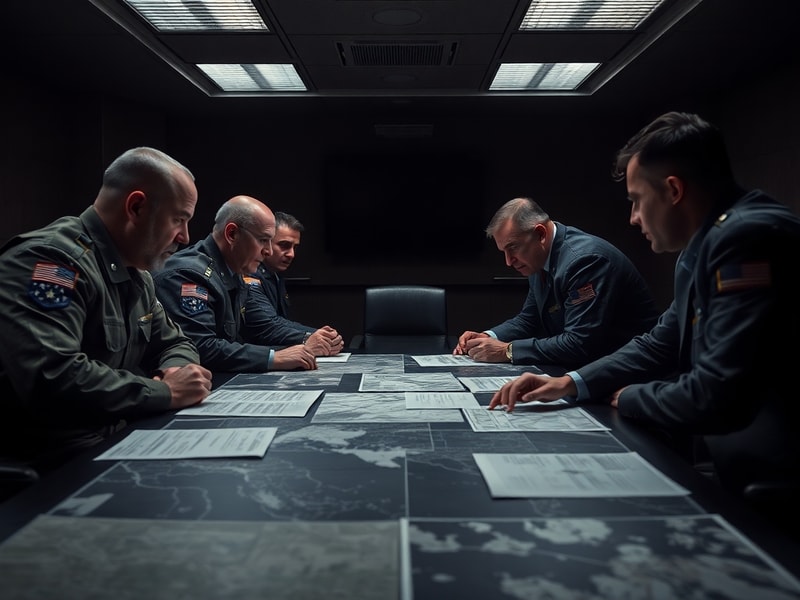
US Israel Intelligence Tensions: A Growing Rift in 2023
“`html
US Israel Intelligence Tensions: A Growing Rift
Last updated: October 2023
The relationship between the United States and Israel has long been defined by close intelligence cooperation, but recent years have seen tensions emerge in ways that challenge decades of shared strategy. While both nations remain aligned on many geopolitical priorities, disagreements over intelligence sharing, regional security, and operational priorities have created friction that extends beyond diplomatic rhetoric. These strains are not merely symbolic; they reflect deeper shifts in how each country perceives threats and manages alliances in an increasingly volatile Middle East.
The origins of these tensions are complex. They stem from divergent assessments of Iran’s nuclear program, differing approaches to Palestinian statehood, and competing visions for the future of Syria and Lebanon. At the heart of the issue is a fundamental question: Can the US and Israel maintain a unified intelligence front when their national interests no longer align as closely as they once did?
Intelligence Sharing Under Scrutiny
One of the most visible signs of strain has been the growing skepticism around intelligence sharing. Reports from 2022 and 2023 indicated that Israeli intelligence operations—particularly those involving Iran—were sometimes conducted without full prior consultation with US counterparts. This has led to concerns in Washington about operational security and the potential for unauthorized escalations.
In one notable incident, Israeli airstrikes on Iranian military sites in Syria were carried out without advance notice to the US, raising alarms in the Pentagon. While Israel justified the strikes as necessary to prevent Iran from establishing a permanent military presence in Syria, US officials reportedly viewed the action as a destabilizing move that could provoke retaliation from Tehran.
- Operational secrecy vs. strategic alignment: Israel’s Mossad has historically been one of the most trusted intelligence partners of the CIA, but recent operations suggest a shift toward unilateral action.
- Risk of miscommunication: Without real-time intelligence sharing, the potential for misunderstandings between US and Israeli forces increases, particularly in high-stakes regions like the Red Sea and Iran.
- Domestic pressure in Israel: Prime Minister Benjamin Netanyahu’s government faces internal calls to take more aggressive action against Iran, sometimes at odds with US diplomatic efforts.
Diverging Threat Assessments
The intelligence rift is not just about timing; it reflects deeper differences in how the US and Israel perceive regional threats. For Israel, Iran’s nuclear program and its network of proxy forces in Syria, Lebanon, and Yemen represent an existential threat. The Israeli government has repeatedly stated that it will not allow Iran to acquire nuclear weapons, even if it means taking military action without US approval.
In contrast, the Biden administration has pursued a more cautious approach, emphasizing diplomacy and multilateral sanctions to curb Iran’s nuclear ambitions. This divergence was evident in 2023 when Israel launched covert operations to sabotage Iran’s nuclear facilities, actions that the US quietly acknowledged but did not publicly endorse. Such unilateral moves underscore the widening gap between the two allies’ threat perceptions.
Another area of contention is the status of Hamas and Hezbollah. While Israel views both groups as terrorist organizations that must be dismantled, the US has at times engaged with Hezbollah indirectly—particularly in Lebanon—and has sought to prevent a full-scale Israeli invasion of Gaza that could destabilize the region further.
Cyber Espionage and Technological Competition
Beyond traditional intelligence operations, cyber espionage has become another battleground for US-Israel tensions. Israel’s Unit 8200, the military’s elite cyber intelligence unit, has long been a leader in offensive cyber capabilities. However, recent reports suggest that some of Israel’s cyber operations—particularly those targeting Iran—have interfered with US cyber initiatives aimed at the same adversary.
In one instance, Israeli cyberattacks against Iranian nuclear scientists compromised data that US intelligence operatives had been gathering for months. While the US did not publicly condemn Israel, insiders described the incident as a breach of trust that could have long-term consequences for intelligence collaboration.
The rise of artificial intelligence in intelligence gathering has also intensified competition. Both nations are investing heavily in AI-driven surveillance and predictive analytics, but their approaches differ. Israel’s focus on real-time actionable intelligence contrasts with the US’s emphasis on long-term data accumulation and analysis. This technological divergence further complicates efforts to integrate intelligence efforts.
Diplomatic Fallout and Political Consequences
The intelligence tensions have spilled into the diplomatic realm, with public statements from both sides revealing growing frustration. In 2023, US Secretary of State Antony Blinken publicly urged Israel to coordinate more closely on intelligence operations, a rare rebuke that signaled deeper unease. Israeli officials responded by emphasizing their right to act unilaterally to protect national security, framing such actions as essential rather than optional.
Congressional reactions in the US have been mixed. While some lawmakers, particularly Republicans, have defended Israel’s right to self-defense, others have expressed concern that uncoordinated actions could drag the US into unwanted conflicts. A bipartisan group of senators has called for stricter oversight of US-Israel intelligence cooperation, though no concrete policy changes have been implemented to date.
The political dimensions extend beyond Washington. In Israel, Netanyahu’s government has framed the intelligence tensions as a necessary consequence of Israel’s sovereign right to act against existential threats. Meanwhile, opposition leaders have criticized the government for undermining Israel’s most important strategic partnership without gaining tangible benefits.
Public opinion in both countries reflects these divisions. A 2023 Pew Research poll found that while 62% of Americans still view Israel favorably, only 37% believe the US should support Israeli military actions without full consultation. In Israel, a majority of citizens support Netanyahu’s hardline stance, but concerns about isolation from traditional allies are growing.
Looking Ahead: Can the Relationship Be Repaired?
The future of US-Israel intelligence cooperation remains uncertain. While both nations share a common adversary in Iran, their methods and priorities increasingly diverge. The question now is whether these tensions will lead to a permanent fracture or serve as a temporary adjustment in a long-standing alliance.
Several factors could influence the outcome. First, the outcome of Israel’s ongoing conflict with Hamas will shape US-Israel relations. If the conflict escalates into a broader regional war, intelligence cooperation could either tighten under shared necessity or collapse under mutual recrimination. Second, the results of the 2024 US presidential election could reset or further strain the relationship, depending on whether a more interventionist or isolationist administration takes office.
For now, both sides appear to be recalibrating rather than severing ties. The US continues to provide Israel with advanced military technology, including the Iron Dome missile defense system and F-35 fighter jets. Meanwhile, Israel has allowed limited US access to intelligence gathered on Iran, though with significant restrictions.
Yet the underlying issues remain unresolved. As long as Israel prioritizes preemptive strikes against Iran and the US seeks diplomatic solutions, intelligence cooperation will remain strained. The challenge for both nations will be to find a balance between strategic independence and the mutual benefits of a strong alliance.
For observers, the key question is not whether the US and Israel will remain allies, but how they will navigate their differences in an era where intelligence is as much about technological superiority as it is about trust.