Angels vs. Dodgers: The L.A. Baseball Rivalry Beyond the Field
“`html
Angels vs. Dodgers: The L.A. Baseball Rivalry Beyond the Field
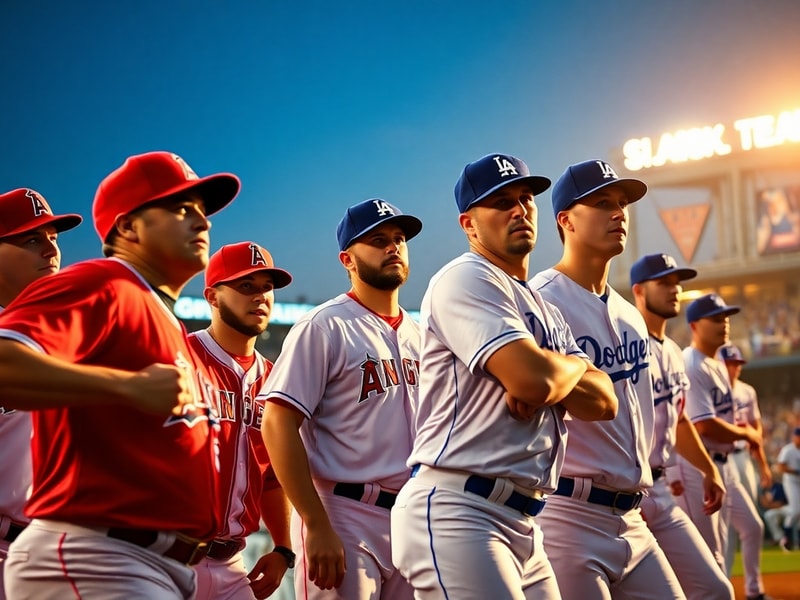
The Los Angeles Angels and the Los Angeles Dodgers represent two distinct baseball identities within the same sprawling metropolis. While the Dodgers play in the National League and the Angels in the American League, their rivalry extends beyond interleague play and into the fabric of Southern California culture. This division isn’t just about geography or league affiliation—it’s about style, history, and the way each team reflects different layers of Los Angeles itself.
The Origins of a Split Identity
The Dodgers arrived in Los Angeles in 1958, transplanting a storied franchise from Brooklyn and planting it in the heart of the city. Their arrival marked Los Angeles’ entry into the big leagues and solidified their role as the city’s “home team” for decades. With a fanbase that spans generations and a historic ballpark—Dodger Stadium—the team became synonymous with L.A. itself.
The Angels, meanwhile, debuted in 1961 as one of the American League’s expansion teams. Originally based in nearby Anaheim, they became the second major league team in the region. Though they played second fiddle to the Dodgers for years, the Angels carved out their own identity with moments like the 2002 World Series run and the rise of stars such as Mike Trout and Shohei Ohtani.
This dual-team reality reflects L.A.’s complexity: a city of dreams where Hollywood’s glamour coexists with Orange County’s suburban energy. While the Dodgers dominate the cultural conversation in L.A., the Angels represent a different kind of ambition—one rooted in resilience and the quiet pursuit of excellence.
On-Field Clashes and Off-Field Narratives
When the Angels and Dodgers meet in interleague play, the games are more than just wins and losses. They’re symbolic battles between two visions of baseball. The Dodgers, with their deep pockets and roster of superstars, often play a brand of baseball associated with analytics and sustained dominance. The Angels, meanwhile, have become known for high-ceiling talent and moments of brilliance that flicker like a flame in the wind.
Over the years, interleague matchups have produced memorable moments: Ohtani’s pitching duels against Clayton Kershaw, Trout’s tape-measure home runs, and the occasional underdog story where the Angels upset the heavily favored Dodgers. These games aren’t just about pride—they’re a referendum on each team’s philosophy and future direction.
- Dodgers: Emphasize player development, analytics, and a culture of winning. Their farm system has consistently produced elite talent, and their front office is known for making bold moves at the trade deadline.
- Angels: Bet on individual brilliance and star power. Their approach relies on signing or developing franchise-changing players, often with high-risk, high-reward contracts.
- Fan Engagement: Dodgers fans fill the largest ballpark in MLB nearly every night. Angels fans, though fewer in number, are known for their passion and loyalty, especially in Anaheim and surrounding communities.
Cultural Impact and Fan Identity in Southern California
The Angels-Dodgers divide isn’t just a baseball issue—it’s a cultural one. The Dodgers are woven into the story of L.A.: from Jackie Robinson breaking the color barrier to Fernando Valenzuela’s legendary 1981 season that united the city across ethnic and economic lines. Their legacy is one of integration, resilience, and Hollywood-style glamour.
The Angels, though often seen as the underdog, have cultivated a different kind of identity. Their fanbase is more diverse and family-oriented, reflecting Orange County’s demographic makeup. The team’s branding—from the halo logo to the “Angels Baseball” simplicity—projects an accessible, wholesome image that contrasts with the Dodgers’ more established prestige.
This split identity plays out in casual conversation across Southern California. Ask someone from Pasadena about baseball, and they’re likely to cheer for the Dodgers. Ask someone from Irvine, and they might lean toward the Angels. The rivalry, though not as intense as Yankees-Red Sox or Dodgers-Giants, is still felt in everyday life—at barbecues, in sports bars, and on social media.
What the Future Holds: Two Teams on Different Trajectories
Looking ahead, both teams are at pivotal moments. The Dodgers remain contenders, with a core of young stars and a front office still pushing the envelope. But their window for a championship feels increasingly urgent as the core of their roster ages.
The Angels, meanwhile, are in a phase of transition. After years of near-misses and unfulfilled potential, the organization has begun to rebuild around Ohtani—one of the most transcendent talents in the game. If they can surround him with sustainable pitching and defense, the Angels could once again become a force to be reckoned with.
The broader implication? The Angels’ success could redefine what it means to be a baseball team in Southern California. If they rise, they challenge the notion that L.A. is a one-team town. If they struggle, it reinforces the Dodgers’ dominance and raises questions about whether the Angels can ever escape the shadow of their cross-town rivals.
Either way, the Angels-Dodgers dynamic offers a fascinating case study in how teams coexist in a fragmented media landscape. In an era where fans have endless ways to consume baseball—from streaming to social media—the rivalry isn’t just about the games. It’s about identity, aspiration, and the many ways Los Angeles chooses to define itself through sport.
Key Takeaways
- The Dodgers represent L.A.’s established baseball tradition, with a legacy tied to the city’s growth and cultural evolution.
- The Angels embody the aspirational side of Southern California—rooted in hope, star power, and the dream of greatness.
- Interleague play between the teams serves as a symbolic clash of philosophies: analytics vs. talent, consistency vs. potential.
- The rivalry reflects broader demographic and cultural divides within the region, from L.A. County to Orange County.
- Both teams are at turning points: the Dodgers chasing one last ring with a veteran core, the Angels betting on Ohtani to lead a new era.
As the 2024 season unfolds, the Angels and Dodgers will once again face each other on the field. But their true rivalry plays out every day in the stands, on the airwaves, and in the hearts of fans who see in these teams something deeper than baseball—they see a reflection of themselves.
For those looking to dive deeper into baseball culture in Southern California, explore more on Dave’s Locker Sports and Dave’s Locker Analysis.