Global Racing’s Premier Stage
The Grand Prix isn’t just a race. It’s a convergence of engineering brilliance, driver precision, and cultural spectacle that unfolds across continents every season. Today, the world’s eyes turn to circuits from Monaco to Suzuka, where the stakes are higher than ever. With technology reshaping performance and audiences expanding beyond traditional borders, the Grand Prix represents more than speed—it’s a global phenomenon shaped by history, innovation, and human ambition.
This year, the calendar features 23 races spanning five continents, each venue carrying its own legacy. Monaco’s tight streets demand nerves of steel, while Spa-Francorchamps tests both car and driver with its legendary elevation changes. In contrast, the high-speed straights of Baku or the humid challenges of Singapore present entirely different puzzles for teams to solve. The global nature of the sport means fans wake up to different races each weekend, creating a year-round rhythm of anticipation.
The Evolution of Grand Prix Racing: From Humble Beginnings to Global Dominance
The term “Grand Prix” originates from early 20th-century French motorsport, where it simply meant “great prize.” Over time, it evolved into a symbol of automotive excellence and national pride. The first official Formula 1 World Championship race took place in 1950 at Silverstone, but the spirit of Grand Prix racing stretches back to the 1920s with events like the Italian Grand Prix at Monza.
What began as a European-centric competition has transformed into a global enterprise. The inclusion of races in Japan, the United States, and the Middle East reflects both technological advancement and strategic expansion. Today, teams operate across multiple time zones, with factories in the UK, Italy, Switzerland, and beyond. This international footprint has turned Grand Prix racing into a cultural bridge, connecting fans from Tokyo to Toronto through shared passion and rivalry.
Technology and Strategy: The Invisible Forces Behind Victory
Modern Grand Prix success is less about raw horsepower and more about systems, data, and split-second decisions. The aerodynamic efficiency of a rear wing can mean the difference between pole position and midfield. Meanwhile, tire degradation strategies determine whether a driver gambles on one less pit stop or plays it safe in a changing race.
Teams today rely on real-time telemetry, wind tunnel simulations, and AI-driven predictive modeling. The halo device, introduced for safety in 2018, has become a standard feature, proving that innovation often arrives quietly before becoming indispensable. Behind the scenes, engineers work in climate-controlled rooms, analyzing terabytes of data from sensors embedded in every component of the car.
Strategy is equally critical. A race can hinge on a single pit stop decision made hours before the green flag. Weather forecasts—once a gamble—are now hyper-localized, with teams using satellite data to predict rain over a single corner. This technological arms race ensures that every Grand Prix is not just a test of speed, but of intellect.
Cultural Impact: Racing as a Global Mirror
Grand Prix racing is more than a sport; it’s a cultural export. In Brazil, Ayrton Senna remains a national hero, his legacy immortalized in murals and music. In Singapore, the night race lights up the skyline, turning the city-state into a neon-lit stage for 62 laps. Meanwhile, in the UAE, the Yas Marina circuit hosts a post-season gala that rivals Hollywood in glamour.
Each Grand Prix carries local flavor. The Italian Grand Prix at Monza is a sea of red, with tifosi draped in Ferrari scarves. The British Grand Prix at Silverstone is a weekend of tea, raincoats, and underdog stories. In Monaco, the yachts anchored in the harbor outnumber the spectators on the circuit’s famed tunnel section.
This diversity extends to the drivers. Today’s grid features talent from the UK, Netherlands, Spain, Thailand, and beyond. Lewis Hamilton’s record-breaking career opened doors for a new generation, while young stars like Lando Norris and Oscar Piastri represent the future. The sport’s ability to embrace global diversity has made it a powerful platform for inclusion and representation.
What to Watch in Today’s Grand Prix
As the season reaches its climax, every race carries weight. Points are tight, rivalries are fierce, and the margin for error is razor-thin. Here’s what to keep an eye on:
- Title Contenders: The top two drivers are separated by fewer than 20 points, with mechanical reliability and tire management likely to decide the champion.
- Constructor Standings: The fight between the top teams is not just about speed—it’s about resource allocation, factory output, and strategic flexibility.
- Rookie Performances: Two debutants are adapting to the intensity of F1, with one already scoring points and turning heads in the paddock.
- Weather Variables: Forecasts suggest unpredictable conditions, with a chance of rain on Sunday—always a wildcard in Grand Prix racing.
- Fan Engagement: Social media buzz is peaking, with viral moments from practice sessions sparking debates and memes worldwide.
The Grand Prix today is a testament to human ingenuity and global unity. It’s a reminder that while the cars reach speeds over 200 mph, the real race happens in the minds of engineers, the hearts of fans, and the legacy left for future generations.
A Lasting Legacy
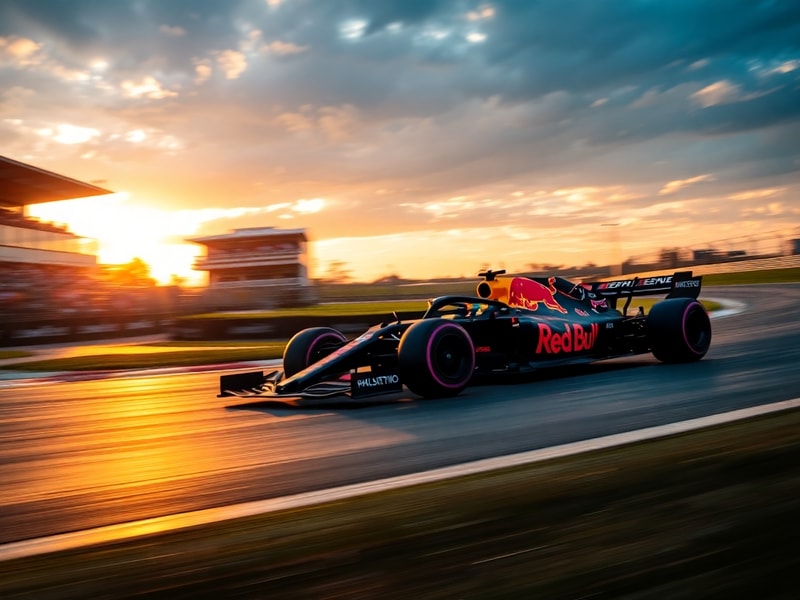
As the sun sets on another Grand Prix weekend, the echoes of engines fade, but the impact lingers. The sport continues to evolve, with hybrid engines paving the way for sustainable racing and digital platforms bringing the experience to millions who may never step into a grandstand.
For those who follow Grand Prix racing, it’s more than entertainment—it’s a ritual. A shared experience that transcends language and borders. Whether you’re cheering from a café in Rome, a living room in São Paulo, or the packed grandstands of Suzuka, the Grand Prix today connects us all in a moment of pure, unfiltered excitement.
And as the checkered flag falls, the question isn’t just who won. It’s about what’s next.
Explore more about motorsport and global racing events on our Sports and Technology pages.