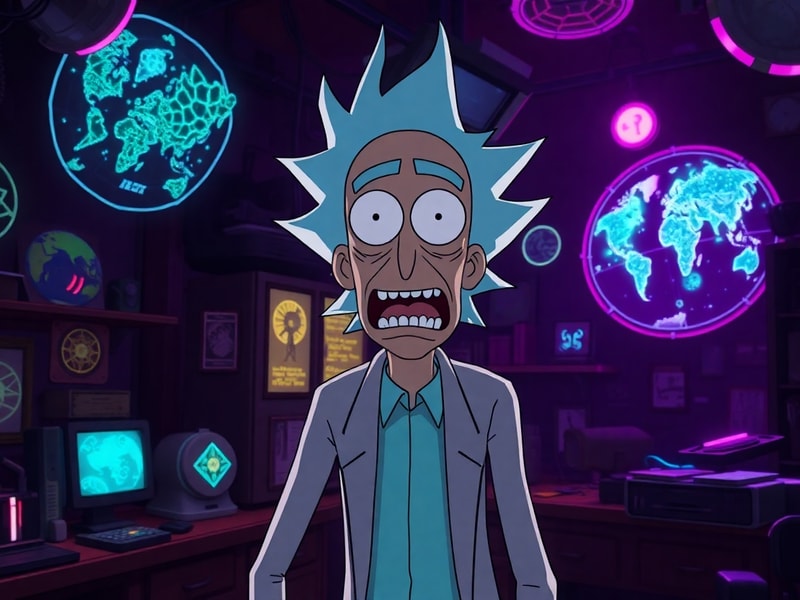
The third episode of Rick and Morty Season 9, titled “The Ricklantis Resurrection,” delivered more than just another chaotic adventure. It marked a significant turning point in the show’s evolving narrative structure, particularly in how it handles its sprawling multiverse and the enigmatic figure of Rick Sanchez himself. The episode’s bold storytelling choices raised immediate questions about the future of the series and its ability to balance humor with deeper, more introspective themes.
The Return of the Citadel: A Nostalgic Yet Disruptive Force
The Citadel of Ricks returned in this episode, but not as a mere backdrop for witty banter or one-dimensional villainy. Instead, it served as a narrative device to explore the consequences of Rick’s actions across the multiverse. The episode’s opening sequence, which revisited the Citadel’s architecture and lore, felt like a love letter to long-time fans. Yet it also introduced a jarring shift—one that challenges the show’s traditional episodic structure.
For the first time, the Citadel wasn’t just a place; it was a character. Its resurgence forced Rick to confront the fallout of his decisions, particularly the ripple effects of his past manipulations. This kind of continuity is rare for Rick and Morty, a show that often thrives on self-contained chaos. The Citadel’s return suggested that Season 9 might be moving toward a more serialized format, where past events carry real weight.
Key Moments That Redefined the Ricktimeline
- The Rick Council’s Reveal: The introduction of the Rick Council—a group of Ricks who have collectively decided Rick Sanchez’s fate—added a layer of political intrigue that the show has only hinted at before. Their existence implies a hierarchy among Ricks, one that could redefine the power dynamics of the multiverse.
- Rick’s Vulnerability: For the first time, Rick wasn’t the unassailable genius. His forced participation in the Citadel’s bureaucracy exposed cracks in his armor, hinting at a future where even he can’t outsmart every consequence.
- Morty’s Growth: While Rick’s arc took center stage, Morty’s quiet moments of defiance—particularly his refusal to blindly follow Rick’s orders—signaled a maturation of his character. This could be a sign of the show’s intent to give him more agency in future episodes.
- The Ricklantis Conspiracy Deepens: The episode’s title, “The Ricklantis Resurrection,” wasn’t just a nostalgic callback. It suggested that the events of the Ricklantis Mixup arc from Season 2 might have long-term repercussions, particularly in how the Citadel operates.
Why This Episode Matters for the Future of Rick and Morty
The shift in tone and structure in “The Ricklantis Resurrection” isn’t just a gimmick—it’s a calculated move to evolve the show beyond its roots. Rick and Morty has always been a balancing act between absurdist humor and existential dread, but this episode leaned harder into the latter. The Citadel’s return wasn’t just fan service; it was a narrative reset, one that could allow the show to explore new themes without discarding its legacy.
One of the most intriguing implications is the potential for Rick to lose his omnipotence. For years, Rick has been the smartest being in the universe, but the Citadel’s bureaucracy—a system designed to neutralize rogue Ricks—presents a threat he can’t simply science his way out of. If this arc continues, it could lead to a Rick who is humbled, perhaps even defeated, in a way that reshapes the show’s core dynamic.
Meanwhile, Morty’s growing independence hints at another evolution. The show has often treated him as the audience surrogate, but recent episodes have given him moments of true agency. If this trend continues, it could lead to a dynamic where Morty isn’t just reacting to Rick’s chaos but actively shaping his own path.
The Broader Implications for the Rick and Morty Multiverse
The episode’s exploration of the Citadel also raises larger questions about the multiverse itself. If the Citadel is a place where Ricks are judged and contained, what does that say about the nature of Rick’s genius? Is he truly a force of chaos, or is he merely a product of a system that demands his destruction? These questions could lead to a deeper examination of the show’s central themes: free will, determinism, and the cost of power.
Additionally, the Citadel’s return could signal a shift in how the show handles its lore. For years, Rick and Morty has thrived on self-contained stories, but the introduction of serialized elements suggests that the writers are ready to weave a more interconnected tapestry. This could either revitalize the show or risk alienating casual viewers who prefer its episodic roots.
A Look Ahead: What’s Next for Season 9?
Given the stakes of “The Ricklantis Resurrection,” Season 9 could take one of two paths. The first is a more serialized approach, where the Citadel’s rules and Rick’s diminishing control become central conflicts. This would mark a bold new direction for the show, one that could elevate it beyond its usual antics.
The second path is a return to form, where the Citadel’s threat is resolved quickly, and the show resumes its episodic chaos. While this would satisfy fans who love Rick and Morty for its unpredictability, it might leave the deeper themes of this episode unresolved.
Either way, “The Ricklantis Resurrection” proved that Rick and Morty is still capable of surprising its audience. By blending nostalgia with innovation, the episode set the stage for a season that could redefine the show’s legacy.
Conclusion: A Turning Point for Rick and Morty
“The Ricklantis Resurrection” wasn’t just another episode of Rick and Morty—it was a statement. The show’s writers have always balanced humor with heart, but this episode dared to ask bigger questions about its characters and world. Whether it’s the Citadel’s return, Rick’s growing vulnerability, or Morty’s quiet rebellion, the episode’s legacy will depend on how the season builds on these foundations.
For fans, the episode was a reminder of why they fell in love with the show in the first place. For the writers, it was a challenge to keep evolving without losing what makes Rick and Morty unique. As Season 9 continues, all eyes will be on how these threads are woven into the larger narrative—and whether the show can sustain this new direction without alienating its core audience.
One thing is certain: Rick and Morty is still far from done reinventing itself.
For more on the show’s evolving lore, check out our Gaming and Entertainment sections.