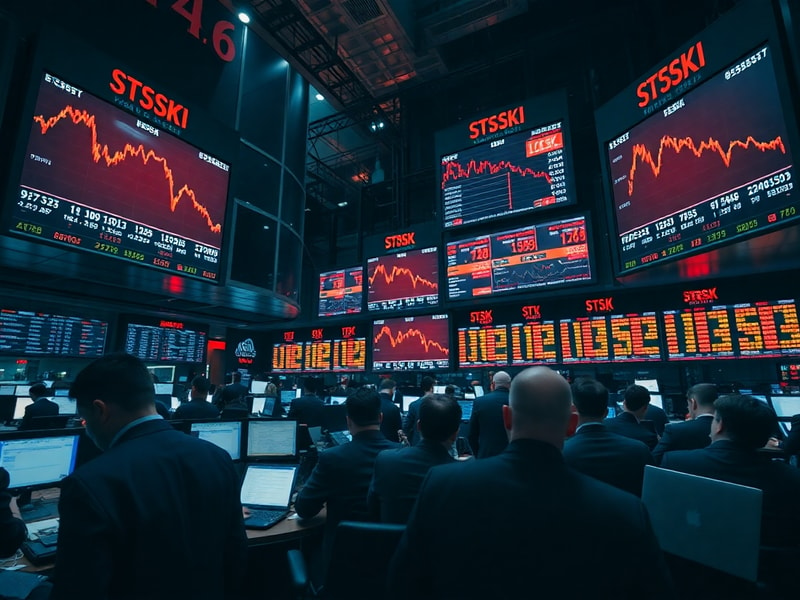
Stock market futures slipped sharply overnight, sending ripples through global financial markets. The decline reflects mounting concerns over economic uncertainty, corporate earnings reports, and shifting monetary policy expectations. Traders woke up to a sea of red across major indices, with Dow Jones, S&P 500, and Nasdaq futures all pointing to a lower open.
Several factors converged to pressure futures, including rising bond yields, mixed corporate earnings, and ongoing geopolitical tensions. The Federal Reserve’s recent signals about potential interest rate hikes have also fueled volatility as investors reassess risk exposure. While the drop may feel abrupt, it underscores deeper fragility in market sentiment following a prolonged period of relative stability.
Key Drivers Behind the Futures Decline
The overnight sell-off wasn’t driven by a single event but rather a combination of macroeconomic and corporate factors. Below are the primary contributors to the decline:
- Rising Treasury Yields: The 10-year Treasury yield surged past 4.5%, its highest level in months. Higher yields increase borrowing costs for businesses and consumers, which can dampen economic growth and corporate profitability.
- Mixed Corporate Earnings: Several high-profile companies reported earnings that fell short of expectations, particularly in the tech and consumer sectors. Weak guidance from industry leaders like Tesla and Netflix weighed on broader market sentiment.
- Fed Policy Uncertainty: Investors are recalibrating expectations after Federal Reserve officials hinted at a more hawkish stance. The possibility of prolonged higher interest rates has dampened appetite for growth stocks.
- Geopolitical Tensions: Escalating conflicts in Eastern Europe and the Middle East continue to inject uncertainty into global markets. Traders are pricing in potential disruptions to supply chains and energy markets.
How Futures Reflect Broader Market Sentiment
Futures serve as a critical barometer for market sentiment ahead of the regular trading session. While they don’t always predict the exact trajectory of the cash market, they provide early signals about investor positioning. Today’s decline suggests a cautious or defensive stance among traders, particularly in sectors sensitive to interest rates.
Technology and growth stocks, which have led the market for much of the year, are particularly vulnerable. Higher interest rates reduce the present value of future earnings, making these stocks less attractive. Meanwhile, value sectors like energy and utilities have shown relative resilience, benefiting from higher yields and stable demand.
It’s worth noting that futures volatility doesn’t always translate into a full-day sell-off. Historically, markets have shown the ability to recover intraday, especially if economic data or corporate news provides relief. However, the persistence of these pressures could extend the downturn into a more prolonged correction.
Broader Implications for Investors
The futures decline isn’t an isolated event; it reflects broader shifts in the economic landscape. For investors, this environment calls for a more strategic approach to portfolio management. Diversification remains key, but the traditional 60/40 stock-bond split may face challenges as both equities and fixed income grapple with higher yields.
Commodities could emerge as a potential hedge against inflation and currency fluctuations. Gold and oil, for instance, often benefit from safe-haven demand during periods of uncertainty. However, their performance will depend on the trajectory of geopolitical events and supply dynamics.
For those with a longer time horizon, market dips may present opportunities to accumulate quality assets at lower valuations. Dollar-cost averaging into positions can mitigate the risk of mistiming the market. Conversely, conservative investors may opt to reduce exposure to highly leveraged sectors until clarity emerges on the Fed’s policy path.
A Look Ahead: What to Watch Next
The coming days and weeks will be critical in determining whether this futures decline evolves into a broader correction. Several key events and data releases could provide direction:
- Federal Reserve Speeches: Comments from Fed officials, particularly Chair Jerome Powell, will be closely scrutinized for clues about interest rate policy. Any hints of a more dovish tilt could ease pressure on futures.
- Economic Data: Upcoming reports on jobs, inflation (CPI/PCE), and GDP growth will shape expectations for the Fed’s next move. Weak data could prompt a reassessment of rate hike probabilities.
- Corporate Earnings: The earnings season is far from over. Investors will be watching for updates from companies in cyclical sectors, such as industrials and financials, which may offer better visibility into economic health.
- Geopolitical Developments: Any escalation or de-escalation in global conflicts could sway market sentiment. Energy prices and supply chains remain particularly sensitive to these dynamics.
For now, the futures decline serves as a reminder of the market’s inherent volatility. While short-term fluctuations can be unsettling, they also create opportunities for those prepared to navigate uncertainty. Staying informed, maintaining a balanced portfolio, and avoiding knee-jerk reactions will be essential in the days ahead.
For more insights on market trends and investment strategies, explore our Finance and Business sections. Whether you’re a seasoned investor or just starting, staying ahead of the curve requires both data and perspective.
In times like these, patience and discipline are invaluable. The market’s path forward will depend on a complex interplay of economic, political, and corporate factors. By focusing on fundamentals and long-term goals, investors can weather the storm and emerge stronger on the other side.