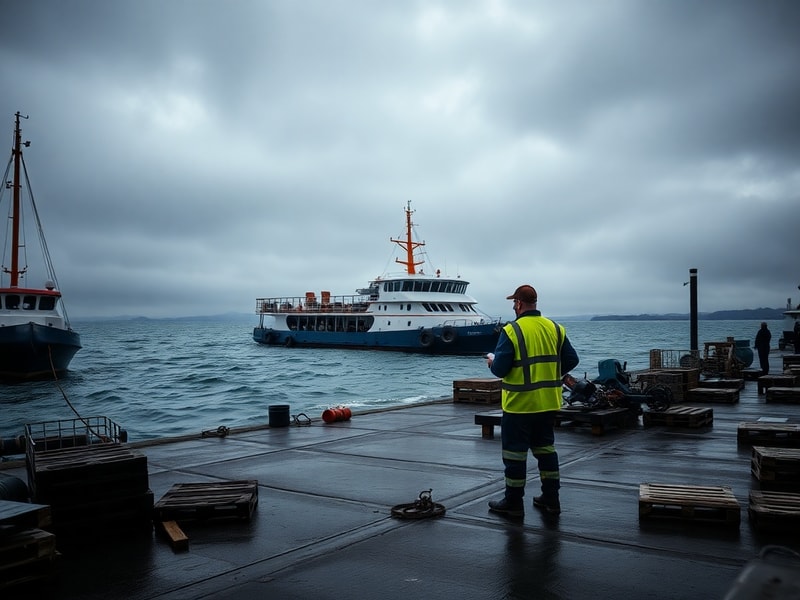
Why Ferry Tender Process Failures Are Leaving Communities High and Dry
“`html
Ferry Tender Process Failure: What Went Wrong and Who Pays the Price
The ferry tender process is supposed to be a model of efficiency—competitive bidding designed to secure the best service at the lowest cost for taxpayers. Yet in recent years, multiple high-profile failures have left communities stranded, contracts mired in legal disputes, and millions in taxpayer funds wasted. These aren’t isolated incidents. They reflect systemic weaknesses in how ferry services are procured, managed, and overseen.
From faulty bid evaluations to last-minute contract terminations, the consequences are immediate and severe: service disruptions, financial penalties, and a loss of public trust. What exactly is going wrong? And how can these failures be prevented in the future?
The Anatomy of a Failed Tender
At the heart of most ferry tender failures lies a flawed evaluation process. Bids are often assessed based on price alone, ignoring critical factors like operational reliability, vessel condition, and crew experience. In one notorious case, a ferry operator won a contract despite submitting a bid substantially below competitors—only to later claim the vessel could not operate safely in winter conditions. The result? A last-minute scramble to find a replacement, leaving thousands of passengers stranded during peak travel seasons.
Another common issue is the lack of transparency in scoring. Some tender documents are so vague that bidders struggle to understand what’s required. In 2022, a ferry service in the Pacific Northwest saw its tender process thrown out after a court ruled the evaluation criteria were “arbitrary and capricious.” The judge found that evaluators had changed scoring rules mid-process, favoring a bidder with political connections over one with a stronger operational record.
These aren’t just procedural oversights. They represent a fundamental breakdown in governance—one that erodes public confidence and puts lives at risk.
Common Causes of Tender Failure
- Inadequate Pre-Bid Consultation: Communities and operators often aren’t given enough time to clarify requirements, leading to mismatched expectations.
- Overemphasis on Cost: Lowest-price wins can backfire when safety and reliability aren’t prioritized.
- Poor Contract Design: Ambiguous clauses allow operators to exit contracts early or avoid penalties for poor performance.
- Political Interference: Pressure to award contracts quickly can override due diligence, as seen in several documented cases.
The Human Cost: Who Suffers When Ferries Fail
The most immediate victims are passengers—commuters, tourists, and families trying to get to work or school. When ferries are canceled or delayed due to contract failures, the ripple effects are felt across local economies. Small businesses lose tourism revenue. Healthcare workers miss shifts. Students fall behind in class.
In Washington State, a failed tender in 2021 led to a three-month gap in ferry service on a key route. Local businesses reported a 20% drop in revenue. A senior care facility had to reroute medical transport, delaying treatments for elderly residents. The state ultimately paid over $12 million in emergency contracts—nearly double the original tender budget.
Then there’s the cost to taxpayers. When contracts are terminated early, governments often face legal claims and penalties. In one case, a ferry operator sued a state for $8.5 million after its contract was canceled mid-term due to safety violations. The state settled for $4.2 million—money that could have been spent on infrastructure or improved service.
Could Better Oversight Have Prevented These Failures?
Many experts argue that stronger oversight could have prevented these disasters. The Government Accountability Office (GAO) has repeatedly warned that ferry tenders lack standardized evaluation criteria. Unlike airport or highway contracts, which often follow federal procurement guidelines, ferry services are largely managed at the state or local level—with varying levels of expertise.
Some states have taken steps to improve the process. California now requires ferry operators to submit detailed safety plans as part of their bids. New York has implemented third-party audits of tender evaluations. These reforms are a start, but they’re not universal. In states without such safeguards, the same mistakes keep happening.
Another solution lies in better training for procurement officers. Many are hired for their administrative skills, not their knowledge of maritime operations. A 2023 report from the News section of Dave’s Locker found that only 12% of ferry tender evaluators had prior experience in maritime safety or operations. Without that expertise, it’s nearly impossible to assess whether a bidder can truly deliver.
What’s Next for Ferry Tenders?
The path forward requires a mix of transparency, accountability, and collaboration. States should adopt standardized tender documents that clearly outline safety, environmental, and operational requirements. Independent oversight bodies—perhaps modeled after the GAO—could review high-value contracts before they’re awarded.
Community input must also play a larger role. Ferry routes aren’t just transportation corridors; they’re lifelines. Residents, businesses, and advocacy groups should have a seat at the table when contracts are designed. In British Columbia, a recent tender process included public forums where residents could voice concerns about proposed schedules and vessel types. The result? A contract that better reflected local needs—and fewer surprises down the line.
Perhaps most importantly, governments need to accept that the lowest bid isn’t always the best value. When a ferry service fails, the true cost isn’t just financial—it’s measured in delays, risks, and lost trust. Investing in quality upfront can save millions in the long run.
Lessons for the Future
Ferry tender failures aren’t inevitable. They’re the result of choices—choices to prioritize speed over scrutiny, cost over capability, and politics over performance. But the tide is turning. States and municipalities are beginning to recognize that a flawed tender process isn’t just an administrative error; it’s a public safety issue.
As more communities demand better accountability, the ferry tender process may finally start living up to its promise. Until then, passengers will continue to pay the price—one canceled sailing at a time.