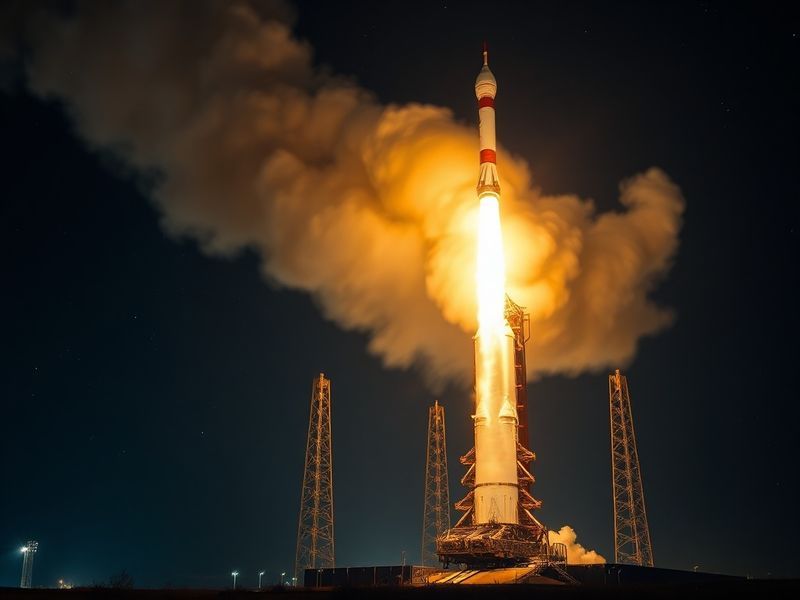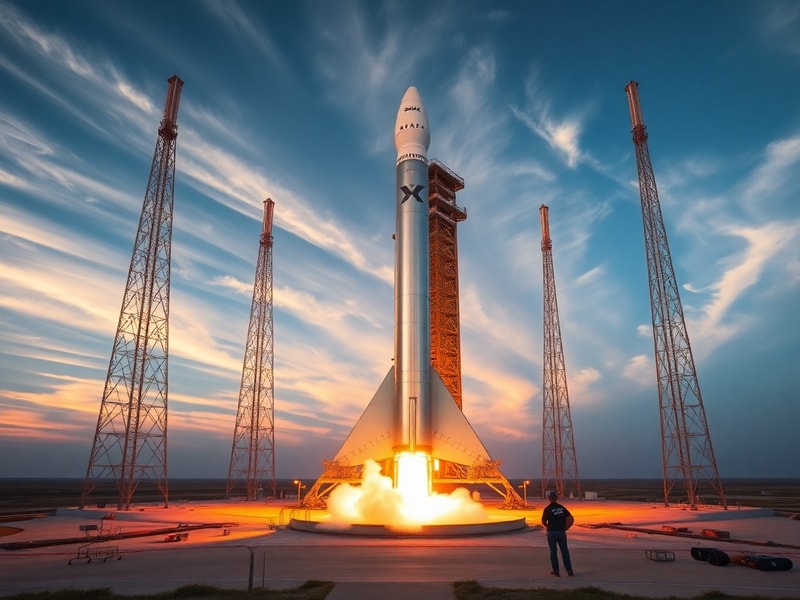
Elon Musk’s SpaceX has become one of the most influential forces in modern aerospace, blending audacious ambition with relentless innovation. Since its founding in 2002, the company has transformed from a startup with grand visions into a global leader in space transportation, satellite deployment, and even human settlement plans. Its achievements—from reusable rockets to crewed missions—have not only advanced technology but also reshaped how the world views humanity’s future beyond Earth.
What started as a project to reduce spaceflight costs has expanded into a multifaceted enterprise influencing industries, governments, and popular culture. SpaceX’s reach extends beyond launches; it has fostered a new era of commercial spaceflight, inspired international collaborations, and sparked debates about the ethics and economics of space exploration. This is the story of how a single company redefined the boundaries of what’s possible.
The Origins and Vision Behind SpaceX
SpaceX was born out of Elon Musk’s frustration with the high costs and inefficiencies of traditional space agencies. After selling PayPal in 2002, Musk poured his resources into a company with a singular mission: making life multiplanetary. The early years were marked by skepticism. Critics questioned whether a private company could compete with government-backed giants like NASA or Roscosmos. Yet, SpaceX’s first major milestone came in 2008 when the Falcon 1 rocket achieved orbit—a feat that had eluded many before it.
The company’s approach was radical. Instead of relying on government contracts alone, it pursued commercial satellite launches and later, crewed missions. This strategy attracted clients from around the world, including telecommunications companies and even NASA, which turned to SpaceX for resupply missions to the International Space Station (ISS). By 2012, SpaceX became the first private entity to send a spacecraft to the ISS, a watershed moment that validated its vision.
Key Milestones in SpaceX’s Early Years
- 2002: SpaceX founded in Hawthorne, California.
- 2008: Falcon 1 becomes the first privately developed liquid-fueled rocket to reach orbit.
- 2010: Dragon spacecraft completes its first orbital flight, later becoming the first private spacecraft to dock with the ISS in 2012.
- 2015: SpaceX lands the first reusable orbital-class rocket, the Falcon 9, setting the stage for cost reductions in spaceflight.
Revolutionizing Spaceflight with Reusability
One of SpaceX’s most transformative innovations is the development of reusable rockets. Traditional spaceflight relied on expendable rockets, which were discarded after each launch, driving up costs. SpaceX’s Falcon 9 changed that by demonstrating that rockets could land vertically and be refurbished for subsequent flights. This breakthrough has slashed launch costs by nearly 90%, making space more accessible.
The implications are vast. Lower costs have democratized access to space, allowing smaller companies and even nations to participate in satellite launches. It has also enabled SpaceX to secure contracts for ambitious projects like the Starlink constellation, a global broadband network composed of thousands of satellites. As of 2024, SpaceX has completed over 200 launches, with many rockets flying multiple times.
Yet, the push for reusability hasn’t been without challenges. Early attempts at landing rockets often ended in explosions or failures. The company’s persistence paid off, though, and today, rocket landings are almost routine. This reliability has solidified SpaceX’s reputation as the go-to provider for commercial and government launches alike.
SpaceX’s Cultural and Global Impact
Beyond its technological achievements, SpaceX has had a profound cultural influence. It has reignited public fascination with space exploration, a field that had grown stagnant in the post-Apollo era. The company’s live-streamed launches attract millions of viewers worldwide, turning rocket science into a spectator sport. Social media amplifies its reach, with Musk’s own platform, X (formerly Twitter), serving as a megaphone for updates and announcements.
SpaceX’s ambitions have also sparked conversations about the future of humanity. Musk’s vision of colonizing Mars—articulated through projects like Starship—has captured imaginations and inspired both optimism and skepticism. While some dismiss the timeline as unrealistic, others see it as a necessary step for the survival of humanity. The debate has extended into academic and policy circles, with institutions like NASA and the European Space Agency (ESA) reevaluating their own Mars strategies in response.
The company’s global footprint is undeniable. Launch sites in the United States, including Cape Canaveral and Vandenberg Space Force Base, are complemented by facilities in Texas and Florida. Internationally, SpaceX has partnered with entities in Europe, Asia, and the Middle East, further embedding itself in the fabric of the global space economy. Its Starlink project, in particular, has drawn attention for its potential to bridge the digital divide, though it has also raised concerns about space debris and astronomical interference.
SpaceX’s Global Partnerships and Collaborations
- NASA: Crewed missions to the ISS under the Commercial Crew Program.
- ESA: Collaborations on Earth observation and satellite launches.
- Private Companies: Contracts with telecommunications firms for Starlink broadband.
- Governments: Deals with countries like Japan and Israel for satellite launches.
The Future: Starship and Beyond
SpaceX’s next frontier is Starship, a fully reusable, super-heavy-lift launch vehicle designed to carry humans and cargo to Mars. The project represents the company’s most ambitious undertaking yet, with Musk setting his sights on crewed missions to the Red Planet within this decade. While Starship’s development has faced setbacks—including multiple test-flight explosions—the progress has been rapid, and the potential rewards are enormous.
Starship’s success could redefine space exploration by enabling large-scale missions, from lunar landings to interplanetary colonization. It could also serve as a catalyst for new industries, such as asteroid mining or space-based manufacturing. The economic ripple effects would be substantial, with estimates suggesting that a thriving space economy could generate trillions of dollars in the coming decades.
Yet, the road ahead is fraught with challenges. Regulatory hurdles, technological hurdles, and the sheer complexity of Mars missions pose significant risks. Environmental concerns, particularly regarding the carbon footprint of rocket launches, have also entered the conversation. SpaceX’s response has been to emphasize sustainability, with plans for in-orbit refueling and the use of methane as a fuel source, which can be produced on Mars.
As SpaceX continues to push the envelope, its story serves as a reminder of how vision, perseverance, and innovation can reshape industries. It has not only advanced spaceflight but also challenged the world to think bigger about humanity’s place in the universe. Whether on Mars or back on Earth, SpaceX’s influence will be felt for generations to come.
Conclusion: A New Era of Space Exploration
SpaceX’s journey from a startup to a spacefaring titan is a testament to the power of ambition and ingenuity. Its accomplishments have redefined what’s possible in space exploration, from reusable rockets to crewed missions. Beyond technology, the company has reshaped global perceptions of space, turning it from a distant frontier into a tangible, achievable goal.
As SpaceX looks toward the future with Starship and Mars, it stands at the precipice of another revolution. The questions it raises—about sustainability, ethics, and humanity’s role in the cosmos—are as profound as the technological feats it achieves. In an industry once dominated by governments, SpaceX has proven that private enterprise can lead the way. Its story is still being written, but one thing is clear: the age of space exploration has only just begun.