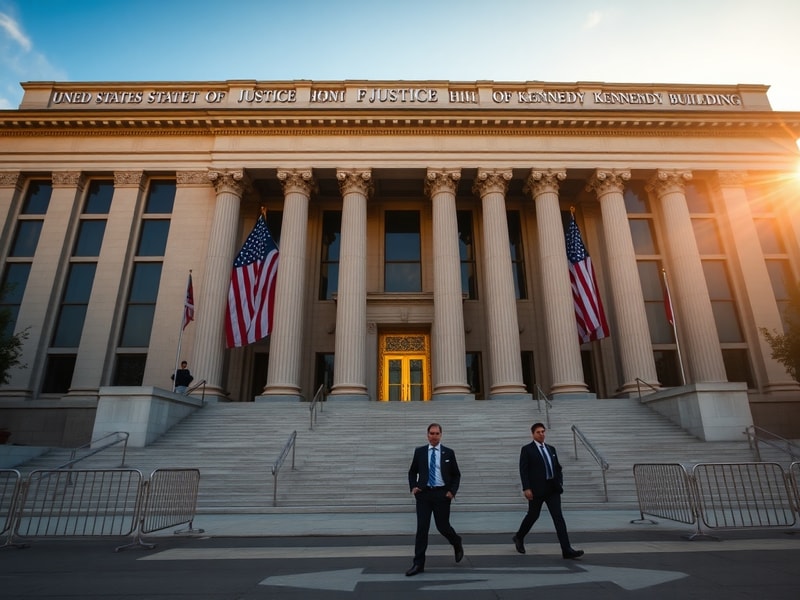
united states department of justice
“`html
The United States Department of Justice: A Global Enforcer of Law and Order
The United States Department of Justice (DOJ) stands as one of the most powerful legal institutions in the world. Established in 1870, it serves as the federal executive department responsible for enforcing the law, defending U.S. interests, and ensuring equal justice under the law. While its primary jurisdiction covers domestic matters, its influence extends far beyond American borders, shaping global legal standards and cooperation.
The DOJ’s reach is vast and multifaceted. It oversees federal law enforcement, prosecutes crimes, defends the U.S. in legal disputes, and upholds civil rights. In an interconnected world where crime and corruption often transcend borders, the DOJ plays a critical role in international justice, working with foreign governments, Interpol, and other agencies to combat transnational threats like cybercrime, terrorism, and human trafficking. Its actions ripple across continents, impacting how nations approach law, governance, and human rights.
The DOJ’s Structure: A Web of Enforcement
The DOJ operates through several key divisions, each with a distinct role in the legal ecosystem. At its core, the department is led by the Attorney General, a Cabinet-level official appointed by the President and confirmed by the Senate. Below this leadership, the DOJ is divided into major components:
- Federal Bureau of Investigation (FBI): The DOJ’s premier investigative agency, the FBI handles domestic and international threats, including terrorism, cybercrime, and espionage.
- Drug Enforcement Administration (DEA): Focuses on combating drug trafficking and disrupting criminal organizations involved in narcotics distribution.
- Bureau of Alcohol, Tobacco, Firearms and Explosives (ATF): Enforces federal laws related to firearms, explosives, and alcohol/tobacco regulations.
- U.S. Marshals Service: The nation’s oldest federal law enforcement agency, tasked with fugitive apprehension, witness protection, and court security.
- Office of the Solicitor General: Represents the U.S. government in Supreme Court cases, shaping legal precedents that influence global jurisprudence.
This structure ensures that the DOJ can address a wide spectrum of legal challenges, from high-profile criminal cases to complex regulatory enforcement. Its ability to deploy specialized units allows it to adapt to emerging threats, whether they stem from organized crime syndicates or digital adversaries.
Global Implications: The DOJ’s Role in International Justice
The DOJ’s influence extends well beyond U.S. borders, often serving as a model for legal systems worldwide. Through international collaborations, it helps shape global policies on cybersecurity, anti-corruption, and human rights. For example, the DOJ’s Cybersecurity Unit works with foreign governments to prosecute hackers and ransomware gangs, while its Transnational Organized Crime Task Forces dismantle criminal networks operating across multiple countries.
One of the DOJ’s most notable international efforts is its pursuit of foreign corruption cases under the Foreign Corrupt Practices Act (FCPA). This law prohibits U.S. companies and individuals from bribing foreign officials, and its enforcement has led to multi-billion-dollar settlements and global compliance reforms. The FCPA’s reach has inspired similar legislation in Europe and Asia, demonstrating how U.S. legal standards can influence international business ethics.
Additionally, the DOJ plays a pivotal role in extradition treaties and mutual legal assistance agreements. When fugitives flee to foreign countries, the DOJ works with Interpol and local authorities to secure their return. High-profile cases, such as the capture of accused cybercriminals or war criminals, often hinge on these cooperative efforts. The DOJ’s ability to coordinate with foreign partners underscores its role as a global enforcer of justice.
Controversies and Criticisms: The DOJ Under Scrutiny
Despite its critical functions, the DOJ has faced significant controversies. Political interference in its operations has been a recurring concern, particularly during times of partisan tension. For instance, former President Donald Trump’s attempts to pressure DOJ officials to investigate his political rivals sparked debates about the department’s independence. Critics argue that such interventions undermine public trust in the justice system.
Another contentious issue is the DOJ’s handling of civil rights cases. While the Civil Rights Division is tasked with protecting marginalized communities, its enforcement has been inconsistent. High-profile cases, such as the federal response to police brutality or voting rights violations, often reveal deep-seated tensions between federal authority and local governance. The DOJ’s role in these matters is frequently scrutinized, with activists and lawmakers demanding stronger accountability.
The DOJ has also been criticized for its aggressive prosecution of low-level drug offenders while failing to address systemic inequities in the criminal justice system. The disparity in sentencing between crack and powder cocaine, for example, disproportionately impacted Black communities, leading to calls for reform. While the DOJ has taken steps to address these issues—such as its support for the First Step Act, which aims to reduce mass incarceration—critics argue that more systemic changes are needed.
The Future of the DOJ: Adapting to a Changing World
As the world becomes increasingly complex, the DOJ must evolve to meet new challenges. The rise of cryptocurrency, artificial intelligence, and globalized crime networks demands innovative legal strategies. The DOJ’s recent creation of a National Cryptocurrency Enforcement Team reflects its commitment to staying ahead of digital threats. Similarly, its focus on prosecuting white-collar crimes, such as fraud and insider trading, highlights the growing need to regulate emerging industries.
Domestically, the DOJ faces pressure to address racial and economic disparities in its enforcement practices. Reform advocates push for policies that prioritize rehabilitation over punishment, particularly for nonviolent offenders. The DOJ’s role in overseeing police departments under consent decrees—legal agreements to address systemic misconduct—shows its potential to drive meaningful change.
Globally, the DOJ’s collaboration with international courts, such as the International Criminal Court (ICC), remains a contentious but necessary endeavor. While the U.S. is not a member of the ICC, it occasionally cooperates on cases involving genocide or war crimes. The DOJ’s involvement in these matters underscores its commitment to upholding universal human rights, even when political tensions arise.
Conclusion: A Balancing Act of Power and Responsibility
The United States Department of Justice is a paradox—a symbol of legal authority and a target of criticism, a protector of rights and a source of controversy. Its global reach ensures that its actions have consequences far beyond American soil, influencing how nations approach justice, corruption, and human rights. Yet, its domestic challenges remind us that no institution is immune to the pressures of politics and public scrutiny.
As the world grows more interconnected, the DOJ’s role will only expand. Its ability to adapt, reform, and collaborate will determine whether it remains a beacon of justice or succumbs to the very forces it seeks to combat. For now, it stands as a testament to the enduring—and often imperfect—pursuit of law in an increasingly complex world.
—
METADATA
{
“title”: “How the U.S. Department of Justice Shapes Global Law and Justice”,
“metaDescription”: “Explore the DOJ’s structure, global impact, and controversies as America’s top law enforcement agency.”,
“categories”: [“Politics”, “Analysis”],
“tags”: [“DOJ”, “U.S. Department of Justice”, “federal law enforcement”, “international justice”, “legal system”],
“imageDescription”: “A wide-angle shot of the U.S. Department of Justice building in Washington, D.C., with a focus on its grand architecture and the American flag flying above. The scene is captured in the early morning light, emphasizing the building’s imposing presence and the gravity of its role.”
}
—END METADATA—
“`