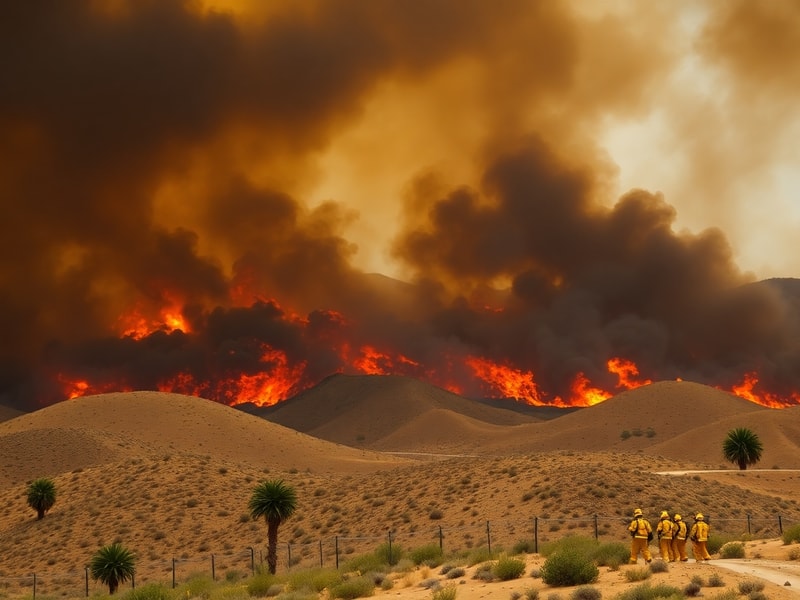
Camp Pendleton Fire Forces Evacuations as Wildfires Sweep Southern California
The Camp Pendleton fire, which ignited on a dry Tuesday afternoon, has become the latest in a series of intense wildfires scorching Southern California. The blaze, originating near the sprawling Marine Corps base in San Diego County, prompted immediate evacuations as flames spread rapidly through the chaparral-covered hills. Firefighters from multiple agencies, including Cal Fire and the U.S. Marine Corps, responded swiftly, yet the fire’s erratic behavior—fueled by high winds and record-breaking temperatures—has made containment a daunting challenge.
The fire’s location near Camp Pendleton, a critical military installation and one of the largest Marine bases in the United States, adds a layer of complexity to the emergency response. The base, which spans over 125,000 acres, is home to thousands of service members and their families, as well as vital training grounds for Marine Corps operations. While the base itself has not been evacuated, nearby communities in San Diego and Riverside counties have faced mandatory orders to leave their homes, with some residents describing the scene as apocalyptic as embers rained down on neighborhoods.
The Global Context of Wildfires and Military Lands
Wildfires are not unique to Southern California, nor are they isolated to civilian areas. Across the globe, military bases and training grounds have increasingly become battlegrounds for climate-induced disasters. In Australia, the Department of Defence reported that bushfires in 2019-2020 burned over 200,000 hectares of land, including parts of the Shoalwater Bay Training Area in Queensland. Similarly, in Portugal, the Ministry of National Defence confirmed that military lands were among the hardest hit during the catastrophic wildfires of 2017, which destroyed more than 500,000 acres. These incidents highlight a growing trend: military installations, often situated in remote or environmentally sensitive areas, are not immune to the escalating wildfire crisis driven by climate change.
In the United States, the Department of Defense has recognized the threat, with a 2021 report noting that wildfires pose “significant risks” to military readiness. The Camp Pendleton fire underscores this concern, as the base’s training schedules and operational capabilities could be disrupted if the situation escalates. The Marine Corps has already begun assessing the fire’s impact on training grounds, with some areas temporarily closed to ensure safety.
The Human and Environmental Toll
The Camp Pendleton fire has already left a mark on both the environment and the people living in its path. Over 2,500 acres have been scorched as of the latest reports, with containment efforts hindered by gusty Santa Ana winds that can whip flames into unpredictable directions. Fire officials have warned that the blaze could merge with nearby fires, creating a larger conflagration that would be even harder to control.
For residents, the emotional and financial toll is steep. Many have been forced to flee with little more than the clothes on their backs, leaving behind homes that may never be the same. The fire’s rapid spread has also raised concerns about air quality, particularly for those with respiratory conditions. Schools in the affected districts have canceled outdoor activities, and residents are advised to keep windows closed to avoid smoke inhalation.
The environmental impact is equally concerning. Southern California’s chaparral ecosystems, already stressed by drought and invasive species, are particularly vulnerable to wildfires. These fires can take decades to recover, if they recover at all. Additionally, the loss of habitat threatens species like the California gnatcatcher and the coastal cactus wren, both of which are protected under state and federal laws. Conservationists are already calling for increased funding for fire prevention measures, such as controlled burns and vegetation management, to protect these fragile ecosystems.
Lessons from Past Fires and the Path Forward
The Camp Pendleton fire is not an isolated incident but part of a broader pattern of worsening wildfires in the western United States. In 2020, California experienced its worst wildfire season on record, with over 4.2 million acres burned. The 2018 Camp Fire, which destroyed the town of Paradise and killed 85 people, remains one of the deadliest in state history. These disasters have forced communities, governments, and military installations to rethink their approach to wildfire preparedness.
One of the key lessons from past fires is the importance of early detection and rapid response. Technology has played a crucial role in this regard, with tools like satellite imagery, drones, and AI-powered predictive modeling helping authorities anticipate fire spread and allocate resources more effectively. For example, technology companies have developed systems that use real-time data to create interactive fire maps, allowing residents to track the fire’s progress and make informed decisions about evacuation.
Another critical factor is community resilience. In the face of such disasters, neighborhoods that have invested in fire-resistant building materials, defensible space around homes, and emergency preparedness plans fare better than those that have not. The Camp Pendleton fire has served as a stark reminder of the importance of these measures, as well as the need for ongoing education about wildfire risks.
Military bases like Camp Pendleton also play a unique role in wildfire response. The Marine Corps has a long history of supporting civilian authorities during emergencies, and this tradition continues with the Camp Pendleton fire. Service members have been deployed to assist with evacuations, provide logistical support, and even help with firefighting efforts. This collaboration between military and civilian agencies is essential, especially as wildfires become more frequent and intense.
A Call for Collective Action
The Camp Pendleton fire is a symptom of a larger crisis—one that demands collective action from governments, communities, and individuals alike. Addressing the wildfire epidemic requires a multifaceted approach that includes reducing greenhouse gas emissions, investing in sustainable land management practices, and supporting research into fire-resistant materials and technologies. It also requires a shift in mindset, recognizing that wildfires are not just a seasonal threat but a year-round reality that demands constant vigilance.
For the residents of Southern California, the Camp Pendleton fire is a wake-up call. It is a reminder that the natural world is not a static backdrop but a dynamic and often unpredictable force. As the climate continues to change, so too will the frequency and intensity of wildfires. The question is not whether another fire will strike, but when—and whether we will be prepared.
The road ahead is challenging, but not without hope. By learning from past fires, embracing innovation, and working together, we can mitigate the impact of wildfires and build a more resilient future for ourselves and the generations to come.