The grand jury system remains one of the most misunderstood yet powerful components of the American legal framework. Established under the Fifth Amendment, grand juries serve as investigative bodies that determine whether criminal charges should be brought against individuals. Their role extends beyond mere rubber-stamping, functioning as a critical check between prosecutorial power and individual rights. Despite their constitutional foundation, grand juries frequently find themselves at the center of public debate—particularly when high-profile cases result in no indictments.
This scrutiny often stems from the secrecy surrounding grand jury proceedings, which contrasts sharply with the transparency expected in criminal trials. The deliberations of a grand jury occur behind closed doors, with only prosecutors, witnesses, and jurors present. This opacity has fueled skepticism about whether the system truly protects the public or merely serves prosecutorial interests. To understand the grand jury’s place in the justice system, it’s essential to examine its origins, mechanics, and the controversies that continue to shape its reputation.
The Historical Foundations of Grand Juries
The grand jury traces its roots to medieval England, where it emerged as a mechanism for communities to present grievances to royal judges. By the 12th century, the Assize of Clarendon formalized its role in investigating crimes, particularly those involving serious offenses like murder or theft. When English colonists brought the system to America, they embedded it in the constitutional framework, ensuring its survival in the Bill of Rights.
The Fifth Amendment explicitly guarantees that no one shall be held to answer for a capital or otherwise infamous crime unless indicted by a grand jury. This provision reflects a deep-seated wariness of unchecked prosecutorial power—a concern that resonated with the Founding Fathers. Over time, the grand jury’s role expanded beyond criminal indictments to include broader investigative functions, such as examining public corruption or corporate malfeasance. Today, it remains a cornerstone of due process, though its application varies significantly across jurisdictions.
Not all states utilize grand juries. While the federal system and about half of U.S. states rely on them, others have replaced them with preliminary hearings conducted by judges. This divergence underscores a broader debate about efficiency versus procedural safeguards. Proponents argue that grand juries provide a necessary layer of scrutiny, ensuring that prosecutors cannot unilaterally pursue charges without community or peer validation. Critics, however, contend that the system is outdated and prone to prosecutorial bias, given that grand juries almost always follow the lead of prosecutors.
How Grand Juries Operate: A Step-by-Step Breakdown
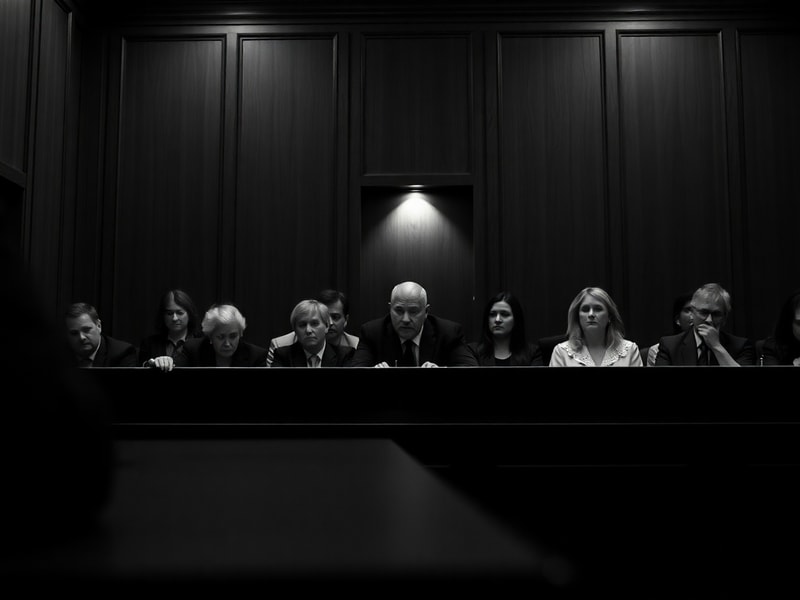
The grand jury process begins with the selection of 16 to 23 jurors, who are chosen randomly from the community, much like trial jurors. Unlike trial juries, however, grand jurors serve for extended periods—often months—and hear multiple cases during their tenure. Their primary responsibility is to determine whether there is “probable cause” to believe a crime has been committed and that the accused is responsible. This threshold is lower than the “beyond a reasonable doubt” standard required for conviction in a criminal trial.
Prosecutors play a dominant role in grand jury proceedings. They present evidence, call witnesses, and guide the jurors through the legal framework of the case. Defense attorneys are typically absent, and the accused does not have the right to testify unless invited by prosecutors. This asymmetry has led to criticism that grand juries are effectively an arm of the prosecution rather than an independent body. The proceedings are conducted in secret, with no public record of the deliberations or the evidence presented. Only the prosecutors and jurors are present, and witnesses are sworn to secrecy.
If a majority of grand jurors agree that probable cause exists, they issue an indictment, formally charging the individual with a crime. This indictment is then presented to a judge, who reviews it for legal sufficiency before the case proceeds to trial. In cases where the grand jury declines to indict, the matter is typically dismissed, though prosecutors retain the discretion to pursue charges through alternative means in some jurisdictions.
One of the most contentious aspects of grand jury proceedings is the lack of transparency. Because the public rarely learns about the evidence or deliberations, high-profile cases—such as those involving police shootings—often spark outrage when no indictments are returned. The 2014 decision not to indict Officer Darren Wilson in the shooting death of Michael Brown in Ferguson, Missouri, drew national attention to the grand jury’s role and fueled demands for reform. Critics argued that the secrecy of the process shielded prosecutorial misconduct and eroded public trust.
Controversies and Criticisms Surrounding Grand Juries
The grand jury system has long been a lightning rod for criticism, with opponents pointing to several systemic flaws. One of the most persistent complaints is the lack of checks on prosecutorial power. Because prosecutors present the case, control the flow of evidence, and shape the legal arguments, grand juries often serve as a rubber stamp for their decisions. Studies have shown that grand juries indict in more than 99% of cases presented to them, a statistic that underscores the imbalance in the process.
Another major criticism is the secrecy of the proceedings. Unlike criminal trials, which are open to the public, grand jury deliberations are conducted behind closed doors. This opacity can fuel suspicions of impropriety, particularly when high-profile cases result in no indictments. In cases involving police officers, for example, the grand jury’s decision not to charge often sparks protests and accusations of bias. The 2020 decision not to indict the officers involved in the death of Breonna Taylor in Louisville, Kentucky, reignited debates about whether the grand jury system can deliver justice in cases involving law enforcement.
Legal scholars and reform advocates have proposed several solutions to address these concerns. Some advocate for greater transparency, such as allowing limited public access to grand jury proceedings or requiring prosecutors to disclose more information to the public. Others argue for abolishing the grand jury system entirely, replacing it with preliminary hearings where judges and defense attorneys can challenge the evidence. A handful of states, including Virginia and Pennsylvania, have already moved in this direction, opting for preliminary hearings in lieu of grand juries.
The role of grand juries in white-collar crime cases has also come under scrutiny. Critics argue that prosecutors use grand juries to extract cooperation from corporate executives, leveraging the threat of indictment to secure plea deals. This practice, known as “deferred prosecution,” has raised questions about whether grand juries are being used as tools of coercion rather than instruments of justice. Meanwhile, defenders of the system point to its historical role in investigating complex crimes that require extensive resources, such as organized crime or public corruption.
Grand Juries in High-Profile Cases: Lessons from History
High-profile grand jury decisions have repeatedly thrust the system into the national spotlight, often sparking debates about race, power, and justice. Perhaps the most infamous example is the 1921 Tulsa Race Massacre, in which a white mob destroyed the Black-owned Greenwood District in Tulsa, Oklahoma, killing hundreds of residents. Despite the scale of the violence, no one was ever indicted for the massacre—a decision that has been attributed to the racial biases embedded in the legal system at the time.
More recently, the grand jury’s role in police brutality cases has become a focal point of activism. The 2014 decision not to indict Officer Wilson in Ferguson, Missouri, for the shooting of Michael Brown led to widespread protests under the banner of Black Lives Matter. Similarly, the 2015 decision not to indict the officers involved in the death of Freddie Gray in Baltimore, Maryland, resulted in riots and calls for systemic reform. These cases highlighted the grand jury’s potential to either uphold or undermine public trust in the justice system, depending on the circumstances.
In contrast, grand juries have also played a role in holding powerful figures accountable. The 2019 indictment of Harvey Weinstein on sexual assault charges marked a rare instance in which a grand jury’s decision resulted in significant legal consequences for a high-profile defendant. The case demonstrated that, under the right circumstances, grand juries can function as a check on unchecked power. However, the Weinstein case also underscored the system’s reliance on prosecutorial strategy, as the charges brought by the Manhattan District Attorney’s office were narrower than the full scope of the allegations against him.
These examples illustrate the grand jury’s dual nature: a tool of both justice and injustice, depending on who wields it and under what conditions. For some, the system represents a safeguard against prosecutorial overreach. For others, it is a relic of a bygone era, ill-equipped to address the complexities of modern crime and punishment. As calls for reform grow louder, the grand jury’s future remains uncertain, caught between its constitutional roots and the evolving demands of a society that increasingly demands transparency and accountability.
Key Takeaways for Understanding Grand Juries
- The grand jury system is enshrined in the Fifth Amendment but operates differently across federal and state jurisdictions.
- Grand juries serve as investigative bodies, determining whether probable cause exists to charge an individual with a crime.
- Prosecutors play a dominant role in grand jury proceedings, which are conducted in secret and lack many of the safeguards found in criminal trials.
- Critics argue that the system is biased in favor of prosecutors and lacks transparency, while defenders point to its historical role in complex investigations.
- High-profile cases, particularly those involving police brutality, have fueled public skepticism about the grand jury’s ability to deliver justice.
Further Reading
For more insights into the legal system and its complexities, explore these related topics on Dave’s Locker:
- Legal Analysis: In-depth examinations of courtroom dynamics and judicial decisions.
- Criminal Justice Reform: Coverage of ongoing efforts to modernize the legal system and address systemic inequities.
Conclusion: The Grand Jury’s Place in an Evolving Justice System
The grand jury remains a paradox—a constitutional safeguard that often operates in the shadows, subject to the whims of prosecutorial strategy. Its history is one of both noble intent and troubling failure, reflecting the broader tensions within the American justice system. As calls for transparency and reform grow louder, the grand jury’s future hangs in the balance. Will it adapt to the demands of a more skeptical public, or will it fade into obscurity, replaced by