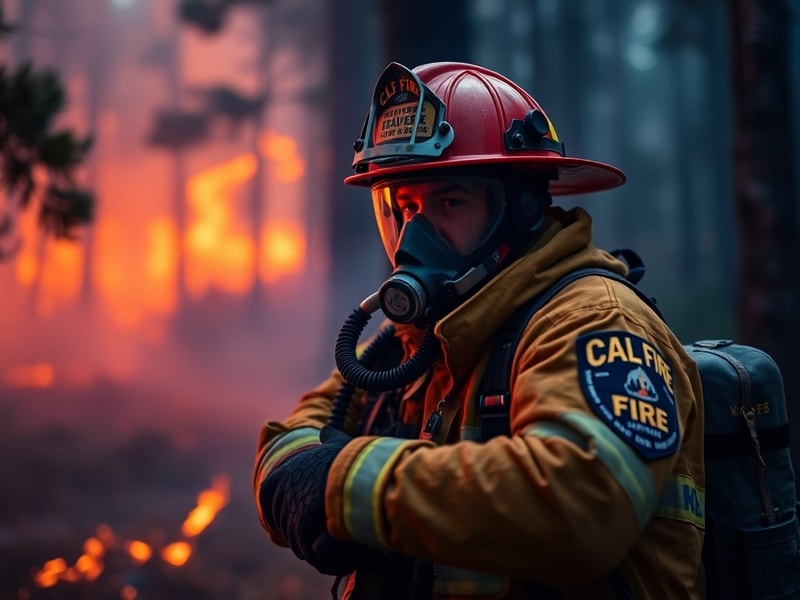
How CAL FIRE Protects California from Wildfires Year-Round
“`html
California’s Firefighting Force: Inside CAL FIRE’s Role in Wildfire Prevention
With wildfires becoming an annual crisis in California, the state’s firefighting agency stands as the first line of defense. CAL FIRE doesn’t just respond to blazes—it prevents them through strategic forest management, public education, and rapid emergency response. Understanding how this agency operates reveals much about the state’s approach to one of its most pressing challenges.
The Structure and Mission of CAL FIRE
CAL FIRE, formally known as the California Department of Forestry and Fire Protection, serves as the state’s primary wildfire suppression agency. Established in 1885, it has evolved from a small forest management unit into a comprehensive emergency response organization. Today, CAL FIRE employs over 9,000 personnel, including firefighters, pilots, and support staff, making it one of the largest fire departments in the world.
The agency’s mission extends beyond battling flames. CAL FIRE focuses on four core pillars: emergency response, fire prevention, forest management, and community preparedness. Each year, it responds to tens of thousands of wildfires, many of which are contained before they escalate into catastrophic events. Its prevention efforts include prescribed burns, vegetation management, and public outreach programs designed to reduce human-caused ignitions.
CAL FIRE’s organizational structure mirrors its multifaceted responsibilities. The agency operates under the California Natural Resources Agency but maintains close ties with federal partners like the U.S. Forest Service. Field operations are divided into 21 administrative units, each responsible for specific geographic regions. This localized approach ensures rapid response times and tailored strategies for different ecosystems, from coastal forests to inland chaparral.
Wildfire Prevention: Beyond Just Putting Out Fires
While media coverage often highlights the dramatic moments of firefighting—helicopters dropping water, crews battling flames through the night—CAL FIRE’s most critical work happens long before a spark ignites. Prevention is the agency’s most powerful tool, and it employs several strategies to mitigate wildfire risks.
One of the most effective prevention methods is prescribed burning. By intentionally setting controlled fires during low-risk periods, CAL FIRE reduces the buildup of dry vegetation that fuels wildfires. In 2023 alone, the agency conducted over 100,000 acres of prescribed burns statewide. These controlled burns not only lower fire intensity but also restore natural fire-adapted ecosystems, promoting biodiversity.
Another key strategy is fuel reduction through mechanical thinning and mastication. In dense forests where trees compete for resources, CAL FIRE removes excess vegetation to decrease fire spread potential. This work is particularly vital in areas where historical fire suppression has led to overgrown forests. The agency also collaborates with private landowners, offering grants and technical assistance to implement fire-safe landscaping and building practices.
Public education remains a cornerstone of CAL FIRE’s prevention efforts. Through programs like “Ready for Wildfire,” the agency teaches residents how to create defensible space around their homes, use fire-resistant building materials, and develop family emergency plans. These initiatives have proven crucial in reducing property damage during wildfire season.
Key Prevention Strategies Employed by CAL FIRE
- Prescribed Burns: Controlled fires set during low-risk periods to reduce vegetation buildup.
- Fuel Reduction: Mechanical thinning and mastication to decrease fire spread potential.
- Public Education: Programs like “Ready for Wildfire” to promote fire-safe practices.
- Community Preparedness: Grants and assistance for landowners to implement fire-safe landscaping.
- Technology Integration: Use of drones, satellite imagery, and predictive modeling to identify high-risk areas.
Response and Recovery: CAL FIRE’s Role During Crisis
When wildfires do ignite, CAL FIRE’s response capabilities are unmatched in the state. The agency operates a fleet of 12 air tankers, 1,800 fire engines, and hundreds of hand crews, all strategically stationed to ensure rapid deployment. During peak fire season, which typically runs from June through November, CAL FIRE coordinates with local, state, and federal agencies to form a unified command structure.
One of the agency’s most critical roles during active fires is incident command. CAL FIRE often takes the lead in managing large-scale fires, coordinating resources, and implementing evacuation orders. Its Incident Command System (ICS) ensures clear communication and efficient resource allocation, even when hundreds of agencies are involved. This structure has been praised for its effectiveness in preventing fire spread and protecting lives.
Recovery efforts begin long before the flames are fully contained. CAL FIRE works with local governments to assess damage, clear hazardous debris, and restore critical infrastructure. In the aftermath of major fires, the agency plays a key role in investigating the cause, which can inform future prevention strategies. For example, after the 2018 Camp Fire—the deadliest wildfire in California’s history—CAL FIRE’s investigation led to changes in utility regulations to prevent similar disasters.
The human toll of wildfires extends beyond property damage. CAL FIRE’s crews often face extreme physical and mental challenges, from battling flames in 100-degree heat to dealing with the emotional weight of lost lives and homes. The agency has made strides in mental health support for its personnel, recognizing that the psychological impact of firefighting is as significant as the physical demands.
The Future of Wildfire Management in California
CAL FIRE’s work is evolving in response to climate change, urban expansion, and technological advancements. As California’s wildfire season grows longer and more intense, the agency faces increasing pressure to adapt its strategies. One major challenge is the state’s growing wildland-urban interface (WUI), where residential areas encroach on fire-prone landscapes. CAL FIRE is working to balance development with fire safety through stricter building codes and zoning regulations.
Technology is playing an increasingly vital role in CAL FIRE’s operations. The agency has invested in predictive modeling tools that use weather data, fuel moisture levels, and historical fire patterns to forecast high-risk areas. Drones equipped with thermal imaging cameras help crews locate hotspots and assess fire behavior in real time. Additionally, CAL FIRE is exploring the use of artificial intelligence to analyze satellite imagery and detect potential fire starts before they become uncontrollable.
Climate change remains the most significant long-term threat to California’s wildfire landscape. Rising temperatures, prolonged droughts, and shifting precipitation patterns are creating conditions that favor larger, more destructive fires. CAL FIRE is collaborating with researchers to study these trends and develop adaptive strategies. For example, the agency is experimenting with fire-resistant tree species and exploring ways to enhance carbon sequestration in forests to mitigate climate impacts.
Public policy also plays a crucial role in shaping CAL FIRE’s future. Recent legislation, such as California’s Wildfire Prevention Grants Program, has allocated hundreds of millions of dollars to support CAL FIRE’s prevention and preparedness efforts. However, critics argue that more needs to be done to address the root causes of wildfires, including utility company liability and forest mismanagement at the federal level. CAL FIRE finds itself at the center of these debates, advocating for policies that balance environmental stewardship with public safety.
Why CAL FIRE Matters Beyond California
While CAL FIRE’s primary responsibility lies within the state’s borders, its strategies and innovations have far-reaching implications. Other states, particularly those in the western U.S., look to California as a model for wildfire management. CAL FIRE’s prescribed burning programs, for instance, have inspired similar initiatives in Oregon and Colorado, where agencies are adopting controlled fire techniques to reduce wildfire risks.
Internationally, countries like Australia and Portugal have turned to CAL FIRE for expertise in battling megafires. After Australia’s devastating 2019-2020 fire season, CAL FIRE shared lessons on incident command, air operations, and community preparedness. These exchanges highlight the global nature of wildfire challenges and the importance of collaborative solutions.
CAL FIRE’s work also underscores the need for a holistic approach to wildfire management. While suppression and prevention are critical, they must be paired with broader efforts to address climate change, urban planning, and ecosystem health. The agency’s ability to adapt and innovate serves as a testament to the power of proactive, science-driven solutions in the face of environmental crises.
For residents of California, CAL FIRE represents more than just a firefighting force—it is a guardian of communities, a steward of the land, and a symbol of resilience. As wildfires continue to shape the state’s future, the agency’s role will only grow in importance, demanding sustained investment, public support, and political will.