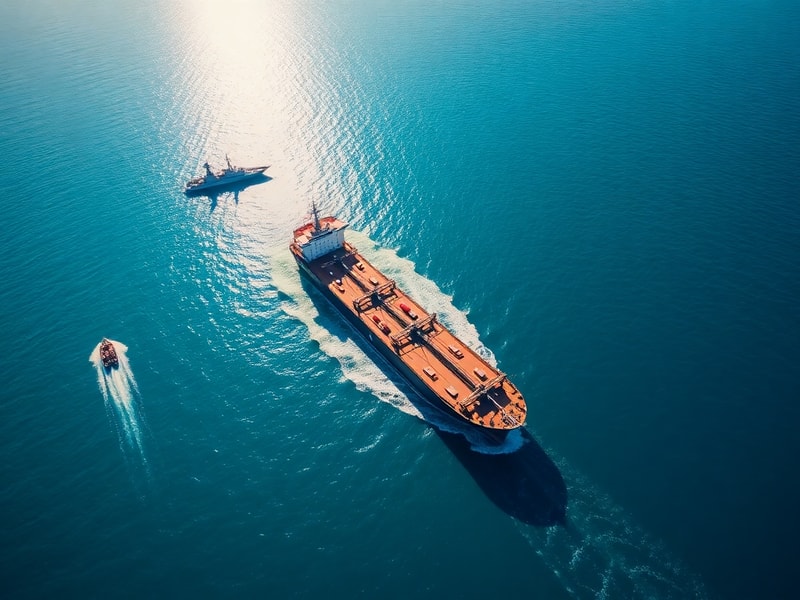
Strait of Hormuz Tensions Threaten Global Oil and Shipping Routes
“`html
Strait of Hormuz: Rising Tensions and Global Shipping Risks
The Strait of Hormuz remains one of the world’s most critical chokepoints for maritime trade, with over 20% of the world’s oil supply passing through its narrow waters each day. Recent months have seen renewed tensions in the region, raising concerns about potential disruptions to global energy markets and shipping routes. These developments come at a time when geopolitical instability already threatens supply chain reliability worldwide.
The strait’s strategic importance cannot be overstated. Connecting the Persian Gulf to the Gulf of Oman, it serves as the sole maritime route for oil exports from several Gulf Cooperation Council (GCC) nations, including Saudi Arabia, Iran, and the UAE. Any disruption in this corridor could send shockwaves through global energy prices and force shipping companies to reroute vessels around Africa, adding thousands of miles and days to transit times.
Recent Escalations: What’s Happening Now
Over the past year, incidents involving commercial vessels and naval forces have intensified. In late 2023 and early 2024, multiple ships were targeted or seized in the strait and nearby waters, prompting international condemnation and calls for de-escalation. These events followed a pattern of sporadic but deliberate actions, often attributed to regional proxy conflicts or responses to sanctions.
In April 2024, a major shipping company rerouted one of its oil tankers away from the strait after receiving intelligence about potential threats. The incident underscored the fragility of maritime security in the region and highlighted how quickly commercial decisions are influenced by geopolitical risks.
The situation is further complicated by the presence of multiple military forces, including U.S. Navy patrols and Iranian Revolutionary Guard vessels, which operate in close proximity. These patrols, intended to ensure safe passage, have occasionally led to standoffs or confrontations, raising concerns about accidental escalation.
Why the Strait Matters: Broader Implications
The Strait of Hormuz is not just a regional concern—it has global economic ramifications. Oil prices are highly sensitive to disruptions in the strait. Even the perception of risk can lead to price volatility, affecting everything from gasoline costs to airline ticket prices. For example, during a brief closure scare in 2019, Brent crude prices spiked by nearly 20% within days.
Beyond oil, the strait is a linchpin for LNG (liquefied natural gas) shipments. Qatar, the world’s largest LNG exporter, relies heavily on the strait for its shipments to Asia. Any prolonged disruption would strain energy markets already grappling with supply constraints and transition challenges.
For shipping companies, the strait’s instability forces costly operational adjustments. Rerouting around the Cape of Good Hope adds roughly 3,000 nautical miles and up to two weeks of sailing time for vessels traveling between the Persian Gulf and Europe. This increases fuel consumption, crew costs, and insurance premiums, all of which are eventually passed on to consumers.
Key Factors Driving Current Tensions
- Regional Rivalries: The ongoing hostility between Iran and Gulf states, particularly Saudi Arabia and the UAE, plays a central role. Proxy conflicts in Yemen and Syria often spill over into maritime security.
- Sanctions and Retaliation: U.S. sanctions on Iranian oil exports have driven Iran to assert its influence in the strait as a form of pressure and deterrence.
- Military Posturing: Increased naval presence by external powers, including the U.S., UK, and China, adds layers of complexity to an already volatile environment.
- Cyber and Asymmetric Threats: Beyond physical confrontations, there are growing concerns about cyberattacks on shipping infrastructure or GPS spoofing, which can disrupt navigation.
Looking Ahead: Possible Scenarios
Analysts have outlined several potential scenarios for the coming months, ranging from diplomatic breakthroughs to full-scale conflict. The most optimistic outcome involves a temporary de-escalation through backchannel negotiations, possibly facilitated by a third-party mediator such as Oman or Switzerland.
A more concerning scenario would involve a deliberate attack on a commercial vessel or a naval confrontation, leading to a temporary closure of the strait. Even a short closure could have cascading effects, including oil price spikes and panic buying by governments and corporations.
On the economic front, the private sector is already preparing for prolonged uncertainty. Major insurers have adjusted premiums for vessels transiting the region, and some shipping firms are exploring alternative routes or even temporary storage solutions in the Red Sea or East Africa.
The international community’s response remains fragmented. While the U.S. and its allies have called for freedom of navigation and condemned attacks on civilian vessels, Russia and China have adopted more cautious stances, emphasizing dialogue and non-interference.
Conclusion: Navigating Uncertain Waters
The Strait of Hormuz remains a powder keg with global implications. Its stability depends on a delicate balance of military deterrence, diplomatic engagement, and economic pragmatism. For now, the world watches as stakeholders maneuver to protect their interests without triggering a wider conflict.
One thing is clear: the strait’s future will shape not just regional security but the global economy. As shipping companies recalculate routes and energy markets brace for volatility, the need for sustained diplomatic efforts has never been more urgent.
Until then, the world’s reliance on this narrow waterway ensures that any disruption will be felt far beyond the shores of the Persian Gulf.
For ongoing updates on maritime security and global trade, visit Dave’s Locker News or explore analysis on Dave’s Locker Analysis.