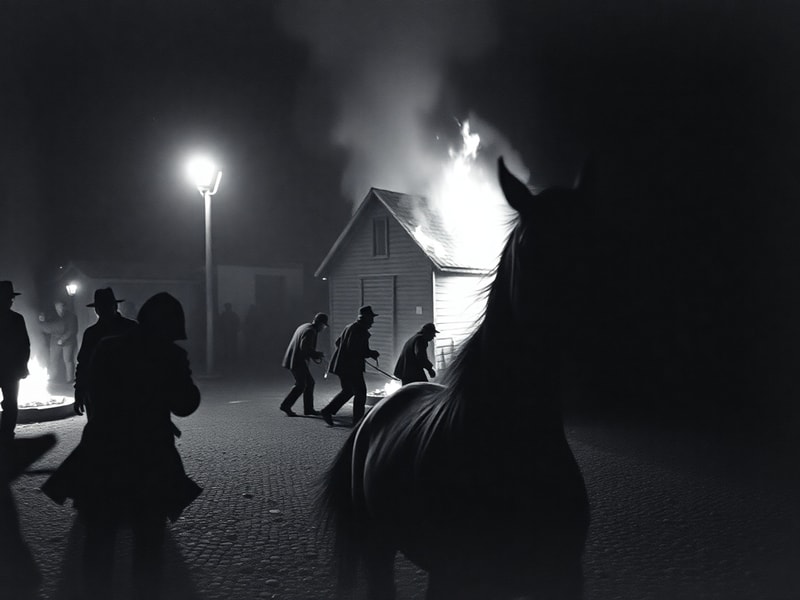
The term pogrom carries heavy historical weight, often associated with organized violence against specific ethnic or religious groups. While the word originates from 19th-century Russia, its implications stretch across centuries and continents. Pogroms are not merely historical footnotes; they represent systemic failures in governance, societal cohesion, and human rights protections. To understand their enduring relevance, we must examine their roots, evolution, and the lessons they offer for contemporary conflicts.
The Origins and Evolution of Pogroms
The word “pogrom” comes from the Russian “погром” (pogrom), meaning “to wreak havoc, to demolish violently.” It first appeared in the late 1800s to describe violent attacks against Jewish communities in the Russian Empire. These attacks were often state-sanctioned or tolerated, reflecting deep-seated prejudices embedded in imperial policies. The 1881-1884 pogroms, which followed the assassination of Tsar Alexander II, marked a turning point. They spread rapidly across hundreds of towns, leaving thousands homeless and hundreds dead.
By the early 20th century, pogroms had become a global phenomenon. In the Ottoman Empire, for instance, the 1915 Armenian Genocide began with systematic pogroms targeting Armenians, Greeks, and Assyrians. These events were not isolated incidents but part of broader campaigns of ethnic cleansing. The 1920s and 1930s saw pogroms in Europe, including the 1929 Hebron massacre in Palestine and the Kristallnacht in Nazi Germany, where Jewish communities faced coordinated violence under state direction.
Key Characteristics of Pogroms
Pogroms share several defining features that distinguish them from other forms of violence:
- Organized or tolerated by authorities: Pogroms often occur with implicit or explicit support from local or national governments. This distinguishes them from spontaneous riots or mob violence.
- Targeted at specific groups: Whether based on ethnicity, religion, or political affiliation, pogroms focus on marginalized or vulnerable populations.
- Use of propaganda: Hate speech and dehumanizing rhetoric frequently precede pogroms, creating an atmosphere of fear and justification for violence.
- Economic motives: In many cases, pogroms are tied to the seizure of property or resources from targeted groups, as seen in the expulsion of Jews from medieval Europe.
- Collective trauma: The psychological and social scars of pogroms often persist for generations, shaping intergroup relations long after the events themselves.
Pogroms in the 20th and 21st Centuries
The 20th century witnessed some of the most devastating pogroms in history. The Holocaust, while distinct in its industrial scale, began with pogrom-like violence in the ghettos of Eastern Europe. Similarly, the 1947 Partition of India saw horrific violence between Hindus, Muslims, and Sikhs, with pogroms erupting in cities like Delhi, Lahore, and Amritsar. An estimated 1 million people died, and 15 million were displaced in one of the largest mass migrations in history.
In more recent decades, pogroms have continued to surface in conflicts around the world. The 1994 Rwandan Genocide, for example, began with coordinated attacks on Tutsi civilians, fueled by decades of ethnic propaganda. In 2002, the Gujarat riots in India saw mobs target Muslims, resulting in over 1,000 deaths and widespread destruction of property. These events underscore how easily societal tensions can escalate into organized violence when institutions fail to protect vulnerable groups.
Modern Parallels: Pogroms and State Failure
Today, the term “pogrom” is sometimes used to describe violent mob attacks against minority groups, even when state involvement is less direct. For instance, the 2012 anti-Roma violence in Hungary and the 2021 anti-Muslim riots in India reflect how ethnic and religious minorities remain targets in unstable political climates. These modern pogroms often emerge from a combination of economic despair, political manipulation, and social media-fueled disinformation.
One of the most alarming trends is the normalization of hate speech in public discourse. Leaders and influencers who stoke divisions often create environments where violence against minorities is seen as justified or even heroic. This was evident in the 2017 Charlottesville rally in the United States, where white supremacists chanted slogans like “Jews will not replace us,” foreshadowing later attacks, such as the 2018 Pittsburgh synagogue shooting.
Lessons and the Path Forward
Pogroms are not relics of the past; they are recurring symptoms of systemic failures. Their recurrence in different eras and regions suggests that humanity has yet to fully address the root causes of such violence: prejudice, impunity, and weak institutions. However, history also offers lessons on prevention and recovery.
First, education plays a critical role in combating the stereotypes that fuel pogroms. Teaching the history of pogroms and genocide can foster empathy and awareness, making societies less susceptible to propaganda. Second, strong legal frameworks and independent judiciaries are essential to hold perpetrators accountable and protect vulnerable groups. Finally, international cooperation is vital. Organizations like the United Nations and the International Criminal Court (ICC) must prioritize early intervention in regions where tensions are rising.
How Communities Recover
Survivors of pogroms often face long-term challenges, including displacement, economic hardship, and intergenerational trauma. Recovery requires more than just physical reconstruction; it demands psychological healing and social reconciliation. Truth and reconciliation commissions, such as those in South Africa and Rwanda, have shown how societies can begin to address past atrocities. However, these processes are often slow and contentious, requiring sustained political will and public support.
For diaspora communities, pogroms can become a defining part of their identity, shaping cultural narratives and collective memory. For example, the descendants of Jewish pogrom survivors often maintain strong ties to their heritage as a form of resistance against erasure. Similarly, Armenian communities worldwide observe April 24 as Genocide Remembrance Day, ensuring that the horrors of 1915 are never forgotten.
Conclusion: Confronting the Past to Secure the Future
Pogroms are a stain on humanity’s history, but they are not inevitable. By studying their patterns—how they begin, escalate, and leave scars—we can better recognize the warning signs in contemporary conflicts. The responsibility to prevent pogroms lies with governments, civil society, and individuals alike. It demands vigilance against hate speech, accountability for those who incite violence, and solidarity with targeted communities.
History does not repeat itself exactly, but its echoes are unmistakable. Pogroms remind us that the fight for human dignity is ongoing. Whether in the streets of Kyiv, the villages of Myanmar, or the neighborhoods of Charlottesville, the specter of organized violence against the vulnerable persists. Only through collective action can we ensure that the lessons of the past are not repeated in the future.
For further reading on historical conflicts and their modern implications, explore our History and Analysis sections on Dave’s Locker.