What Is an IPO?
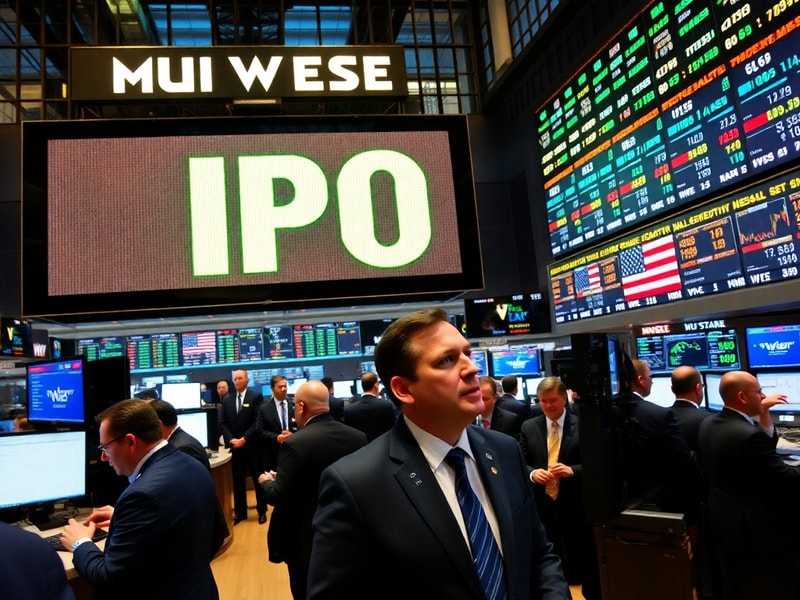
An initial public offering, commonly known as an IPO, is the process through which a private company sells shares of stock to the public for the first time. This transition marks a pivotal moment in a company’s lifecycle, transforming it from a privately held entity—often controlled by founders, venture capitalists, and early investors—into a publicly traded corporation. The capital raised from an IPO can fuel expansion, fund research and development, or reduce debt, while also providing liquidity to early stakeholders.
IPOs are not just financial transactions; they are cultural and economic milestones. They often capture public imagination, especially when high-profile companies go public. For instance, tech giants like Alibaba and Airbnb became household names in part due to their blockbuster IPOs, which drew global attention to their business models and market potential. These events can shift investor sentiment, influence industry trends, and even redefine consumer behavior in specific markets.
Why Do Companies Go Public?
The decision to go public is rarely made lightly. Companies weigh several strategic, financial, and operational factors before pursuing an IPO. One of the primary motivations is access to capital. Public markets offer a vast pool of funds that can be deployed toward growth initiatives such as entering new technology sectors, expanding into international markets, or acquiring competitors.
Another key driver is liquidity. Founders, early employees, and venture capitalists often hold significant equity stakes that are difficult to sell without a public market. An IPO creates a liquid market for these shares, allowing stakeholders to realize value from their investments. Additionally, going public can enhance a company’s prestige and credibility, making it easier to attract top talent, form strategic partnerships, and negotiate better terms with suppliers and customers.
Not all companies benefit from going public, however. The process is expensive, time-consuming, and subject to rigorous regulatory scrutiny. Public companies face ongoing disclosure requirements, quarterly earnings reports, and increased scrutiny from investors and the media. Some firms choose to remain private for longer periods, leveraging private funding rounds or alternative financing structures to maintain control and flexibility.
The IPO Process: From Preparation to Public Trading
The path to an IPO is complex and typically spans several months. It begins with internal preparation: auditing financial statements, refining business strategies, and selecting a team of underwriters—usually investment banks—that will manage the offering. The underwriters assess the company’s valuation, market conditions, and investor appetite before setting an initial price range for the shares.
Next comes the regulatory phase. In the United States, the company files a registration statement with the Securities and Exchange Commission (SEC), including a detailed prospectus that outlines financial performance, business risks, and management plans. Similar processes exist in other major markets, such as the Financial Conduct Authority in the UK or the China Securities Regulatory Commission. Regulators review the filing to ensure transparency and protect investors.
Once approved, the company enters a marketing phase known as the roadshow. Executives and underwriters meet with potential institutional investors to generate interest and gauge demand. This phase culminates in the pricing of the shares, often just days before the public debut. Finally, on the first day of trading, the shares are listed on a stock exchange—such as the New York Stock Exchange or Nasdaq—and begin fluctuating based on market dynamics.
Key Steps in the IPO Process
- Preparation: Financial audits, business planning, and underwriter selection.
- Regulatory Filing: Submission of prospectus to relevant securities authority.
- Due Diligence: Underwriters conduct thorough financial and legal reviews.
- Roadshow: Presentation to institutional investors to build demand.
- Pricing & Allocation: Final share price and distribution to investors.
- Listing & Trading: Shares begin trading on a public exchange.
Global Perspectives: How IPOs Vary Across Markets
While the core principles of an IPO are consistent worldwide, the process and market reception can differ significantly based on regional regulations, investor culture, and economic conditions. In the United States, IPOs are often characterized by high-profile media coverage and strong institutional demand. The country’s deep capital markets and robust legal framework make it a preferred destination for tech and biotech startups seeking massive valuations.
In contrast, China’s IPO market operates under a more centralized regulatory system. The China Securities Regulatory Commission (CSRC) maintains strict controls over listing approvals, which has led to a backlog of companies waiting to go public. Despite these challenges, China has seen some of the world’s largest IPOs, particularly in sectors like e-commerce and renewable energy. Cultural factors also play a role; Chinese investors often exhibit strong retail participation, which can lead to volatile post-IPO trading behavior.
Europe presents another distinct model. Countries like Germany and France have strong traditional industries, and IPOs in these markets often reflect that focus. For example, automotive and industrial firms frequently go public in Frankfurt or Paris, where investor bases are more familiar with long-term capital investments. Meanwhile, smaller European markets like Sweden and the Netherlands have nurtured tech and life sciences companies that list domestically before expanding regionally.
Emerging markets such as India and Brazil offer high-growth potential but come with greater regulatory uncertainty and currency risks. Indian IPOs, for instance, have surged in sectors like digital payments and renewable energy, reflecting rapid domestic adoption of new technologies. However, political instability and infrastructure gaps can deter foreign investors, making these markets more volatile for public listings.
The Cultural Impact of IPOs: Beyond the Numbers
IPOs are more than financial events—they are cultural touchstones that shape public perception and influence behavior. When a company goes public, it enters a broader narrative about innovation, risk, and economic opportunity. The 2019 IPO of ride-hailing giant Uber, for example, sparked debates about the sustainability of gig economy business models and the treatment of workers. Similarly, the 2021 direct listing of Coinbase highlighted the growing mainstream acceptance—and volatility—of cryptocurrency.
These events also serve as barometers for investor sentiment. A successful IPO can ignite a wave of optimism, encouraging other companies in the same sector to consider going public. This phenomenon was evident during the dot-com boom of the late 1990s and the more recent surge in electric vehicle (EV) startups. Conversely, a high-profile IPO that underperforms can dampen market enthusiasm and lead to a cautious approach among issuers and investors alike.
Culturally, IPOs often become part of national conversations about wealth creation and economic mobility. In countries with strong entrepreneurial cultures, such as the United States and Israel, IPOs are celebrated as symbols of innovation and success. In contrast, in markets where wealth inequality is a contentious issue, public offerings can become focal points for discussions about fairness and corporate accountability.
Conclusion: The Enduring Significance of IPOs
IPOs remain one of the most transformative mechanisms in global finance, offering companies a pathway to growth while providing investors access to high-potential opportunities. Their impact extends beyond balance sheets, influencing industries, shaping consumer behavior, and reflecting broader economic trends. As technology continues to disrupt traditional business models and capital markets evolve, the role of IPOs is likely to expand—though their form and function may adapt to new regulatory and cultural realities.
For companies, the decision to go public requires careful consideration of timing, market conditions, and long-term objectives. For investors, IPOs offer a chance to participate in the next phase of a company’s journey—but they also come with risks that demand thorough research and disciplined decision-making. Whether in Silicon Valley, Shanghai, or Frankfurt, the IPO remains a powerful symbol of ambition, transformation, and the enduring allure of the public markets.