Novorossiya: A Historical Region Revisited
Novorossiya, which translates to “New Russia,” is a term that has resurfaced in modern geopolitical discourse, carrying layers of historical significance and contemporary relevance. The region, originally designated by Catherine the Great in the 18th century, encompassed territory that today includes parts of southern Ukraine and southwestern Russia. This area was pivotal in Russia’s imperial expansion, serving as a frontier zone where imperial ambitions clashed with local identities.
Historically, Novorossiya was a melting pot of cultures, shaped by waves of migration and conquest. The region’s strategic location along the Black Sea made it a crossroads for trade, diplomacy, and conflict. By the late 18th century, Catherine the Great’s administration established cities like Odessa, Kherson, and Nikolaev as symbols of Russian expansion and modernization. These urban centers became cultural hubs, blending Russian, Ukrainian, Jewish, and other ethnic influences into a distinct regional identity.
The 2014 Resurgence: Politics and Identity
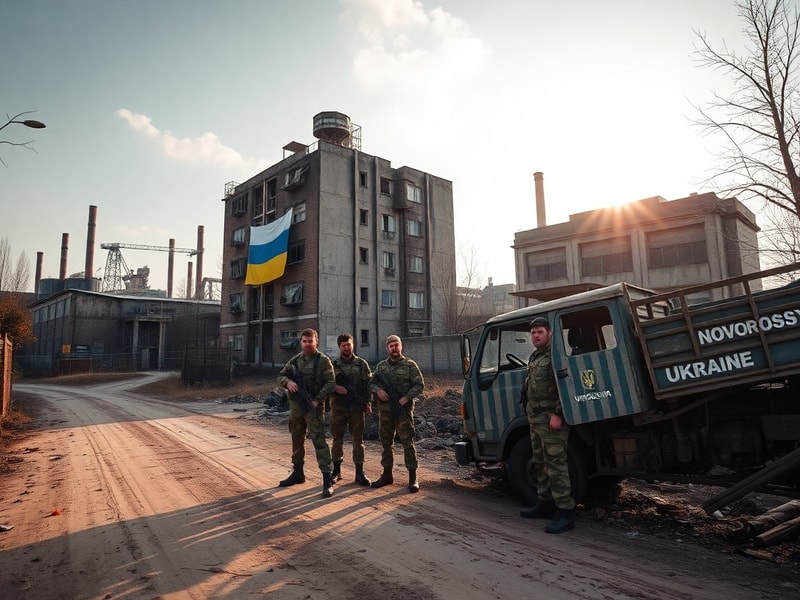
In 2014, the term Novorossiya gained renewed prominence during the conflict in eastern Ukraine. Pro-Russian separatists in Donetsk and Luhansk declared independence, framing their struggle as a defense of Russian-speaking populations against what they perceived as an oppressive Ukrainian government. The self-proclaimed “People’s Republics” of Donetsk and Luhansk invoked the historical concept of Novorossiya to legitimize their political aspirations, though the term’s modern usage often diverged from its historical roots.
The political narrative surrounding Novorossiya in 2014 was complex. While some supporters saw it as a movement for cultural autonomy, critics argued it was a pretext for Russian intervention. The Kremlin’s ambiguous stance—neither fully endorsing nor disavowing the separatists—added to the confusion. International observers noted that the conflict’s framing as a defense of Novorossiya was both a strategic and ideological tool, designed to rally domestic support in Russia and justify military involvement.
Cultural Symbolism and Regional Identity
For many in Russia and parts of Ukraine, Novorossiya represents more than just a geographical or political concept; it embodies a shared cultural heritage. The region’s historical legacy is celebrated in literature, music, and folklore, often idealized as a symbol of resilience and multiculturalism. However, this romanticized view is not universally shared. In Ukraine, the term Novorossiya has been met with skepticism, if not outright rejection, particularly among those who view it as a tool of Russian imperialism.
The cultural divide over Novorossiya highlights broader tensions in the post-Soviet space. While some communities in southern and eastern Ukraine identify with the region’s historical narrative, others emphasize their Ukrainian heritage, rejecting any association with a term that has been co-opted for political purposes. This cultural fragmentation reflects deeper questions about identity, sovereignty, and the legacy of empire in the 21st century.
Global Implications: A Geopolitical Chessboard
The resurgence of Novorossiya as a geopolitical issue has reverberated beyond the borders of Ukraine and Russia. For Western nations, the conflict underscored the fragility of post-Cold War borders and the resurgence of great-power competition. The annexation of Crimea in 2014 and the ongoing war in Donbas became flashpoints in a broader struggle between Russia and the West, with Novorossiya serving as a rhetorical battleground.
International reactions to the Novorossiya narrative have been mixed. Some analysts argue that the term’s revival was a deliberate strategy to destabilize Ukraine and undermine its sovereignty. Others see it as a reflection of Russia’s long-standing policy of protecting Russian-speaking populations abroad, a doctrine often referred to as “compatriots policy.” Regardless of intent, the conflict has had far-reaching consequences, from economic sanctions against Russia to the displacement of millions of people.
The global implications of Novorossiya extend to energy politics as well. The region’s proximity to key gas transit routes has made it a critical player in Europe’s energy security debates. Disruptions in gas supplies from Ukraine to Europe during the conflict highlighted the region’s strategic importance, further entangling Novorossiya in the complex web of international relations.
Novorossiya in the 21st Century: Myths and Realities
To understand Novorossiya today, it’s essential to separate historical fact from political fiction. While the term has deep roots in Russian imperial history, its modern usage is often more ideological than factual. The self-proclaimed republics of Donetsk and Luhansk, for example, did not align neatly with the historical boundaries of Novorossiya. Instead, they represented a localized interpretation of the term, tailored to the needs of separatist leaders and their backers.
The myth of Novorossiya as a unified cultural or political entity is further complicated by the region’s diversity. Southern Ukraine, for instance, is home to a mix of ethnic Russians, Ukrainians, Bulgarians, Greeks, and Jews, each with their own historical narratives. The idea of a monolithic “Novorossiyan” identity is therefore more of a construct than a reality, shaped by the exigencies of war and propaganda.
Key Takeaways
- Historical Legacy: Novorossiya was a 18th-century imperial designation that encompassed parts of modern-day Ukraine and Russia, serving as a frontier for Russian expansion.
- Political Resurgence: The term gained new life in 2014 during the conflict in eastern Ukraine, where it was used by separatists to legitimize their cause.
- Cultural Divide: The term’s modern usage reflects broader tensions over identity, sovereignty, and the legacy of empire in the post-Soviet space.
- Global Impact: The conflict over Novorossiya has had far-reaching consequences, from sanctions to energy politics, reshaping international relations.
- Myth vs. Reality: The idea of Novorossiya as a unified entity is more ideological than historical, reflecting the complexities of regional identity.
Looking Ahead: The Future of Novorossiya
The future of Novorossiya remains uncertain, caught between historical memory and contemporary geopolitics. For Ukraine, reclaiming control over the Donbas region is a matter of national sovereignty, while for Russia, the conflict is framed as a defense of cultural kin. The term itself has become a symbol of these competing narratives, its meaning constantly evolving in response to political developments.
One thing is clear: the legacy of Novorossiya will continue to shape the region’s trajectory for years to come. Whether through negotiated settlements, frozen conflicts, or further escalation, the term will remain a touchstone for discussions about identity, power, and the boundaries of the post-Soviet world. For observers, the challenge lies in navigating the myths and realities of Novorossiya, separating historical truth from political expedience.
As the conflict in Ukraine drags on, the term Novorossiya serves as a reminder of how history can be weaponized in the pursuit of political goals. It also underscores the enduring power of regional identity, even in an era of globalization and transnational alliances. For those seeking to understand the complexities of the post-Soviet space, Novorossiya is more than just a historical footnote—it is a living, breathing symbol of the region’s unresolved past and uncertain future.
For more analysis on geopolitical conflicts, explore our News and Analysis sections.