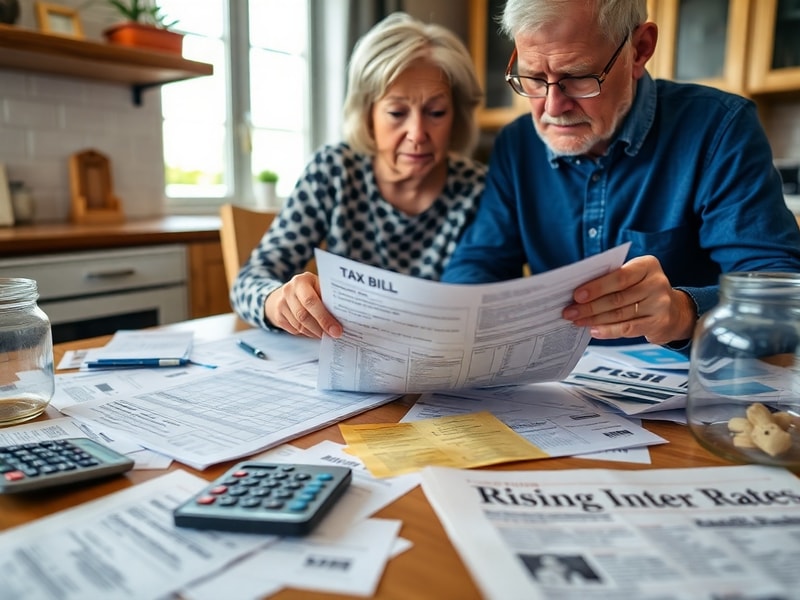
Millions of savers are facing a sharp increase in the tax they pay on interest earned from their accounts, a change that arrived with little fanfare but significant consequences. The rise in savings interest tax liabilities comes as the Bank of England maintains higher interest rates to combat inflation, pushing returns on savings accounts to levels not seen in over a decade. While higher interest rates benefit those with substantial savings, the tax implications are creating a new financial burden for many.
This development follows years of near-zero interest rates that kept savings returns—and the associated tax bills—largely invisible to most account holders. Now, as banks pass on more of the central bank’s rate hikes to customers, the Treasury is collecting more from savers who previously paid little to no tax on interest income. The shift is reshaping household finances and prompting savers to reassess their strategies.
Why the Tax on Savings Interest Is Rising
The increase in tax on savings interest stems from two converging factors. First, the Bank of England’s base rate has remained above 5% since late 2022, lifting average savings rates to around 4-5% on easy-access accounts and even higher on fixed-term deposits. Second, the government’s Personal Savings Allowance (PSA)—the amount of interest one can earn tax-free—has not been increased since its introduction in 2016.
Under current rules, basic-rate taxpayers can earn up to £1,000 in savings interest annually without paying tax. Higher-rate taxpayers receive a £500 allowance, while additional-rate taxpayers receive none. With average interest rates rising, more savers are exceeding these thresholds without realizing it. For example, someone with £50,000 in a savings account earning 4% interest would receive £2,000 annually—£1,000 over the basic-rate allowance, triggering a tax bill of £200 for a basic-rate taxpayer and £400 for a higher-rate taxpayer.
These figures are not hypothetical. Data from HM Revenue & Customs shows that over 2 million taxpayers paid tax on savings interest in 2023, up from just 500,000 in 2021. The number is expected to rise further in 2024 as more savers cross the PSA threshold.
The Real-World Impact on Savers
The consequences of this tax increase are unevenly distributed. Those most affected are middle-income households with moderate savings balances—often retirees or cautious investors who prioritize security over growth. Unlike wealthier individuals who may use tax-efficient wrappers such as ISAs or pensions, these savers typically hold money in standard savings accounts where interest is fully taxable once the PSA is exceeded.
A survey by Savings & Investments at Dave’s Locker found that 42% of respondents were unaware their savings interest could be taxable. Many had assumed that the PSA covered all interest, especially since it once did—when rates were far lower. The result is a growing sense of frustration among savers who feel penalized for doing the “right thing” by building emergency funds or saving for future goals.
For a retiree living on a fixed income with £30,000 in savings at 3.5% interest, the annual return is £1,050. Under the PSA, a basic-rate taxpayer would owe £5 tax (on £50 over the allowance), but a slightly higher balance or rate could push that into triple digits. These small but cumulative losses erode purchasing power over time, particularly for those on tight budgets.
Who Is Most Affected?
- Retirees: Often rely on savings income and may not have access to tax-advantaged accounts.
- Middle-income families: May have saved diligently but lack awareness of tax thresholds.
- Small business owners: Often hold surplus cash in business savings accounts, unaware of tax exposure.
- Young professionals: New to saving may underestimate how quickly interest accumulates.
What Can Savers Do? Strategies to Minimize the Tax Hit
While the tax rise is unavoidable for some, there are legal ways to reduce exposure. The most effective is maximizing the use of tax-free wrappers. An Individual Savings Account (ISA) allows up to £20,000 per year to be saved tax-free, including interest. Transferring savings into an ISA shelter can immediately eliminate tax liability on that portion of savings.
For those with larger balances, a stocks and shares ISA or a pension may offer better long-term returns, though they come with different risks. Another option is to spread savings across different accounts or banks to keep each balance below the PSA threshold, though this can be administratively cumbersome.
Some may consider longer-term fixed-rate bonds, which often offer higher interest rates and may allow savers to lock in returns before further rate cuts. However, early withdrawal penalties can negate benefits if financial needs change.
Financial advisers are increasingly urging savers to review their accounts annually and use HMRC’s Tax Tools to estimate liability. While the government has not signaled an increase to the PSA, public pressure may force a review—especially as more voters feel the pinch.
Broader Implications: A Quiet Shift in Personal Finance
The rise in savings interest tax isn’t just a personal finance issue—it reflects a broader evolution in fiscal policy. As governments grapple with high public debt and aging populations, taxing previously “invisible” income streams like savings interest becomes an attractive way to boost revenue without raising headline tax rates. Unlike income tax or VAT, savings interest tax is indirect and often unnoticed until it appears on a tax return.
There’s also a generational dimension. Older savers, who benefited from decades of low rates and generous allowances, now face a less favorable landscape. Meanwhile, younger generations, who have been encouraged to save since childhood, are discovering that their modest nest eggs are now subject to taxation. This could undermine trust in financial institutions and government savings incentives.
From a macroeconomic perspective, higher taxes on savings interest could dampen consumer spending slightly, as households set aside more for tax bills. However, the overall impact is likely to be modest compared to the psychological effect—many savers may feel less motivated to increase their deposits, potentially reducing liquidity in the economy.
The government has defended the policy, arguing that savings interest is income and should be taxed accordingly. Yet the lack of indexation for the PSA means the policy is effectively a stealth tax increase, one that grows as interest rates rise. Without legislative change, millions more will fall into the tax net each year.
Looking Ahead: Will the PSA Be Raised?
Calls for reform are growing. Consumer advocacy groups and opposition MPs have urged the government to raise the PSA or index it to inflation. Some have proposed introducing a higher allowance for pensioners or those on low incomes. While no announcements have been made, the political cost of inaction could rise as more voters receive unexpected tax demands.
In the meantime, financial education and transparent communication from banks and HMRC will be critical. Many savers still receive annual statements that do not clearly indicate potential tax liabilities. Improving this could prevent surprises and encourage better financial planning.
Final Thoughts: Time to Reassess Your Savings Strategy
The era of zero-interest savings is over. With higher returns comes higher responsibility—and potentially higher taxes. Savers must now treat interest income like any other income stream: track it, report it, and plan for it. Ignoring the change could mean unexpected bills and missed opportunities to shelter earnings.
For those who have relied on traditional savings accounts, the message is clear: review your balance, check your interest rate, and consider tax-efficient alternatives. The financial landscape has shifted, and so must savers’ strategies.
One thing is certain: the rise in savings interest tax is not a temporary blip. It’s part of a new normal—one where saving smarter is just as important as saving more.