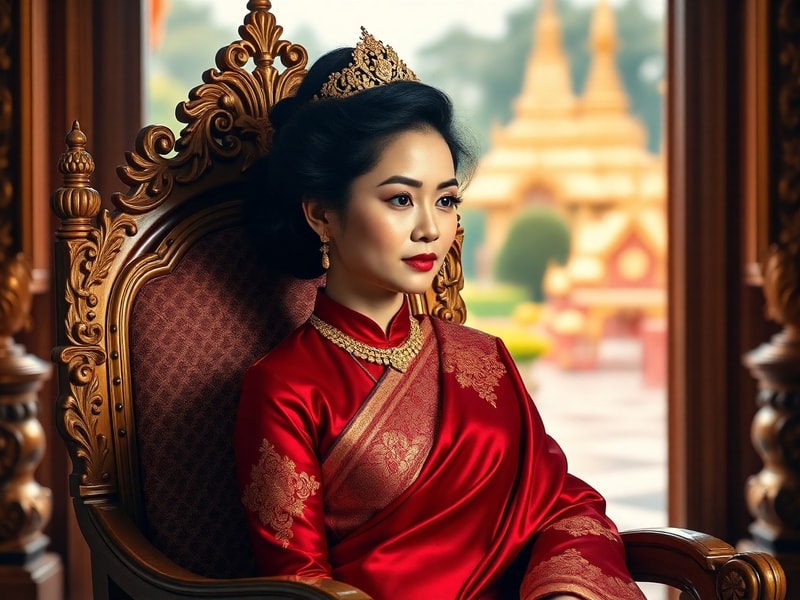
Princess Bajrakitiyabha of Thailand represents a unique blend of traditional royalty and progressive leadership. As the eldest daughter of King Maha Vajiralongkorn and a prominent figure in Thai society, she has carved out a distinct role that extends beyond ceremonial duties. Her work in law, education, and social initiatives demonstrates how modern royalty can engage with contemporary challenges while maintaining cultural heritage.
The Royal Lineage and Early Life
Born on December 7, 1978, Princess Bajrakitiyabha is the only daughter among King Vajiralongkorn’s four children. Her full title is Princess Bajrakitiyabha Mahidol, reflecting her connection to the Mahidol family, which has been central to Thailand’s royal lineage for generations. Educated in both Thailand and the United States, she earned a bachelor’s degree in political science from Thammasat University and later pursued a law degree from Cornell University in New York.
Her upbringing was marked by a balance between royal expectations and personal ambition. Unlike some of her peers in other monarchies, she has chosen to pursue a career in law rather than focus solely on ceremonial roles. This decision has set her apart, allowing her to contribute meaningfully to Thailand’s legal and social frameworks.
Career in Law and Diplomatic Contributions
Princess Bajrakitiyabha’s legal career is one of her most defining achievements. After becoming a prosecutor in Thailand’s Office of the Attorney General, she quickly rose through the ranks due to her dedication and expertise. In 2012, she was appointed as a judge advocate in the Royal Thai Army, a role that combined her legal training with her royal obligations. This position allowed her to work on cases involving military personnel, further expanding her influence within Thailand’s justice system.
Her diplomatic contributions are equally noteworthy. As a special envoy to the United Nations, she has represented Thailand in international forums, advocating for women’s rights and access to education. In 2019, she was appointed as Thailand’s ambassador to Austria, a role that also includes serving as the country’s permanent representative to the United Nations in Vienna. These positions highlight her ability to bridge domestic priorities with global diplomacy.
Key Legal and Diplomatic Roles
- Prosecutor at Thailand’s Office of the Attorney General
- Judge advocate in the Royal Thai Army
- Special envoy to the United Nations for women’s rights
- Ambassador to Austria and permanent representative to the UN in Vienna
Advocacy for Education and Social Causes
Beyond her professional achievements, Princess Bajrakitiyabha is deeply involved in social causes, particularly those related to education and gender equality. She founded the Princess Bajrakitiyabha Scholarship Fund, which supports underprivileged students, especially women, in pursuing higher education. This initiative aligns with her belief in the transformative power of education as a tool for social mobility.
Her work in promoting women’s rights is particularly impactful. As a Goodwill Ambassador for UN Women, she has championed initiatives to combat gender-based violence and improve access to economic opportunities for women. In Thailand, she has collaborated with local organizations to address issues such as human trafficking and child exploitation, using her platform to amplify voices that are often marginalized.
Public Perception and Modern Royalty
Princess Bajrakitiyabha’s approach to royalty has resonated with many Thais, particularly younger generations who value transparency and activism. Unlike some members of the royal family who maintain a more reserved public presence, she has embraced a role that is both visible and engaged. Her social media presence, though carefully curated, allows the public to see her work in real time, fostering a sense of connection with her constituents.
However, her visibility has also sparked discussions about the evolving role of the Thai monarchy. In a country where the royal family holds significant symbolic and political weight, her proactive stance on social issues challenges traditional expectations. Some view her as a refreshing departure from the norm, while others see her as a natural evolution of the monarchy’s role in a changing society.
The Balancing Act of Modern Royalty
- Embracing professional careers outside traditional royal duties
- Using social media to engage with the public
- Advocating for social causes while maintaining royal decorum
- Navigating the expectations of both tradition and modernity
Her marriage to Mr. Weerayut Diskul in 2022 also added a personal dimension to her public image. The ceremony, while steeped in tradition, was notable for its relatively low-key approach compared to other royal weddings, reflecting her preference for a more modern lifestyle. This choice further underscored her ability to adapt royal customs to contemporary values.
A Legacy in the Making
Princess Bajrakitiyabha’s contributions are still unfolding, but her impact is already significant. By merging legal expertise, diplomatic skill, and social advocacy, she has redefined what it means to be a royal in the 21st century. Her work serves as a model for how leadership can transcend ceremonial roles to address real-world challenges.
As Thailand continues to navigate its political and social landscape, figures like Princess Bajrakitiyabha offer a glimpse into the future of the monarchy. Her ability to balance tradition with progress suggests that royalty can remain relevant by actively participating in the issues that matter most to society. Whether through her legal work, diplomatic missions, or advocacy efforts, she is shaping a legacy that extends far beyond the palace walls.
For those interested in exploring more about royal figures and their evolving roles, Entertainment and Culture sections on Dave’s Locker provide deeper insights into how tradition and modernity intersect in today’s world.