Weather Radar Explained: How It Works and Why It Matters
“`html
Understanding Weather Radar: How It Works and Why It Matters
Weather radar stands as one of the most critical tools in modern meteorology, providing real-time data that helps forecasters predict storms, track precipitation, and issue timely warnings. Unlike traditional weather instruments that measure temperature or humidity, radar systems actively send out pulses of energy and analyze the signals that bounce back, creating a detailed picture of what’s happening in the atmosphere. This technology has evolved significantly since its early military applications in World War II, transforming into a cornerstone of both public safety and scientific research.
The Science Behind Weather Radar Technology
The core principle of weather radar relies on the Doppler effect, a phenomenon observed when waves—whether sound, light, or radio—shift frequency based on the movement of their source. In a radar system, a transmitter emits a beam of microwave energy that travels through the atmosphere. When this energy encounters objects like raindrops, snowflakes, or even insects, some of it scatters back toward the radar dish. By measuring the time it takes for the signal to return and the frequency shift caused by the movement of precipitation, meteorologists can determine not only the location of storms but also their intensity and speed.
Modern weather radars, particularly those used by the National Weather Service in the United States, operate in the S-band frequency range (2.7 to 3.0 GHz). This range is ideal because it balances the need for long-range detection with the ability to penetrate heavy rain without excessive signal loss. Dual-polarization technology, introduced in the last two decades, further enhances accuracy by distinguishing between different types of precipitation. For example, it can differentiate between spherical raindrops and irregularly shaped hailstones, reducing false alarms in severe weather warnings.
Key Components of a Weather Radar System
A typical weather radar installation consists of several essential parts:
- Transmitter: Generates the microwave pulses that are sent into the atmosphere.
- Antennas: Focus the radar beam and receive the scattered signals.
- Receiver: Amplifies and processes the returned signals into usable data.
- Signal Processor: Converts raw data into visual representations like radar images.
- Display System: Shows the information in formats accessible to meteorologists and the public.
The dish itself rotates 360 degrees horizontally and tilts at various angles vertically, allowing it to scan multiple layers of the atmosphere. This three-dimensional approach is vital for tracking the development of thunderstorms, which often evolve rapidly in the vertical direction.
The Evolution of Weather Radar: From Military Tool to Life-Saving Technology
Weather radar’s origins trace back to the 1940s, when military radar operators noticed strange echoes on their screens that didn’t correspond to aircraft or ships. These echoes were eventually identified as precipitation, leading to the first dedicated weather radar systems. The U.S. Weather Bureau (now the National Weather Service) began experimenting with radar shortly after World War II, but widespread adoption didn’t occur until the 1950s and 1960s.
The next major leap came in the 1970s with the introduction of the WSR-57 radar, which became the backbone of the National Weather Service’s operations for decades. However, it wasn’t until the 1990s that Doppler radar became widely available, revolutionizing severe weather detection. The infamous tornado outbreak of April 27, 2011, which resulted in 324 fatalities across the Southeast, underscored the importance of advanced radar technology. Forecasters using Doppler systems were able to issue warnings with an average lead time of 22 minutes—up from just 5 minutes in the 1980s.
Today, the U.S. operates a network of 159 WSR-88D radars, collectively known as the Next Generation Weather Radar (NEXRAD) system. This network is complemented by international collaborations, such as Europe’s OPERA program and Japan’s radar systems, creating a global infrastructure for weather monitoring. The integration of radar data with satellite imagery and computer models has further refined forecasting accuracy, enabling predictions that were once thought impossible.
Practical Applications: How Weather Radar Impacts Daily Life
Beyond its role in severe weather warnings, weather radar plays a crucial part in everyday activities. Airlines rely on radar to plan flight routes that avoid turbulence and thunderstorms, reducing delays and improving passenger safety. Farmers use radar data to optimize irrigation schedules and protect crops from unexpected hail or frost. Even outdoor enthusiasts check radar apps before heading out for a hike or a day at the beach, ensuring they stay one step ahead of Mother Nature’s mood swings.
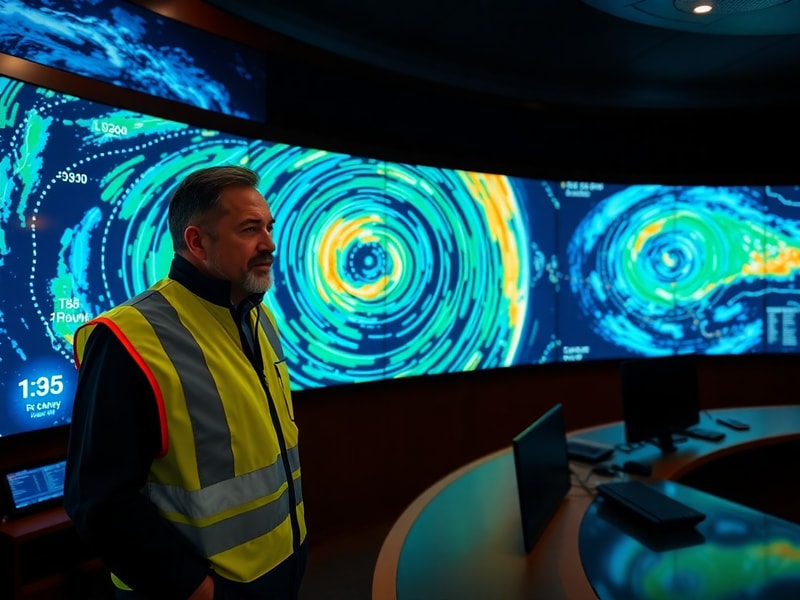
One of the most visible applications is in hurricane tracking. Radar systems, particularly those deployed along coastal regions, provide real-time updates on a storm’s structure, including the formation of eyewalls and rain bands. This information is critical for emergency managers who must decide when to issue evacuation orders. For instance, during Hurricane Katrina in 2005, radar data helped forecasters predict the storm’s rapid intensification, giving residents in New Orleans vital extra time to prepare.
Everyday Uses for Weather Radar Data
- Travel Planning: Commuters and travelers use radar to avoid traffic delays caused by sudden downpours or snowstorms.
- Event Management: Concerts, sports games, and outdoor festivals depend on radar to make last-minute decisions about postponements or evacuations.
- Public Health: Health departments monitor radar for heavy rainfall events that could lead to flooding and waterborne disease outbreaks.
- Energy Sector: Utility companies use radar to predict ice storms or high winds that could damage power lines.
The accessibility of radar data has also democratized weather information. Free platforms like Weather Underground and the National Weather Service’s own website provide interactive radar maps that anyone can use. These tools allow users to zoom in on their neighborhoods, track storms minute-by-minute, and even view historical radar loops to understand long-term weather patterns.
The Future of Weather Radar: Innovations on the Horizon
As climate change intensifies the frequency and severity of extreme weather events, the demand for more advanced radar systems is growing. One promising development is phased-array radar, which uses thousands of small, individually controlled antennas to steer the radar beam electronically. Unlike traditional radar systems that must rotate mechanically, phased-array radar can scan the sky in milliseconds, providing near-instantaneous updates on rapidly evolving conditions.
Another area of innovation is the integration of radar data with artificial intelligence. Machine learning algorithms can analyze vast amounts of radar imagery to identify subtle patterns that human forecasters might miss. For example, AI models are being trained to predict flash flooding by correlating radar data with topographic maps and soil moisture levels. Early tests have shown these systems can improve warning times by up to 30%, a significant margin when every minute counts.
The rise of small, low-cost radar systems is also changing the game. Companies like Climavision and RadarScope are developing compact radars that can be deployed in urban areas to fill gaps in the national radar network. These systems are particularly valuable in regions with complex terrain, such as the mountainous West, where traditional radars struggle to detect low-level precipitation.
Challenges and Limitations
Despite these advancements, weather radar is not without its challenges. One major limitation is the phenomenon known as the “cone of silence,” an area directly above the radar where the beam cannot reach. This blind spot can obscure critical data during the development of severe storms. Additionally, radar signals can be blocked by tall buildings, mountains, or even dense forests, leading to gaps in coverage. Researchers are exploring solutions such as gap-filling radars and satellite-based radar systems to address these issues.
Another challenge is the cost of maintaining and upgrading radar infrastructure. The NEXRAD system alone costs hundreds of millions of dollars to operate and upgrade, and funding for these programs is often subject to political debates. However, the economic benefits of accurate weather forecasting are undeniable. According to a 2018 study by the National Oceanic and Atmospheric Administration (NOAA), weather radar saves the U.S. economy an estimated $10 billion annually by reducing property damage, improving agricultural yields, and preventing lost productivity.
Conclusion: Why Weather Radar Remains Indispensable
From its humble beginnings as a military tool to its current status as a life-saving technology, weather radar has transformed the way we understand and respond to the atmosphere. Its ability to provide real-time, high-resolution data makes it an invaluable asset for meteorologists, emergency responders, and the public alike. As climate change continues to alter weather patterns, the role of radar will only grow in importance, driving innovations that push the boundaries of what’s possible in weather forecasting.
For those who grew up relying on weather reports or checking radar apps before heading out, it’s easy to take this technology for granted. Yet behind every storm warning and sunny-day forecast lies decades of scientific progress and engineering ingenuity. Weather radar doesn’t just predict the weather—it helps us prepare for it, adapt to it, and ultimately, survive it. As we look to the future, one thing is clear: the skies may be unpredictable, but our ability to understand them is only getting better.