Two Cities, Two Stories
Bath and Exeter stand as two of England’s most storied cities, each offering a unique blend of history, culture, and modern energy. Though separated by just 50 miles, their differences reveal much about England’s regional diversity. Bath, with its Roman roots and Georgian elegance, feels like a museum piece brought to life. Exeter, meanwhile, pulses with the vitality of a university city and a working port, its medieval streets whispering tales of Viking raids and royal intrigue.
Both cities have shaped—and been shaped by—their geography. Bath’s thermal springs made it a magnet for relaxation and healing long before the Romans arrived. Exeter, perched on the River Exe, became a strategic stronghold long before William the Conqueror’s forces arrived in 1068. Today, they compete not just in history, but in tourism, education, and even sports. Their rivalry is subtle, more about identity than enmity, but it’s there in the way locals talk about their city’s virtues.
A Walk Through Time
Bath’s architectural legacy is unparalleled in England. The city’s crescents, terraces, and the iconic Royal Crescent are textbook examples of Georgian design, built when Bath was the playground of the 18th-century elite. The Roman Baths, preserved beneath the modern city, are among Europe’s best-preserved ancient sites. UNESCO recognized Bath’s significance in 1987, cementing its status as a World Heritage Site.
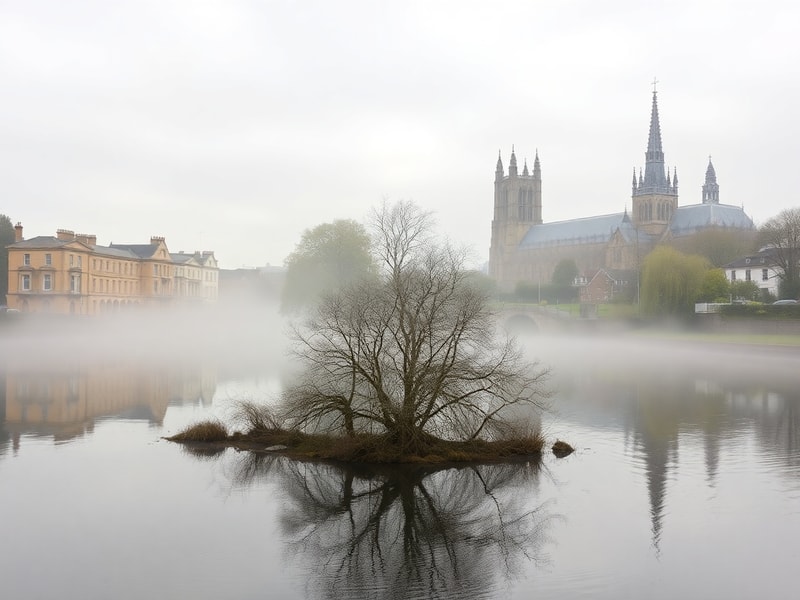
Exeter, by contrast, wears its history more roughly. The city’s medieval cathedral, with its imposing Gothic towers, dominates the skyline. The Exeter Quay, once a bustling port, now hosts artisan markets and riverside cafés. The city’s defensive walls, some dating back to Roman times, still encircle part of the old town. Exeter’s history is more rugged, less polished—more about survival than spectacle.
- Bath: Georgian symmetry, thermal spa culture, and UNESCO status.
- Exeter: Medieval grit, university energy, and a working river.
Cultural Currents and Modern Identities
Bath’s cultural scene revolves around its heritage. The Jane Austen Centre, the Fashion Museum, and the annual Bath Literature Festival all lean into the city’s refined reputation. Tourism is Bath’s lifeblood, with visitors drawn to its spas, tea rooms, and picture-postcard streets. The city’s economy thrives on hospitality, retail, and high-end services, catering to those who can afford—or aspire—to its genteel lifestyle.
Exeter, meanwhile, is a city in motion. The University of Exeter, ranked among the UK’s top institutions, injects youth and intellectual energy into the city. The Exeter Phoenix arts center and the Northcott Theatre showcase contemporary creativity. The city’s music scene has produced acts like Muse, and its food culture blends traditional Devon fare with global influences. Exeter feels less like a museum and more like a living organism, growing and adapting.
This contrast extends to demographics. Bath’s population skews older and wealthier, with a significant retired population. Exeter’s population is younger, thanks to students and young professionals. The two cities even have different accents—Bath’s posh, clipped tones versus Exeter’s broader West Country burr.
The Rivalry Beyond Borders
On the surface, Bath and Exeter don’t compete directly. They’re not rivals in the way Manchester and Liverpool are, or Oxford and Cambridge. But their differences reflect broader tensions in England: tradition vs. progress, leisure vs. industry, heritage vs. innovation. Bath represents the England of Jane Austen novels and period dramas, while Exeter embodies the England of modern universities and creative industries.
Globally, cities like Bath and Exeter are often held up as examples of how heritage can coexist with modernity. Bath’s success in tourism has inspired cities from Kyoto to Vienna, while Exeter’s balance of education and industry has drawn comparisons to Groningen in the Netherlands or Freiburg in Germany. Both cities show that small urban centers can punch above their weight on the global stage.
Yet their differences also highlight challenges. Bath’s reliance on tourism makes it vulnerable to economic shifts, as the pandemic proved. Exeter’s growth brings pressure on housing and infrastructure, a familiar story in university cities worldwide. Both cities must navigate the delicate balance between preservation and progress, between welcoming visitors and serving residents.
What Draws Visitors—and Why They Stay
For travelers, Bath and Exeter offer distinct experiences. Bath is the destination for those seeking relaxation and beauty. A visit might include a soak in the Thermae Bath Spa, a stroll along the Kennet and Avon Canal, and a cream tea at the Pump Room. The city’s charm is in its details—the honey-colored stone, the ironwork balconies, the way the light filters through Georgian windows.
Exeter, by contrast, is for those who want to feel the pulse of a living city. A day might start with a coffee by the Exe, followed by a wander through the historic cathedral close, and end with live music in a pub or a browse through the independent shops of Fore Street. Exeter’s appeal is in its authenticity, its refusal to be a theme park version of itself.
Both cities have their festivals. Bath’s Jane Austen Festival and Christmas Market draw crowds from across the UK. Exeter’s Exeter Festival of South West Writing and the Exeter Respect Festival celebrate local talent and diversity. Each city’s events reflect its soul—Bath’s are nostalgic, Exeter’s are vibrant and inclusive.
A Final Thought
Bath and Exeter are not just two cities in England; they are two sides of the country’s character. One is a jewel box of history, polished to a gleam. The other is a work in progress, rough around the edges but full of life. Together, they remind us that England’s story is not a single narrative but a tapestry of many threads.
Whether you’re drawn to Bath’s elegance or Exeter’s energy, one thing is clear: these cities are far more than postcard backdrops. They are living, breathing entities, each with its own rhythm and reason for being. The next time you’re in the southwest of England, take the train between them. The journey is short, but the contrast will stay with you.
Explore more about England’s historic cities and their cultural impact on Travel.