Turkey occupies a unique position at the crossroads of Europe and Asia, both geographically and culturally. This transcontinental nation has long served as a bridge between civilizations, influencing trade, politics, and art across millennia. From the ancient Silk Road to modern-day NATO membership, Turkey’s strategic importance has never waned.
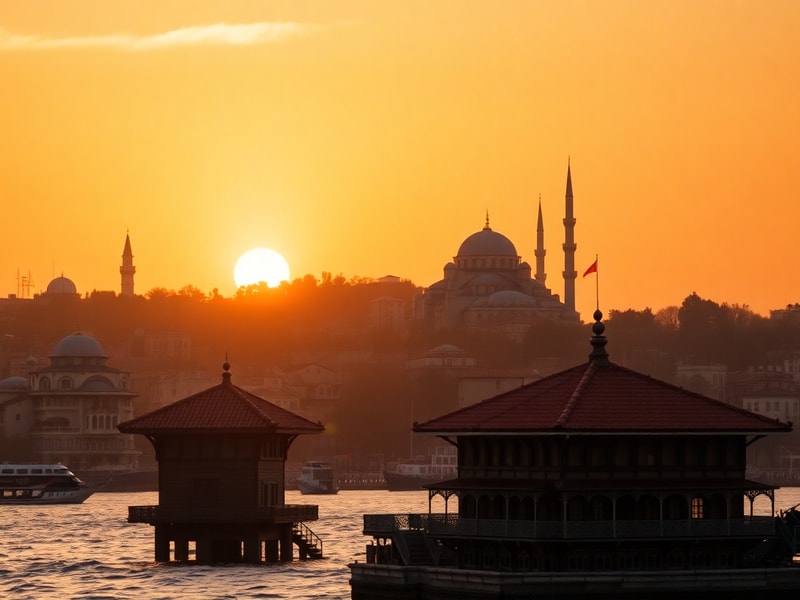
The country spans 783,356 square kilometers, with the Bosphorus Strait dividing its European and Asian halves. Istanbul, Turkey’s largest city, straddles both continents and remains one of the world’s most historically significant urban centers. This geographic duality has shaped Turkey’s identity as a nation that looks both east and west simultaneously.
A Brief Historical Overview
Turkey’s history stretches back to some of humanity’s earliest settlements. The region now known as Turkey has been home to powerful empires including the Hittites, Phrygians, Lydians, Persians, Greeks, Romans, Byzantines, and finally the Ottomans. Each of these civilizations left indelible marks on the cultural landscape.
The Ottoman Empire, which lasted from 1299 to 1922, represents one of history’s most enduring and influential Muslim states. At its peak in the 16th century, the empire controlled vast territories across three continents. The empire’s eventual decline and dissolution after World War I led to the establishment of modern Turkey in 1923 under Mustafa Kemal Atatürk.
Atatürk’s reforms transformed Turkey into a secular republic, implementing sweeping changes that included adopting the Latin alphabet, granting women full political rights, and establishing state-run education. These revolutionary changes set Turkey apart from other predominantly Muslim nations and positioned it as a regional leader.
Modern Turkey: Politics and Challenges
Turkey’s political landscape has been marked by periods of both stability and turbulence. The country operates as a presidential republic with a unique system established after a 2017 constitutional referendum. Recep Tayyip Erdoğan has served as president since 2014, first as prime minister and then through the new system.
Turkey’s foreign policy has become increasingly assertive under Erdoğan’s leadership. The country has played crucial roles in regional conflicts, particularly in Syria, where it has conducted multiple military operations against Kurdish forces and the Assad regime. Turkey’s relationship with NATO has also shifted, with the country often pursuing independent interests that sometimes conflict with Western priorities.
The 2023 presidential election represented a pivotal moment in Turkish politics. Erdoğan secured another term after a closely contested runoff, defeating opposition leader Kemal Kılıçdaroğlu. The election highlighted deep divisions within Turkish society between conservative religious voters and those advocating for more secular governance.
Economic challenges have also defined modern Turkey. The country has faced persistent inflation rates exceeding 80% in recent years, currency instability, and high unemployment. These economic pressures have led to widespread discontent and have become central issues in political debates.
Key Aspects of Turkey’s Modern Political Landscape
- Constitutional changes: The 2017 referendum transformed Turkey from a parliamentary to a presidential system, consolidating power in the executive branch.
- Foreign policy shifts: Turkey has pursued independent regional policies, often clashing with Western allies while strengthening ties with Russia and Middle Eastern states.
- Economic challenges: High inflation, currency devaluation, and debt crises have created significant public dissatisfaction.
- Social divisions: The country remains deeply polarized between conservative religious voters and secular urban populations.
- Kurdish question: The decades-long conflict with Kurdish separatists continues to shape domestic and foreign policy.
Cultural Richness and Contemporary Society
Turkey’s cultural heritage is as diverse as its history. The country boasts 19 UNESCO World Heritage Sites, including the ancient city of Troy, the rock sites of Cappadocia, and the Hagia Sophia in Istanbul. These sites attract millions of tourists annually, contributing significantly to Turkey’s economy.
Turkish cuisine has gained global recognition, with dishes like kebabs, baklava, and Turkish delight becoming household names. The country’s culinary traditions reflect its position at the crossroads of culinary influences from Central Asia, the Middle East, the Balkans, and the Mediterranean.
Music and film have also emerged as important cultural exports. Turkish pop music has developed a distinctive sound, while Turkish dramas have gained international popularity, particularly in the Middle East and North Africa. The 2020s have seen Turkish cinema achieve greater global visibility, with films like “The Wild Pear Tree” and “About Endlessness” receiving international acclaim.
Turkish society remains deeply conservative in many rural areas while embracing progressive values in major cities. This tension plays out in debates over issues like women’s rights, LGBTQ+ acceptance, and religious freedom. The government has implemented policies that reflect conservative Islamic values, including restrictions on alcohol sales and limitations on freedom of expression.
Turkey’s Global Role and Future Prospects
Turkey’s strategic location has made it an indispensable player in regional and global affairs. The country controls the Bosphorus and Dardanelles straits, which connect the Black Sea to the Mediterranean and represent critical chokepoints for international shipping. This geographic advantage has given Turkey significant geopolitical leverage.
The country’s relationship with Europe has been particularly complex. Turkey has been a candidate for European Union membership since 1999, though negotiations have stalled due to political and human rights concerns. The EU relies on Turkey to manage migration flows from the Middle East and Africa, creating a delicate interdependence.
Turkey’s role in NATO has also evolved. While remaining a member, Turkey has purchased advanced Russian missile systems despite U.S. objections, and has blocked NATO expansion in some cases. These actions have strained relations with Western allies while strengthening ties with Russia.
Looking ahead, Turkey faces numerous challenges and opportunities. Economic stabilization remains a critical priority, with President Erdoğan’s government implementing unorthodox policies that have yielded mixed results. The country’s demographic profile, with a young and growing population, could provide economic benefits if properly harnessed.
Turkey’s relationship with its Kurdish minority continues to be a flashpoint, with ongoing conflicts in the southeast and tensions with Kurdish groups in Syria and Iraq. Resolving this issue remains essential for long-term stability.
Environmental challenges also loom large. Turkey is particularly vulnerable to climate change, with increasing water scarcity and desertification affecting agricultural production. The country has made efforts to expand renewable energy, particularly solar and wind power, but faces significant hurdles in transitioning away from fossil fuels.
Despite these challenges, Turkey remains a nation of immense potential. Its strategic location, young population, and growing economy position it to play an increasingly important role in global affairs. The country’s ability to navigate its complex internal divisions while managing relationships with diverse international partners will determine its future trajectory.
For those interested in exploring Turkey further, Dave’s Locker Travel offers comprehensive guides to Turkish destinations, while Dave’s Locker Culture provides deeper insights into the country’s rich historical and contemporary cultural landscape.
As Turkey continues to evolve, it serves as a reminder that national identity is not fixed but constantly shaped by history, geography, and the choices of its people. The country’s journey from imperial capital to modern republic exemplifies the complex forces that shape nations in an increasingly interconnected world.