Nishan Velupillay’s Early Beginnings in a Globalized Sports World
Nishan Velupillay’s journey to prominence reflects the growing influence of diaspora athletes who blend multiple cultural identities into their careers. Born in Australia to Sri Lankan parents, Velupillay represents a new wave of athletes navigating the complexities of global sports while staying connected to their heritage. His rise in football, particularly in the Australian A-League, highlights how identity and opportunity intersect in modern sports.
Velupillay’s early years were shaped by the multicultural suburbs of Melbourne, where football became more than a sport—it was a bridge between communities. Unlike many athletes who focus solely on performance, Velupillay has consistently spoken about the role of culture in shaping his approach to the game. This dual perspective gives him a unique voice in a sport often dominated by rigid structures.
The Australian football landscape has long been a melting pot, but Velupillay’s career underscores how second-generation immigrants are redefining success on and off the pitch. His ability to adapt quickly to different playing styles and environments has made him a standout figure in leagues across Australia and Southeast Asia.
Career Milestones: From Junior Leagues to Professional Recognition
Velupillay’s professional career began with Western Sydney Wanderers’ youth academy, where his technical skills and tactical awareness caught the attention of coaches. His breakthrough came during the 2019-2020 season, when he made his A-League debut at just 18 years old. This early exposure to high-pressure environments set the stage for his subsequent moves to clubs like Melbourne Victory and later to Southeast Asia.
A key moment in his career was his loan spell at Lion City Sailors in Singapore’s domestic league. Playing in a league with a strong emphasis on technical play, Velupillay thrived, contributing both goals and assists. His performances there were not just statistically impressive but also culturally significant—he became one of the few Australian players to leave a lasting impact in a league often overlooked by Western scouts.
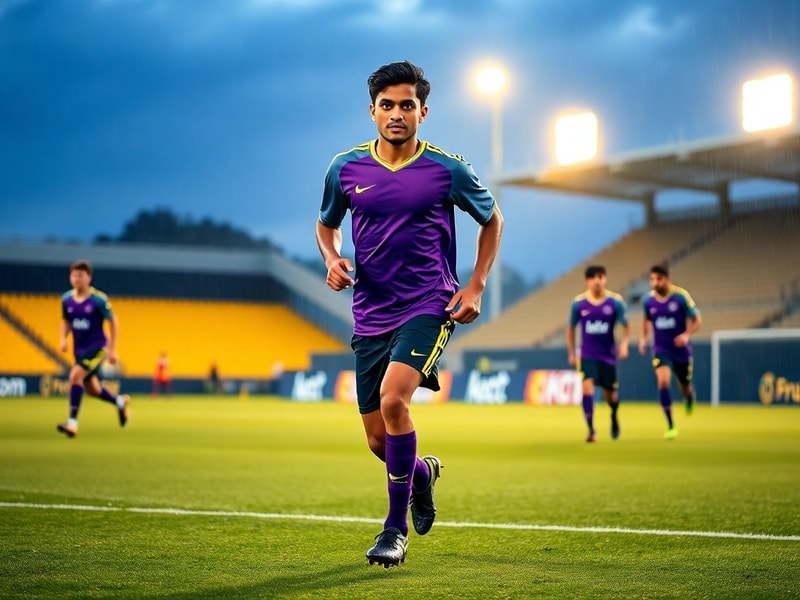
By the 2023 season, Velupillay had established himself as a versatile attacking midfielder, capable of playing as a winger or second striker. His ability to read the game and deliver precise crosses made him a valuable asset. Clubs in Thailand and Malaysia soon took notice, leading to a transfer to Port FC in Bangkok, where he continues to develop his reputation as a playmaker.
Notable Career Stints
- Western Sydney Wanderers (Youth Academy) – 2017-2019
- Melbourne Victory (A-League) – 2020-2022
- Lion City Sailors (Singapore Premier League) – 2022 (Loan)
- Port FC (Thai League 1) – 2023-Present
Cultural Identity and Representation in Modern Football
Velupillay’s Sri Lankan-Australian background places him at the intersection of two footballing worlds. Australia’s national team, the Socceroos, has increasingly embraced multicultural talent, but representation for players of South Asian descent remains limited. Velupillay’s career offers a case study in how athletes from diaspora communities navigate opportunities abroad while staying connected to their roots.
In interviews, Velupillay has often reflected on the challenges of being a “hybrid” athlete—someone who doesn’t fully fit the mold of either his heritage or adopted culture. Yet, this duality has become his strength. His ability to adapt to different coaching styles, from the structured approach in Australia to the more fluid systems in Southeast Asia, demonstrates the advantages of a multicultural upbringing.
Beyond his on-field contributions, Velupillay has used his platform to advocate for greater diversity in football governance. His presence in leagues like the Thai League 1, where local fanbases are deeply passionate about their clubs, also bridges gaps between Asian and Western footballing cultures. This kind of representation is crucial in an era where football is increasingly a globalized industry.
Future Prospects: What’s Next for Nishan Velupillay?
At 23 years old, Velupillay is in the prime years of a footballer’s career. His move to Port FC in Thailand positions him for further growth, given the league’s emphasis on technical development and attacking play. Scouts from European clubs, particularly in leagues like the Eredivisie or Bundesliga, have taken notice of his style, which combines creativity with efficiency.
There’s also speculation about his potential inclusion in Australia’s national team setups. With the Socceroos looking to evolve their playing style, players like Velupillay—who offer versatility and cultural insight—could be pivotal in future campaigns. His experience in Southeast Asia also makes him a strong candidate for Australia’s Olympic or Asian Cup squads.
Off the pitch, Velupillay is exploring opportunities in football development, particularly in engaging young players from multicultural backgrounds. His story serves as an inspiration for aspiring athletes who feel torn between multiple identities. Whether he remains in Asia, transitions to Europe, or returns to Australia, his career trajectory will likely influence how the next generation views football as both a sport and a cultural unifier.
Potential Career Paths Moving Forward
- Domestic Dominance: Continue excelling in the Thai League 1 or transition to a higher-profile league in Japan or South Korea.
- International Breakthrough: Earn a call-up to Australia’s national team for major tournaments like the World Cup qualifiers.
- Coaching or Development: Leverage his experience to mentor young players, particularly in diaspora communities.
- Brand Ambassadorship: Expand his influence beyond football through partnerships with brands that align with his values.
Nishan Velupillay’s career is more than just a series of matches and goals—it’s a narrative about identity, opportunity, and the evolving nature of global football. As he continues to carve out his legacy, his story will resonate with athletes and fans who see sports as a reflection of the world’s diversity.