Understanding the World Cup Table: More Than Just Numbers
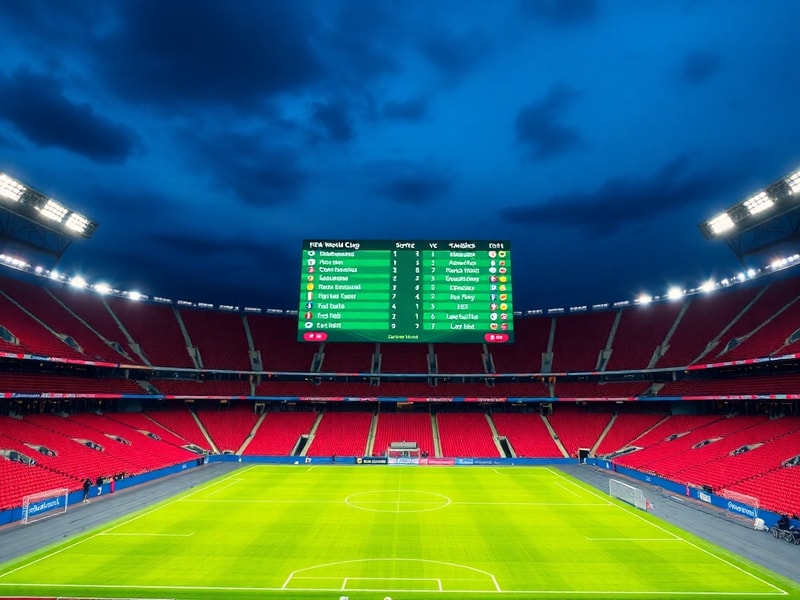
The World Cup table is more than a static ranking—it’s a living document of football’s greatest stories. Updated after every match, it reflects not just points and goal differences, but shifts in strategy, morale, and national pride. For fans, it’s a daily pulse check on their team’s journey. For analysts, it’s a data-rich canvas to dissect performance trends across continents, climates, and styles of play.
Every four years, the table becomes a global conversation piece. It influences broadcast schedules, sponsor decisions, and even public moods in host and participating nations. The standings don’t just record results; they narrate the emotional arc of a tournament. A single upset can flip a group, while a late winner can turn a nation’s hopes into despair or euphoria within minutes. Behind the numbers lies a tapestry of human effort, tactical evolution, and unforeseen twists.
The Structure of the World Cup Table: Groups, Points, and Tiebreakers
The modern World Cup table follows a clear structure, designed to reward consistency and resilience. Each participating team starts with zero points and plays a minimum of three matches in the group stage. Winning earns three points, a draw gives one, and a loss nets none. The top two teams from each group advance, creating a high-stakes filter that has produced legendary upsets and heartbreaking eliminations.
Tiebreakers are crucial when teams finish level on points. FIFA’s rules prioritize goal difference first, then goals scored. If still tied, head-to-head results come into play. This system, while logical, has sparked debates—especially when teams from different groups are compared indirectly. In 2018, Japan advanced over Senegal despite identical records, thanks to fair play points, highlighting how small margins define legacies.
Below is how the table evolves through the tournament:
- Group Stage: Round-robin format; teams aim for top two positions.
- Knockout Stage: Single-elimination; draws lead to penalties after extra time.
- Final Standings: Determined by knockout progression, with third-place playoffs occasionally influencing perceptions.
Cultural Resonance: How the World Cup Table Reflects National Identity
Football is the world’s most popular sport not just for its athleticism, but for how it mirrors society. The World Cup table becomes a mirror of national identity during the tournament. When Japan topped Colombia in 2018, it wasn’t just a win—it was a statement about resilience and teamwork in the face of natural disasters back home. The table told a story of healing and hope.
In Africa, qualification stories carry decades of unfulfilled dreams. When Morocco became the first African nation to reach the World Cup semifinals in 2022, the table wasn’t just a ranking—it was a cultural victory. Streets erupted, flags flew, and for a moment, the continent’s football narrative shifted from underdog to contender. The table became a symbol of possibility.
Even in Europe, where football culture runs deepest, the table takes on historical weight. Germany’s repeated struggles in recent tournaments have fueled debates about identity, youth development, and the pressure of expectations. Meanwhile, Belgium’s “Golden Generation” peaked in 2018 with a third-place finish, their rise and fall etched into the table’s numbers and collective memory.
Behind the Data: What the World Cup Table Doesn’t Show
While the World Cup table offers clarity, it obscures as much as it reveals. Injuries, referee decisions, and even travel logistics can distort a team’s true standing. The table doesn’t capture the brilliance of a last-minute winner or the despair of a missed penalty. It doesn’t measure the psychological toll of a penalty shootout or the joy of a stadium erupting in unison.
It also doesn’t reflect the economic and political context surrounding teams. Qatar’s hosting of the 2022 World Cup brought scrutiny to labor conditions and human rights, subtly influencing how the table—and the tournament—was perceived globally. Meanwhile, sanctions and geopolitical tensions have kept certain nations off the pitch entirely, altering the competitive landscape before a ball is kicked.
Even tactical innovation, like total football or gegenpressing, isn’t visible in the standings. A team might dominate possession but fail to convert, leaving the table unchanged while the football world debates their philosophy. The table is a snapshot, not a story—yet it remains the definitive measure of success in the eyes of most fans and officials.
The World Cup Table as a Global Spectacle
For broadcasters and digital platforms, the World Cup table is a real-time content engine. News outlets update standings minute by minute, while apps push notifications for goal alerts and ranking changes. Fantasy football platforms thrive on the table’s fluidity, rewarding users who predict shifts in momentum. The table isn’t just a scoreboard—it’s a live event.
Social media amplifies its reach. Memes, debates, and viral moments emerge from unexpected upsets. When Saudi Arabia beat Argentina in 2022, the table didn’t just change—it triggered a global conversation about preparation, tactics, and the unpredictability of football. The standings became a catalyst for analysis, humor, and even political commentary.
This digital ecosystem has also democratized access. Fans in remote regions can track their team’s progress without traditional broadcast coverage. The table levels the playing field, giving every supporter the same data to interpret, debate, and celebrate.
Looking Ahead: The Future of the World Cup Table
The World Cup table is evolving with the tournament itself. As FIFA expands the competition to 48 teams in 2026, the table will stretch to accommodate more narratives—more debutants, more underdogs, more stories waiting to unfold. The format may change, but the essence remains: a transparent, competitive ladder that rewards skill, consistency, and heart.
Technology will further refine how we interact with the table. AI-driven predictions, real-time analytics, and immersive visualizations will make the standings more interactive. Yet, the emotional core will persist. A child in Lagos dreaming of seeing their team top the group will still feel the same thrill as a fan in Buenos Aires watching their side climb the ranks.
The World Cup table is more than a ledger. It’s a global ritual, a shared experience, and a testament to football’s power to unite and inspire. As long as the game is played, the table will tell its story—one match, one point, one dream at a time.